
The Rumble, The Revival, and The Grill: George Foreman’s American Dream
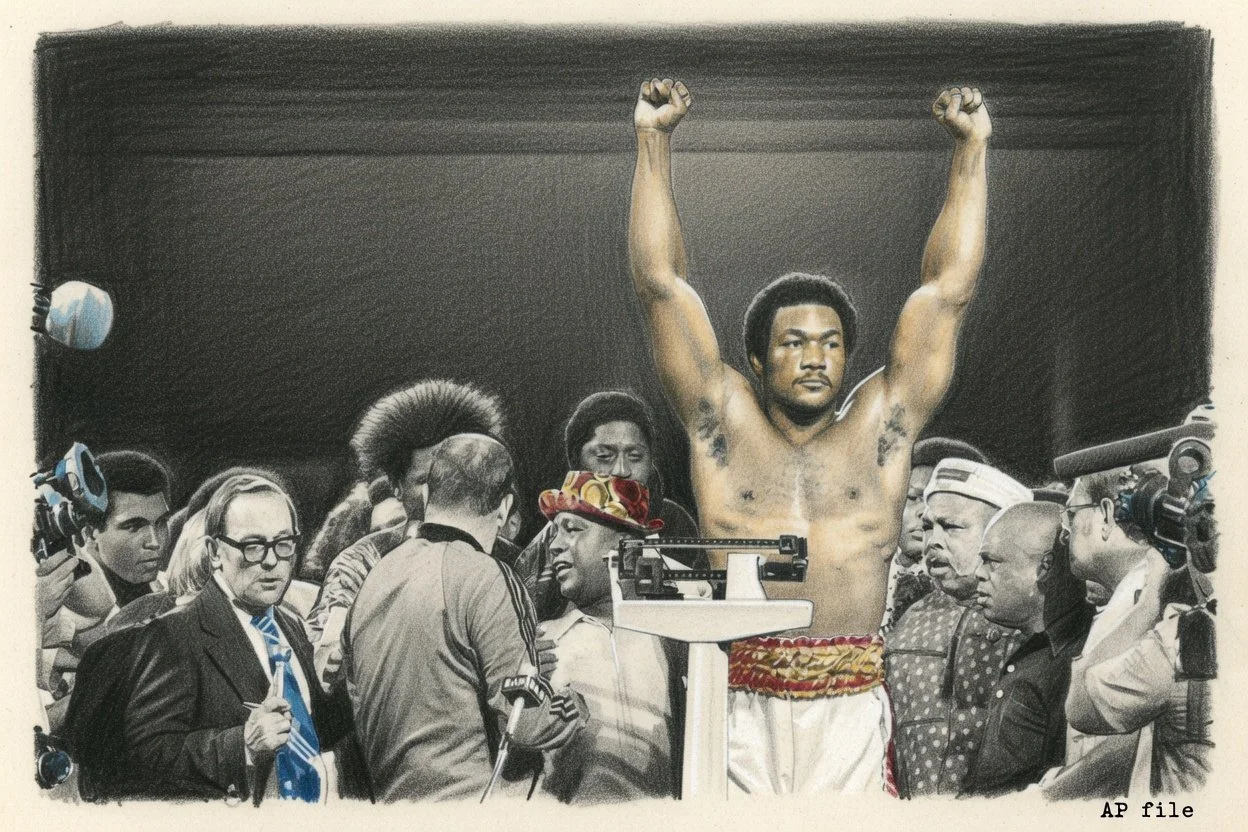
There are few figures in American sports whose life can be divided as cleanly into two legendary chapters as George Foreman. The first chapter is the ferocious heavyweight champion who terrified the boxing world in the 1970s. The second is the smiling, lovable entrepreneur whose electric grill became a staple in millions of American kitchens. Together, they make Foreman one of the most remarkable success stories in modern sports and business.
Born in 1949 in Marshall, Texas, and raised in Houston’s tough Fifth Ward, Foreman’s early life was defined by poverty and anger. One of seven children raised by a single mother, he dropped out of school, joined a street gang, and was headed for a life of crime until a Job Corps program in Oregon introduced him to boxing. Under the guidance of coach Doc Broadus, the raw, powerful teenager discovered he had a gift for knocking people out.
Foreman turned pro in 1969 and rocketed to the top. In 1973, he destroyed undefeated champion Joe Frazier in two rounds in Kingston, Jamaica, winning the heavyweight title in one of the most brutal beatings in boxing history. At 6'4" and 220 pounds of pure muscle, Foreman was considered nearly unbeatable. His 1974 defense against Muhammad Ali in Kinshasa, Zaire — the legendary “Rumble in the Jungle” — is still one of the most famous fights ever. Foreman was the heavy favorite, but Ali’s rope-a-dope strategy exhausted the younger champion. Foreman lost by eighth-round knockout. The defeat devastated him.
For the next decade, Foreman was a different man. He became an ordained minister, opened a youth center in Houston, and largely walked away from boxing. Many assumed his career was over.
Then came one of the most improbable comebacks in sports history.
In 1987, at age 38, Foreman returned to the ring — overweight, bald, and seemingly past his prime. The boxing world laughed. But Foreman kept winning. On November 5, 1994, at age 45, he knocked out 26-year-old Michael Moorer in the 10th round to reclaim the heavyweight title, becoming the oldest man ever to win the heavyweight championship of the world. The moment was so shocking that ringside commentator Jim Lampley screamed, “It’s a miracle!”
Foreman was inducted into the International Boxing Hall of Fame in 2003. His final record was 76-5 with 68 knockouts. He is widely regarded as one of the hardest punchers in heavyweight history.
But the second half of his life may be even more impressive.
In the early 1990s, Foreman was approached by a company that wanted to use his name on a new indoor grill. He initially turned them down. Eventually, he agreed to a deal that included a small royalty. The George Foreman Lean Mean Fat-Reducing Grilling Machine launched in 1994. It was an instant hit. The grill’s sloped design allowed fat to drain away, perfectly matching America’s growing health consciousness in the 1990s.
What started as a modest endorsement became a cultural phenomenon. Sales exploded. By 1999, the company had sold over 100 million units worldwide. Foreman later revealed he had negotiated a better deal that gave him 40% of the profits. He reportedly earned over $200 million from the grill — more money than he made in his entire boxing career.
The grill did more than make Foreman rich. It changed how Americans cooked. It made healthy eating accessible and turned Foreman into a beloved pitchman. His warm, smiling commercials became iconic. The man once feared as “The Fighting Preacher” was now America’s friendly uncle selling kitchen appliances.
This transformation was remarkable. Foreman went from being one of the most intimidating athletes on the planet to one of the most trusted celebrity endorsers. He bridged the gap between the tough, masculine world of boxing and the domestic, family-oriented world of home cooking. In doing so, he showed that a man could be both a warrior and a gentle figure of reassurance.
Today, at 77 years old, George Foreman remains a symbol of resilience and reinvention. He has said many times that his greatest accomplishment wasn’t winning the heavyweight title twice — it was becoming a better man and providing for his family.
His story is a powerful American narrative: a poor kid from the streets of Houston who became heavyweight champion of the world, lost everything, found faith, and then built an entirely new empire in the second half of his life. The fact that millions of Americans still have a George Foreman grill in their kitchen is a daily reminder of one of the most successful second acts in sports history.
Few athletes have managed to be both feared and loved in the way Foreman has. Fewer still have turned a boxing career into a business empire that continues to generate wealth decades later. In the end, George Foreman didn’t just win fights. He won at life — twice.
