
The Miracle of Larry Bird: How a Poor White Kid from French Lick Became One of the Most Important Racial Bridges in American Sports
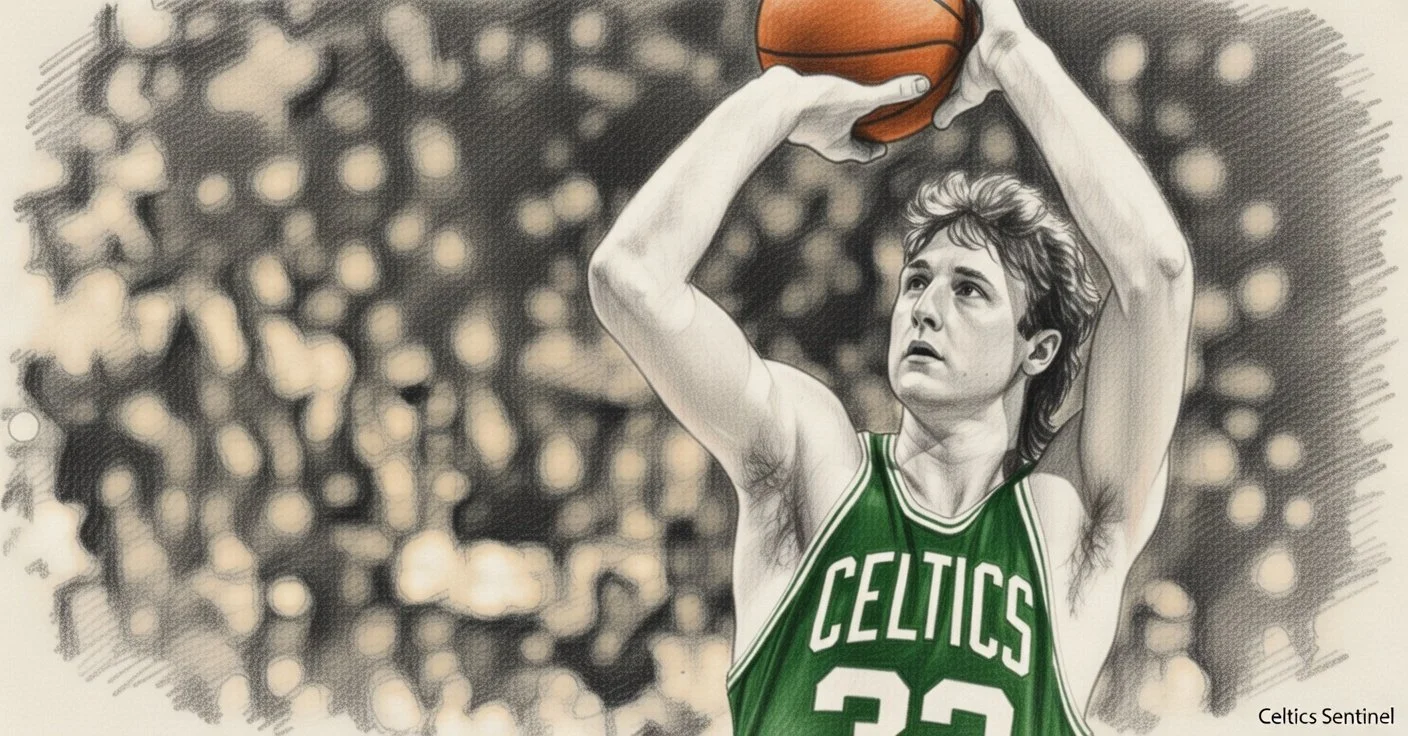
In the summer of 1979, a skinny, pale 22-year-old from French Lick, Indiana walked into the Boston Celtics locker room and changed professional basketball forever. Larry Bird didn’t just play the game — he played it with a Midwestern meanness and a shooter’s touch that made him one of the greatest to ever live. But the real miracle isn’t the three NBA championships, the three MVPs, or the fact that he turned the moribund Celtics into a dynasty. The real miracle is that Larry Bird, given where and when he grew up, was never poisoned by the casual racism that surrounded him.
French Lick, Indiana in the 1960s and 70s was about as white and rural as America got. Population under 2,000. One stoplight. The kind of town where everybody knew everybody, and “everybody” was almost entirely white. The nearest sizable Black community was 50 miles away in Indianapolis. The Ku Klux Klan had been active in southern Indiana in the 1920s, and while overt racism had faded by the time Bird was a teenager, the casual, everyday variety remained. Black people were still referred to with the N-word in casual conversation. Interracial dating was unheard of. The civil rights movement felt like something happening on television, not in real life.
Bird’s own family was poor. His father committed suicide when Larry was 19. The family sometimes went without electricity. Bird worked odd jobs, played basketball on dirt courts, and developed the legendary work ethic that would define him. He was a product of his environment — quiet, stubborn, fiercely competitive, and culturally isolated.
And yet, Larry Bird was never racist.
That fact becomes more remarkable the more you study the era. In the mid-1970s, when Bird was coming of age, the NBA was still overwhelmingly Black, and many white players and fans viewed the league with suspicion. The “too Black” narrative was real. Bird arrived in Boston in 1979, the same year the Celtics had been criticized for being “too white.” The city itself was still scarred by the violent busing crisis of 1974–1976, one of the ugliest episodes of school desegregation in American history.
Bird could have easily absorbed the prejudices of his time and place. Instead, he did the opposite.
His breakthrough came through his rivalry with Magic Johnson. The 1979 NCAA final between Michigan State and Indiana State is still the most-watched college basketball game ever. Bird’s team lost, but the two players formed an instant, unlikely bond that would define the 1980s NBA. Their rivalry was fierce — they hated losing to each other — but it was never ugly. Magic has said many times that Bird was the first white player who treated him as an equal on the court and off it. Bird, in turn, has always spoken of Magic with genuine affection and respect.
That relationship mattered. In an era when many white fans still felt alienated by the “Black” NBA, Bird became the bridge. He was white, from the heartland, spoke with a country drawl, and played a fundamentally sound, team-first style that traditionalists loved. Yet he openly admired and defended his Black teammates and opponents. When critics tried to pit him against Magic racially, Bird refused to play along. He consistently gave credit to Black players for changing the game and elevating it.
Bird’s character was forged in poverty and small-town values, but those same values — hard work, loyalty, and quiet dignity — transcended race in his mind. He judged people by how they played and how they treated their teammates, not by the color of their skin. That mindset was rare for a white man of his generation from his background.
His accomplishments are staggering. Bird led the Celtics to three NBA championships (1981, 1984, 1986). He won three consecutive MVP awards (1984–86). He was a 12-time All-Star, a two-time Finals MVP, and a member of the 1992 Olympic Dream Team. He retired with career averages of 24.3 points, 10.0 rebounds, and 6.3 assists — numbers that still rank among the all-time greats. He is one of only two players (with Wilt Chamberlain) to win three straight MVPs. His clutch performances — the steal from Isiah Thomas in the 1987 Eastern Conference Finals, the game-winning three against the Rockets in the 1986 Finals — are legendary.
And yet, in 2026, Larry Bird feels strangely underrated.
Part of it is the modern obsession with athleticism and highlight-reel plays. Bird wasn’t an explosive athlete. He was slow by today’s standards. His greatness was in his basketball IQ, his passing, his shooting touch, and his killer instinct. Those things don’t translate well to TikTok clips. The advanced analytics era also slightly dims his legacy because his teams played in a slower, more physical era with fewer possessions.
But the bigger reason is cultural. Today’s sports discourse rewards flash and narrative. Bird was quiet, almost shy off the court. He didn’t do podcasts. He didn’t chase social media fame. He didn’t have the larger-than-life personality of Magic or the global brand of LeBron. He just showed up, worked harder than everyone else, and won.
In many ways, Larry Bird represents the last of a certain kind of American sports hero — the small-town white kid who became the best in a Black-dominated league through sheer will and skill, while treating his Black teammates and rivals with genuine respect. In an era when racial division was raw and open, Bird’s example mattered. He proved that excellence and character could transcend background.
That he came from French Lick, Indiana in the 1970s and emerged without the racism that defined so much of that time and place really is a kind of miracle. Not because he was perfect — he had the competitive edge and occasional trash talk of any great athlete — but because he chose respect over resentment, excellence over excuse.
In the end, Larry Bird didn’t just win basketball games. He won something harder: he proved that a poor white kid from rural Indiana could become one of the greatest players ever while helping to heal, in his own quiet way, some of the deepest wounds in American sports and society.
