
Why Eulace Peacock Posed a Greater Threat to Jesse Owens' Legacy Than the 1936 Olympic Boycott
In the sweltering summer of 1936, amid the grandiose spectacle of Nazi Germany's Berlin Olympics, Jesse Owens etched his name into immortality. The African American track star from Ohio State University won four gold medals—in the 100m, 200m, long jump, and 4x100m relay—defying Adolf Hitler's Aryan supremacy propaganda and becoming a symbol of racial triumph. His long jump duel with Germany's Luz Long, who saluted Owens' victory despite the regime's ideology, remains one of sports' most poignant moments. Yet, the path to Berlin was fraught with threats: a heated U.S. debate over boycotting the Games due to Nazi antisemitism and persecution. While this political storm loomed large, it wasn't the greatest peril to Owens' greatness. That distinction belongs to Eulace Peacock, a forgotten rival whose 1935 dominance could have derailed Owens' Olympic narrative, underscoring how athletic competition often poses more immediate risks than geopolitical drama.
The boycott movement in the U.S. gained traction in the mid-1930s as reports of Nazi atrocities—Kristallnacht in 1938 came later, but Jewish persecution was evident by 1935—sparked outrage. Organizations like the American Athletic Union (AAU) and figures such as Avery Brundage, then AAU president, debated participation. Brundage, a staunch amateurism advocate with alleged antisemitic leanings, pushed for attendance, arguing sports transcended politics. Opponents, including labor unions, religious groups, and Black newspapers like the Chicago Defender, called for a boycott to protest discrimination against Jewish athletes in Germany. African American athletes were divided: some, like Owens initially, favored going to prove Black excellence; others saw hypocrisy in condemning Nazi racism while ignoring Jim Crow at home. The Defender reported on December 14, 1935, that stars like Peacock, Owens, and Ralph Metcalfe supported participation to repudiate Nazi theories. Ultimately, the U.S. Olympic Committee voted 58-56 to attend, averting a boycott that could have sidelined Owens entirely.
Had the boycott succeeded, Owens' legacy might have been confined to college exploits, like his legendary 1935 Big Ten meet where he set three world records and tied a fourth in 45 minutes. But the boycott's failure allowed Owens to shine in Berlin, turning a potential threat into his defining stage. Geopolitically, his victories embarrassed Hitler, who reportedly snubbed him, fueling anti-Nazi sentiment and boosting U.S. morale amid the Great Depression. Culturally, Owens became an icon of resistance, inspiring generations from Muhammad Ali to modern activists. Yet, this political hurdle pales against the athletic menace posed by Peacock, who nearly upstaged Owens before Berlin.
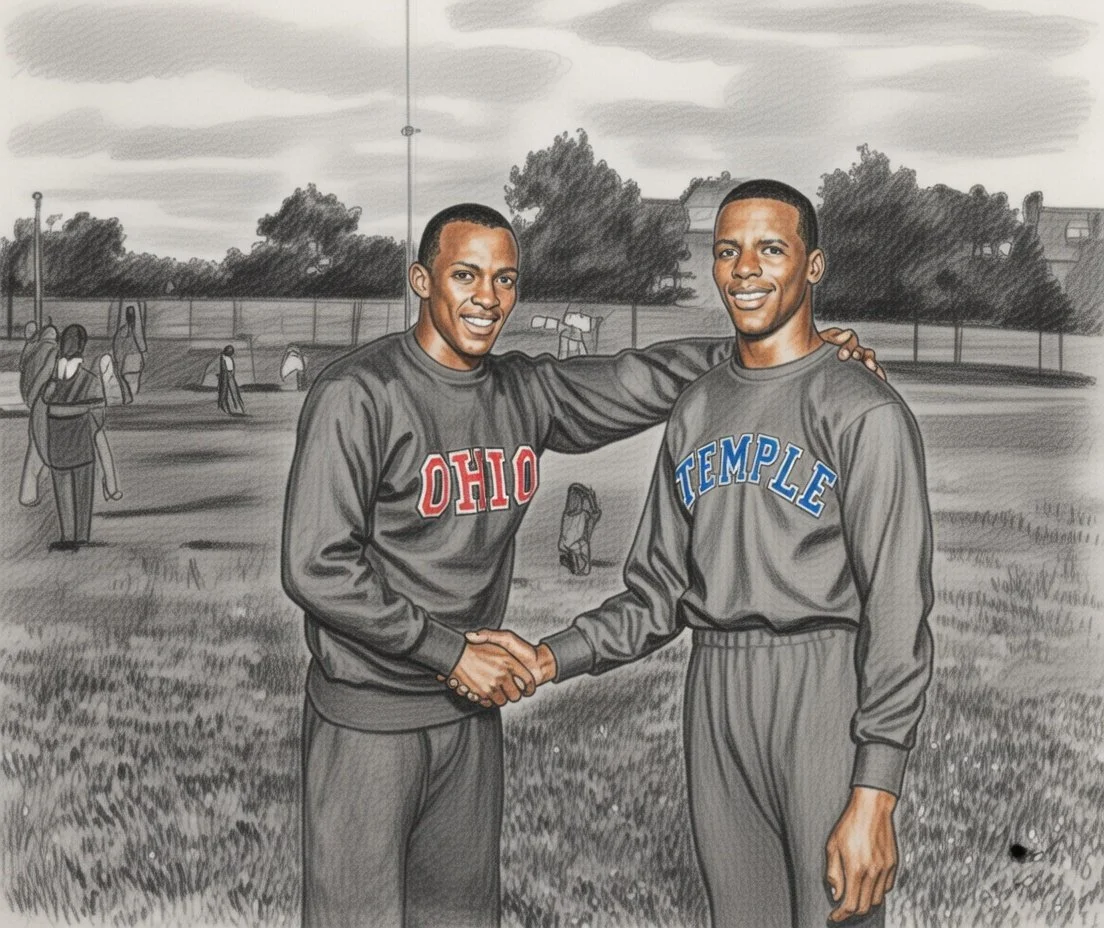
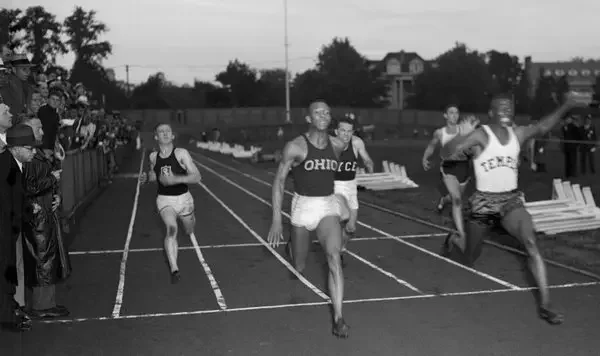
Eulace Peacock, born in 1914 in Dothan, Alabama, and raised in New Jersey, was a multi-sport prodigy. Like Owens, he excelled in sprints and long jump, earning a scholarship to Temple University. Peacock's breakthrough came in 1935, a year that saw him eclipse Owens repeatedly. At the AAU championships in Lincoln, Nebraska, on July 5, 1935, Peacock defeated Owens in both the 100m (10.2 seconds, tying the world record) and long jump (26 feet, 3 inches), feats that led The New York Times to headline "Peacock's Victories Over Owens Project Duel for Olympic Fame." Peacock's explosive start and finish complemented his physicality—he was also a football prospect—making him a formidable foe.
Their rivalry intensified throughout 1935. Peacock beat Owens five consecutive times in the 100m, including at key meets in Ontario and elsewhere. Owens himself acknowledged Peacock's edge, reportedly saying Peacock might have been the better sprinter. The Associated Press even favored Peacock for Olympic gold. This head-to-head dominance threatened Owens' aura of invincibility, built on his 1935 Ann Arbor exploits. Peacock's victories exposed Owens' vulnerabilities, pushing him to refine his technique. As historian William J. Baker noted, Owens "peaked too soon," with Peacock's surge adding pressure.
The turning point came in May 1936. Peacock pulled a hamstring during a meet, a severe injury that sidelined him from the Olympic trials. Unable to qualify, he watched from afar as Owens dominated Berlin. Peacock's absence cleared Owens' path, but it also relegated Peacock to obscurity. He turned pro briefly, then served in the Coast Guard during WWII, later becoming a businessman. Peacock died in 1996 at 82, his rivalry with Owens largely forgotten outside niche histories.
Peacock's threat to Owens' greatness was athletic and personal: as a fellow Black American, he represented internal competition in a sport where opportunities for minorities were scarce. In the Jim Crow era, both faced racism—segregated facilities, denied endorsements—but Peacock's edge could have split the spotlight, diminishing Owens' singular heroism. Instead, Owens' unchallenged Berlin performance amplified his cultural impact, symbolizing Black excellence against white supremacy.
The rivalry's legacy highlights how sports history often hinges on contingencies like injury. Peacock's story, detailed in PBS's "Jesse Owens" documentary, reminds us of forgotten talents who shape legends indirectly. In American culture, it underscores resilience: Owens overcame losses to Peacock, emerging stronger, a metaphor for civil rights struggles.
Today, as debates rage over athletes' legacies amid controversies, Peacock's shadow on Owens illustrates that true greatness withstands rivals, not just regimes.
