
Sister Act Supreme: Venus and Serena Williams' Tennis Dominance and Cultural Revolution
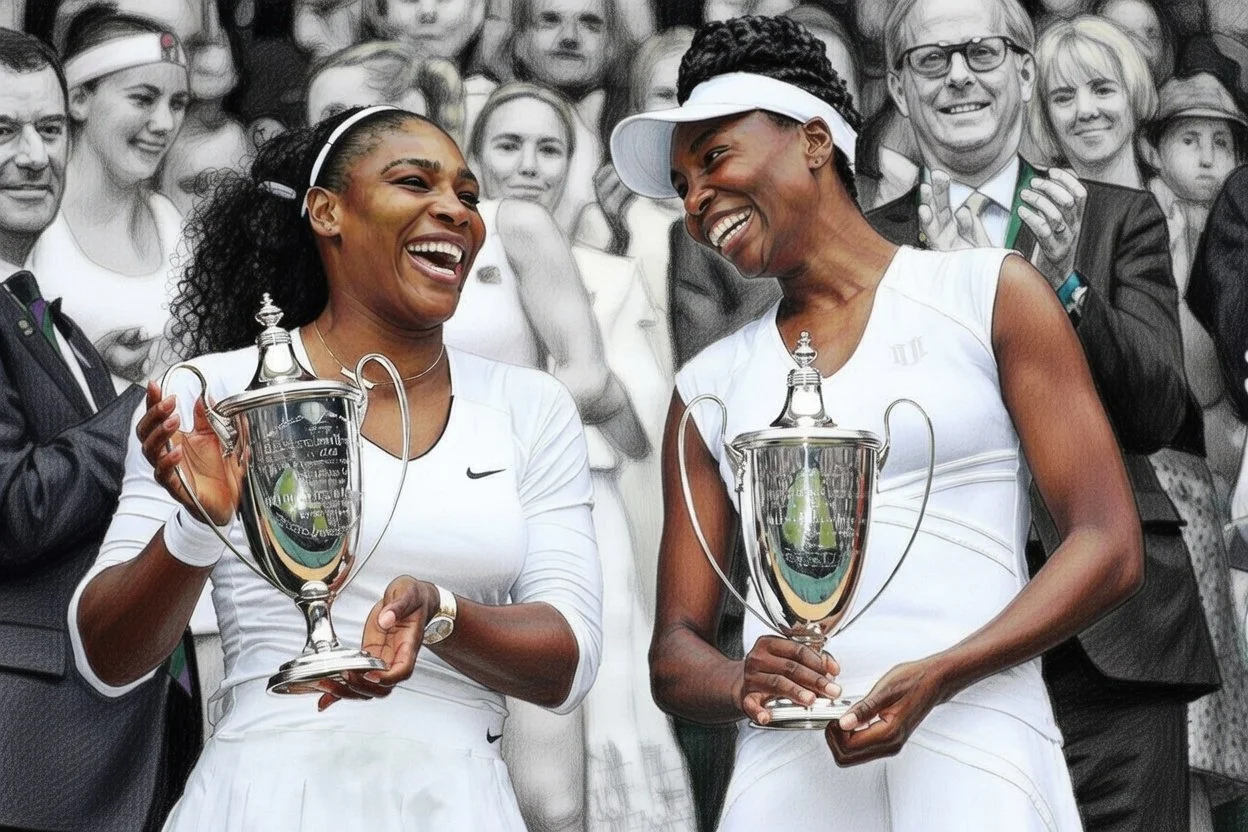
In the sun-baked courts of Compton, California, where chain-link fences separated dreams from harsh realities, two sisters honed a game that would shatter barriers and redefine excellence. Venus and Serena Williams, born in 1980 and 1981 respectively, rose from public parks to global stardom, amassing a combined 30 Grand Slam singles titles and becoming synonymous with power, precision, and perseverance. Coached by their father Richard and mother Oracene, they turned tennis—a sport historically reserved for the white elite—into a platform for Black empowerment. Their achievements not only dominated record books but also catalyzed cultural shifts in America, influencing fashion, feminism, racial discourse, and women's empowerment in ways that echo through society today.
Venus Williams burst onto the scene first, turning pro in 1994 at age 14. Her powerful serve and athleticism quickly made waves: she reached the 1997 US Open final as a 17-year-old, the first unseeded woman to do so in the Open Era. Venus claimed her maiden Grand Slam at Wimbledon in 2000, defeating Lindsay Davenport, and defended it in 2001 against Justine Henin. She added US Open titles in 2000 and 2001, Australian Open runner-up finishes, and French Open finals. With seven Grand Slam singles titles—five at Wimbledon, two at the US Open—Venus also excelled in doubles and mixed, but her Olympic haul stands out: five medals, including four golds (singles 2000, doubles 2000, 2008, 2012) and one silver (mixed 2016), the most by any tennis player.
Serena followed in 1995, but her dominance soon eclipsed all. At 17, she won the 1999 US Open against Martina Hingis, her first Grand Slam. Serena's 23 singles titles—the most in the Open Era—include seven Australian Opens (2003, 2005, 2007, 2009-10, 2015, 2017), seven Wimbledons (2002-03, 2009-10, 2012, 2015-16), six US Opens (1999, 2002, 2008, 2012-14), and three French Opens (2002, 2013, 2015). She held all four majors simultaneously twice—the "Serena Slam" in 2002-03 and 2014-15. With Venus, they won 14 doubles Slams, undefeated in finals, and three Olympic doubles golds (2000, 2008, 2012). Serena's 2017 Australian Open win while pregnant underscored her superhuman resilience. Together, the sisters faced off 31 times, with Serena leading 19-12, their rivalries producing epic matches like the 2003 Australian Open final.
Their head-to-head dynamic added layers: Venus often mentored Serena early on, but Serena's surpassing her sister highlighted their mutual respect. Off-court, they revolutionized doubles, blending power with strategy, and their Olympic successes—Serena's 2012 singles gold completing her Golden Slam—cemented them as the most decorated tennis siblings.
The Williams sisters' impact on American culture is profound, transcending tennis to challenge racial and gender norms. Emerging from Compton—a neighborhood plagued by gang violence and poverty—they defied stereotypes of Black women in sports. Tennis, a predominantly white, affluent pursuit, had few Black stars before them; Althea Gibson's 1950s breakthroughs were isolated. The sisters faced racism—boos at Indian Wells in 2001 led to a 14-year boycott—but their success forced inclusion. Serena, in particular, confronted body-shaming and scrutiny over her muscular physique, turning criticism into empowerment. Their bead-adorned braids, bold outfits (Serena's catsuits, Venus's designs), and unapologetic confidence redefined beauty standards, inspiring Black girls to embrace natural hair and strength.
Culturally, they ushered in tennis's "power era," with blistering serves and groundstrokes that influenced players like Naomi Osaka and Coco Gauff. Their advocacy for equal pay—Venus lobbied for Wimbledon's parity in 2007—advanced feminism in sports. Serena's maternity leave return in 2018 spotlighted motherhood and athletics, challenging biases. Business-wise, Serena Ventures invests in women-led startups, amassing a $2 billion portfolio, while Venus's Eleven clothing line promotes body positivity. Media portrayals—HBO's "Being Serena," the film "King Richard" (2021)—cement their icon status, blending sports with pop culture like few others.
Their legacy endures: inducted into halls of fame, they inspire amid America's racial reckonings. In a divided society, the Williams sisters symbolize triumph over adversity, proving excellence knows no color.
