
The Miracle on Ice: When Hockey Froze the Cold War
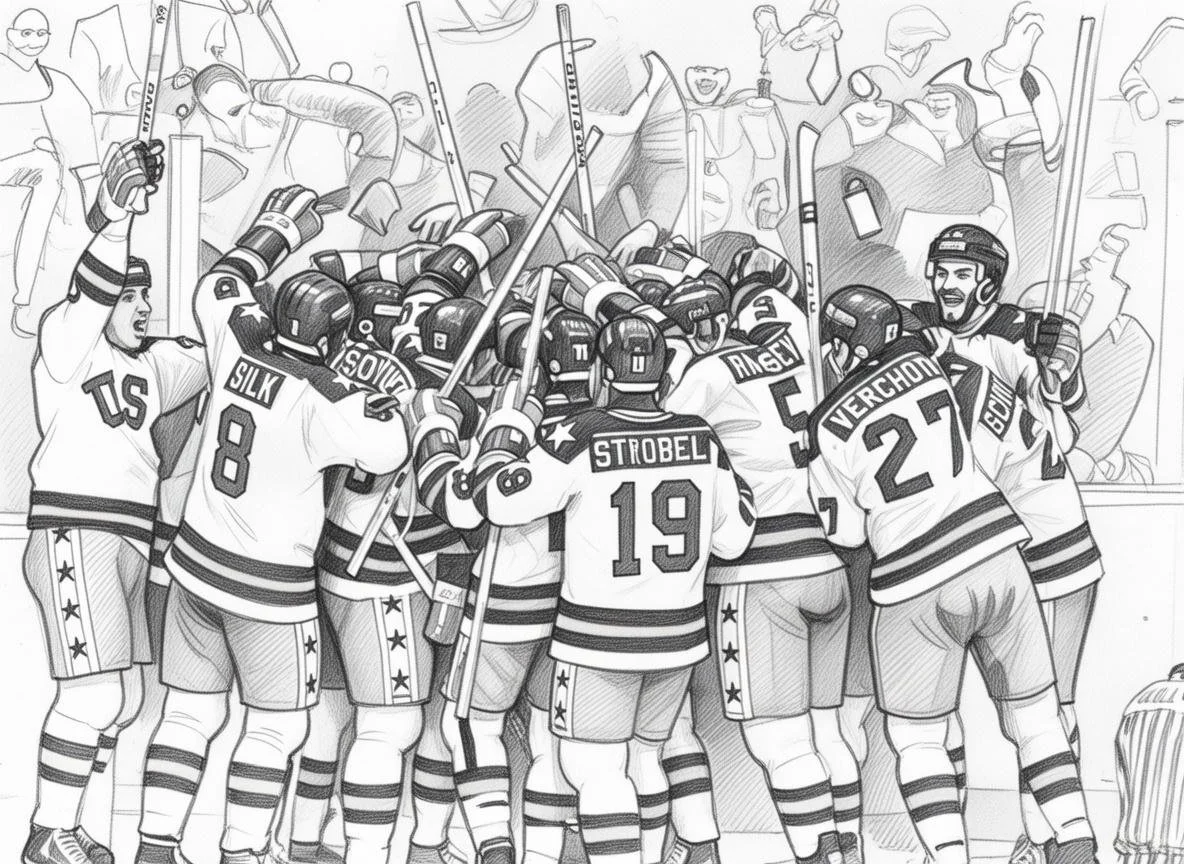
Imagine a frozen arena in Lake Placid, New York, on February 22, 1980, where the chill isn't just from the ice but from the shadow of a superpower standoff. A ragtag squad of American college kids, average age 21, faces off against the Soviet Union's Red Army team—professional juggernauts who'd demolished NHL all-stars and won gold in the last four Olympics. The crowd of 8,500 chants "U-S-A!" as the puck drops, but this isn't just hockey; it's a proxy battle in the Cold War's endless winter, where a single goal could thaw national despair and strike a symbolic blow against an empire. For military history buffs who study superpower brinkmanship and sports fans who live for underdog epics, the Miracle on Ice wasn't magic—it was a meticulously orchestrated upset that exposed the cracks in Soviet invincibility, reminding the world that even Goliaths can fall to a well-aimed slingshot.
The 1980 Winter Olympics in Lake Placid were a modest affair compared to summer spectacles, with 1,072 athletes from 37 nations competing in 38 events. But for the U.S. men's hockey team, coached by the enigmatic Herb Brooks—a former Olympian with a drill-sergeant's intensity—it was a mission impossible. Brooks assembled 20 amateurs, mostly from rival college programs in Minnesota and Boston, through grueling tryouts and a 419-day preseason tour where they went 42-27-1 against pros and internationals. His philosophy: blend European skating finesse with North American grit, enforced through infamous "Herbies"—punishing end-to-end sprints that built unbreakable conditioning. The Soviets, meanwhile, were a machine: players like Vladislav Tretiak (the greatest goalie ever) and Valeri Kharlamov trained year-round as "amateurs" in the Red Army, dominating with a possession style honed since their 1956 Olympic debut. The U.S. hadn't medaled in hockey since 1960's gold, and oddsmakers pegged them at 1,000-to-1 for gold. Yet Brooks' mantra—"You were born to be a player. You were meant to be here"—forged a unit ready for the improbable.
The geopolitical stakes elevated this semifinal from game to global drama. The Cold War, raging since 1945, pitted U.S. capitalism against Soviet communism in a bipolar world of proxy wars, arms races, and ideological brinkmanship. By 1980, tensions peaked: the Soviet invasion of Afghanistan in December 1979—aimed at propping up a communist regime amid mujahideen resistance—drew universal condemnation. President Jimmy Carter, reeling from the Iran hostage crisis (444 Americans held since November 1979) and post-Vietnam malaise, responded with grain embargoes, increased defense spending, and a boycott of the upcoming Moscow Summer Olympics—joined by 65 nations. American morale was at rock bottom: inflation soared, gas lines stretched, and the USSR seemed ascendant after Vietnam's fall in 1975. Sports became a surrogate arena; Soviet dominance in Olympic medals symbolized communist superiority, while U.S. victories offered rare patriotic balm. As Carter told Congress in his January 1980 State of the Union, the invasion was "the most serious threat to world peace since the Second World War." For the hockey team, Brooks framed the matchup as ideological: "Gentlemen, you don't have enough talent to win on talent alone."
The game itself was a masterpiece of tension. At Olympic Center's Field House, the Soviets struck first, leading 2-1 after a deflected goal off U.S. goalie Jim Craig. But the Americans, fueled by Brooks' system of relentless forechecking and counterattacks, tied it twice—Dave Silk and Mark Johnson scoring to make it 2-2, then 3-3 after Johnson's buzzer-beater with one second left in the first period, prompting Soviet coach Viktor Tikhonov to yank legendary netminder Tretiak. The second period was scoreless, a defensive clinic where Craig stopped 16 shots. Then, in the third, Johnson tied it at 3-3, and captain Mike Eruzione— a journeyman from Boston University—rifled a wrist shot past Vladimir Myshkin at 10:00, putting the U.S. ahead 4-3. The final 10 minutes were agony: the Soviets unleashed 39 shots total, but Craig saved 36, his glove a Berlin Wall against the red tide. As the clock hit zero, Al Michaels' iconic call—"Do you believe in miracles? YES!"—erupted over ABC, capturing the euphoria as players mobbed the ice.
The upset's ripple effects were seismic, both domestically and geopolitically. In America, reeling from economic woes and foreign humiliations, the victory sparked "Miracle Mania"—parades, White House visits, and a surge in youth hockey enrollment that tripled rinks nationwide. It boosted Carter's approval by 10 points temporarily, symbolizing resilience amid calls for Olympic boycotts. For the Soviets, it was a humiliating glitch in their sports machine, which had used Olympic success to tout communist superiority since the 1950s. The loss fueled internal doubts, especially as Afghanistan devolved into a quagmire costing 15,000 Soviet lives by 1989. Globally, it humanized the Cold War: the U.S. as plucky underdogs, the USSR as fallible giants, accelerating cultural shifts that contributed to the Eastern Bloc's 1989 collapse. The team went on to beat Finland 4-2 for gold, but the Miracle was the true triumph—a psychological strike in the soft power arena.
Culturally, the event birthed enduring myths and media. Disney's 2004 film Miracle starring Kurt Russell as Brooks grossed $64 million, romanticizing the tale. It inspired generations of athletes, proving amateurs could topple pros through preparation and heart—lessons echoed in military doctrines on asymmetric warfare. Yet it also underscored sports' vulnerability; the U.S. boycott of Moscow later that year denied the hockey team a rematch, highlighting how geopolitics trumps games.
In retrospect, the Miracle on Ice endures as a beacon of Cold War defiance, where a hockey game captured the era's ideological freeze and hinted at its eventual thaw. It blended athletic alchemy with strategic serendipity, proving that in the grand chessboard of superpowers, a single pawn can checkmate a king. But as global tensions simmer anew, one can't help but wonder: In today's divided arenas, could another such miracle ignite unity or merely fan the flames of rivalry?
