
Kings of the Board, Pawns of the Cold War: Fischer-Spassky '72
Imagine a dimly lit hall in Reykjavík, Iceland, on July 11, 1972, where the clink of chess pieces echoes like distant artillery in a silent war. Two men sit across a board, one an eccentric American prodigy with a mind like a steel trap, the other a Soviet grandmaster embodying the disciplined might of an empire. The air is thick with tension, not from crowds but from the weight of a divided world watching every move. This isn't just chess; it's a cerebral duel where bishops and knights proxy for missiles and spies, and a single blunder could tip the scales of superpower prestige. For military history enthusiasts who dissect strategic masterstrokes and sports fans who appreciate the intellectual brutality of the game, the Fischer-Spassky match was the Cold War's ultimate mind game—a battle where brains outmaneuvered brawn, proving that in the arena of ideas, even superpowers can be checkmated.
Robert James "Bobby" Fischer was born on March 9, 1943, in Chicago, a self-taught genius who learned chess at age 6 from a $1 set bought by his mother. Raised in Brooklyn amid poverty and family turmoil, Fischer's obsessive dedication propelled him to U.S. Junior Champion at 13 and grandmaster at 15—the youngest ever at the time. His style was aggressive, innovative, often dismantling opponents with unorthodox openings like the King's Gambit. By 1970, he'd won the U.S. Championship eight times straight, but his paranoia and demands—insisting on perfect lighting, no cameras—made him a controversial figure. Boris Vasilievich Spassky, born January 30, 1937, in Leningrad, survived the WWII siege as a child before rising through the Soviet chess machine. A two-time world champion (1969-1972), Spassky's elegant, positional play embodied the USSR's state-sponsored dominance, where chess was a tool of ideological supremacy. Supported by a team of analysts, he represented the collective might of a system that viewed individual brilliance as secondary to communist discipline.
The match unfolded against the frozen backdrop of the Cold War, a 27-year ideological standoff between the U.S. and USSR that defined global politics from 1945 to 1991. By 1972, tensions simmered: the U.S. was mired in Vietnam, facing domestic unrest from anti-war protests and Watergate's brewing scandal, while the Soviets suppressed dissent post-Prague Spring (1968) and expanded influence in the Third World. Détente under Nixon and Brezhnev offered a thaw—marked by arms talks and Ping-Pong diplomacy—but chess remained a frontline. The USSR had monopolized the world title since 1948, symbolizing intellectual superiority; an American win would puncture that myth, boosting U.S. morale amid economic stagflation and post-Vietnam doubt. Kissinger personally intervened to coax Fischer to play, viewing it as soft power gold. Iceland, a neutral NATO ally, hosted after Fischer's demands scuttled other venues, turning the remote capital into a media circus.
The 21-game series was a rollercoaster of brilliance and drama. Fischer forfeited Game 2 over camera noise, trailing 0-2, but rebounded with a stunning Game 3 win in a closed room—his first-ever victory over Spassky. Game 6 was a masterpiece: Fischer's Queen's Gambit Declined crushed Spassky so decisively that the Soviet applauded, a rare gesture. Spassky's team accused psychic interference; Fischer demanded his chair be X-rayed for bugs. By Game 13, Fischer led 7.5-5.5, his unorthodox Sicilian Defense baffling the Soviets. The finale came in Game 21: Spassky resigned by phone, conceding 12.5-8.5 without playing, as Fischer's endgame precision sealed victory.
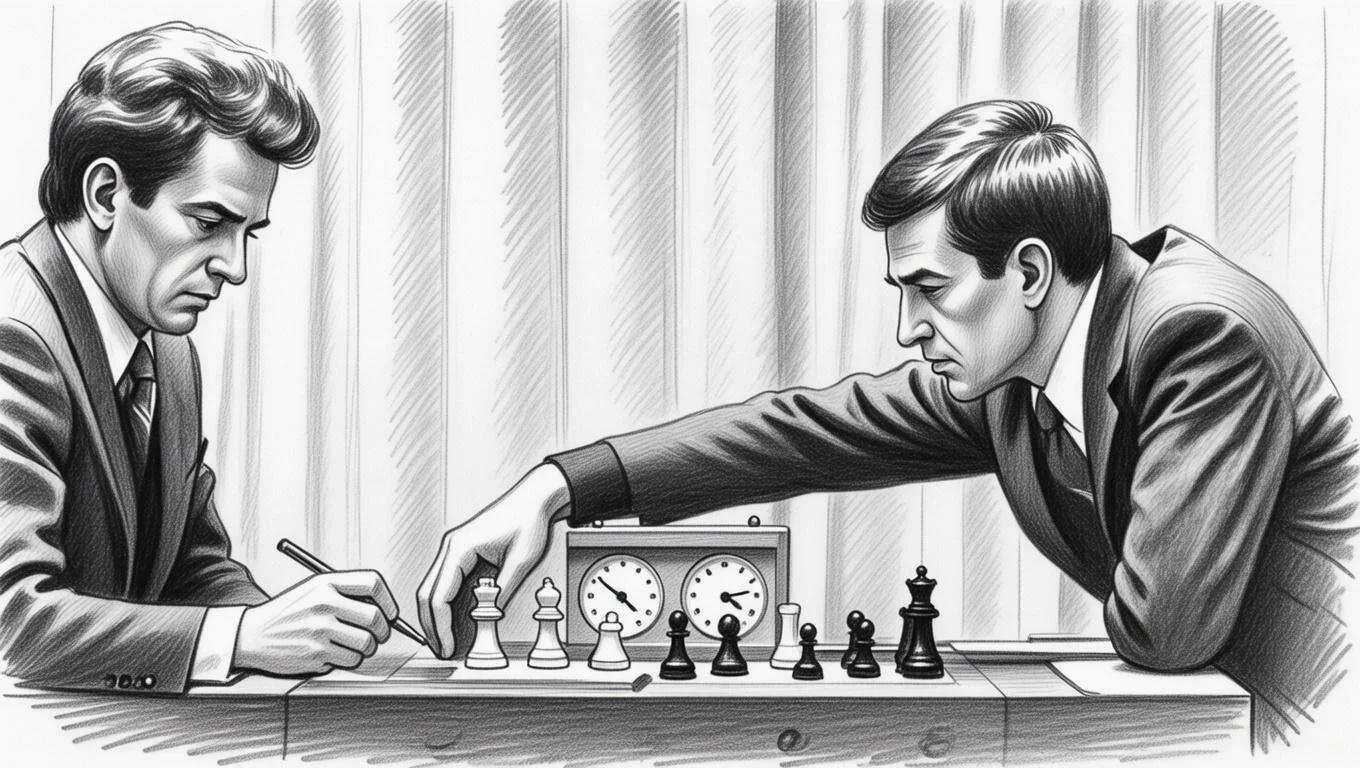
The match's importance transcended chess, becoming a Cold War metaphor. Fischer's win was hailed as a capitalist triumph over communist collectivism—Nixon wired congratulations, and Fischer graced Time's cover as "The New World Champion." It boosted U.S. prestige amid détente, coinciding with Nixon's China visit and SALT talks, suggesting American individualism could outwit Soviet machinery. For the USSR, it was a humiliating glitch; Spassky faced criticism, and the loss fueled internal reforms in chess training. Globally, it popularized chess: U.S. federation membership surged 400%, spawning books, films like Searching for Bobby Fischer, and a boom in scholastic programs. Militarily, it underscored soft power's role—chess as ideological warfare, where mental acuity mirrored nuclear strategy's game theory.
Yet Fischer's victory was bittersweet; his paranoia deepened, leading to a 20-year exile from chess, anti-Semitic rants, and death in 2008. Spassky defected to France in 1976, later befriending Fischer. The match humanized the Cold War, showing individuals could pierce superpower facades.
In retrospect, the Fischer-Spassky clash endures as a pinnacle of Cold War cultural combat, where a board game captured the era's intellectual arms race and hinted at individualism's edge over collectivism. It blended strategic genius with geopolitical theater, proving sports can be as pivotal as summits. But as great power rivalries resurface, one can't help but wonder: In today's digital battlegrounds, could another such mind match sway the course of history once more?