
America's Ultimate Cold War Propaganda Masterpiece: Rocky IV
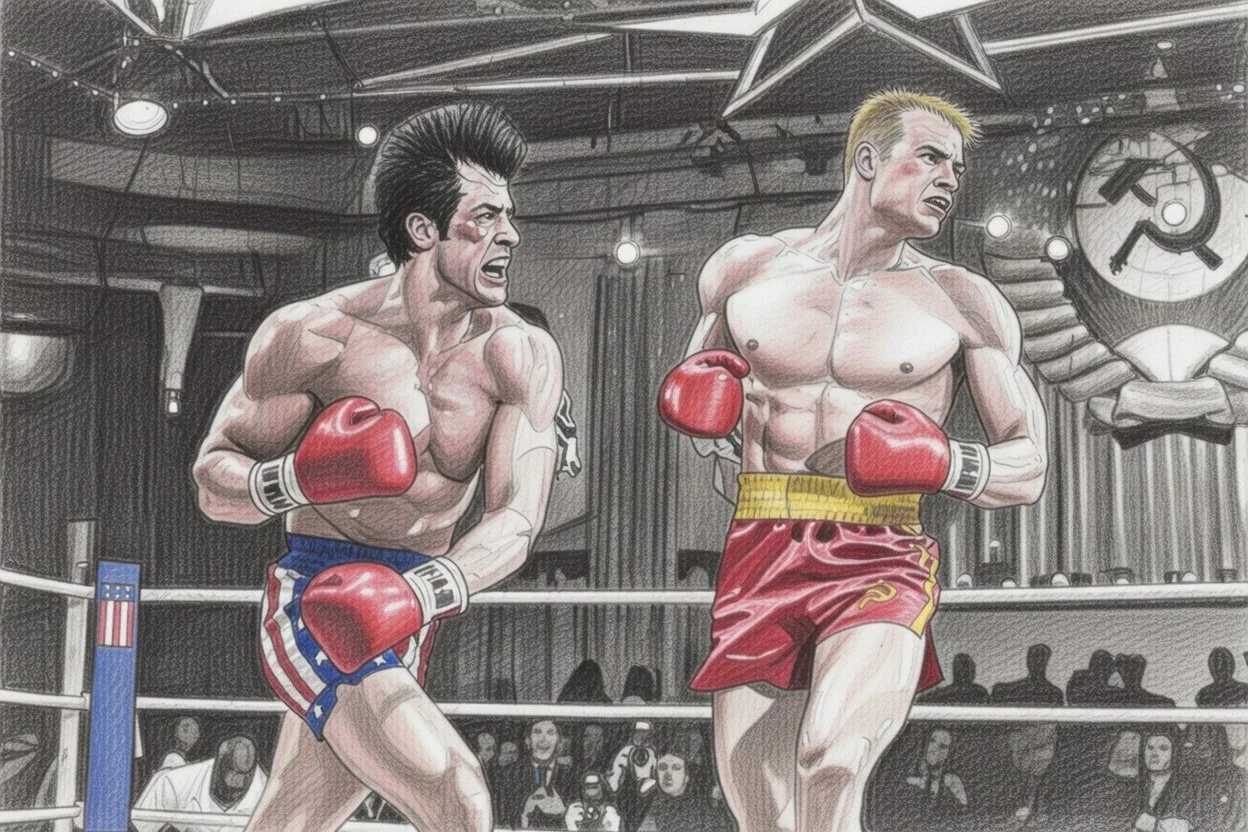
Picture the frozen Siberian wilderness in the dead of winter, where a lone American boxer, Rocky Balboa, trains like a man possessed—chopping wood, pulling sleds through snow, and climbing mountains in raw, primal fury. Cut to a sterile Soviet lab, where his opponent, Ivan Drago, a towering blond automaton, pumps iron on high-tech machines, injects steroids, and stares blankly as trainers monitor his every metric. This montage, set to Survivor's pulsing "Eye of the Tiger" remix, builds to a climactic showdown in Moscow on Christmas Day 1985, where the underdog American, bloodied but unbowed, defeats the Russian giant, winning over a hostile crowd with a speech preaching change and unity. Released November 27, 1985, Rocky IV wasn't just a box office juggernaut grossing $300 million worldwide; it was a cultural sledgehammer, distilling Cold War anxieties into a feel-good fable of American triumph. For those dissecting how media shapes national narratives and fans reliving 80s cinema's bombast, Rocky IV stands as the era's propaganda pinnacle— a film that rallied hearts, vilified the enemy, and left an indelible mark on how America viewed itself and its rival.
Cold War propaganda in American media was a sophisticated machine, blending fear, patriotism, and idealism to sustain public support for the ideological standoff with the Soviet Union from 1947 to 1991. Hollywood played a starring role, producing films that portrayed the U.S. as a beacon of freedom against communist tyranny. From early entries like The Red Menace (1949), which warned of domestic subversion, to blockbusters like Red Dawn (1984), where teens fight Soviet invaders, movies amplified government messages. The Reagan era (1981-1989) supercharged this, with the president's "Evil Empire" rhetoric echoing in media that glorified individualism over collectivism. Propaganda wasn't overt; it wove into entertainment, using stereotypes—Soviets as emotionless brutes—to justify arms races and interventions. Films like Rambo: First Blood Part II (1985) rescued POWs from communist camps, reinforcing narratives of American heroism amid Vietnam's lingering scars. This cultural front complemented CIA efforts, like funding abstract art to counter socialist realism, making media a key soft power tool.
Rocky IV fit this mold like a glove, distilling Cold War binaries into a simple, visceral story. Directed by and starring Sylvester Stallone, the film opens with Apollo Creed (Carl Weathers) challenging Drago (Dolph Lundgren) in an exhibition that turns deadly—Drago's cold "If he dies, he dies" line cementing him as a soulless killer. Rocky avenges his friend by training in Russia, facing a hostile regime, while Drago represents Soviet scientific hubris—steroid-enhanced, machine-like, devoid of humanity. The montages contrast: Rocky's natural, heart-driven regimen vs. Drago's sterile lab, symbolizing free-world virtue over communist artificiality. Released amid Reagan's SDI "Star Wars" program and Gorbachev's glasnost thaw, the film amplified anti-Soviet sentiment, portraying Russians as threats to American values. Stallone crafted it as morale booster, with Rocky's ending speech—"If I can change, and you can change, everybody can change!"—hinting at reconciliation but firmly on U.S. terms. Critics called it blatant jingoism, but its simplicity made it effective propaganda, outshining subtler films like The Hunt for Red October (1990).
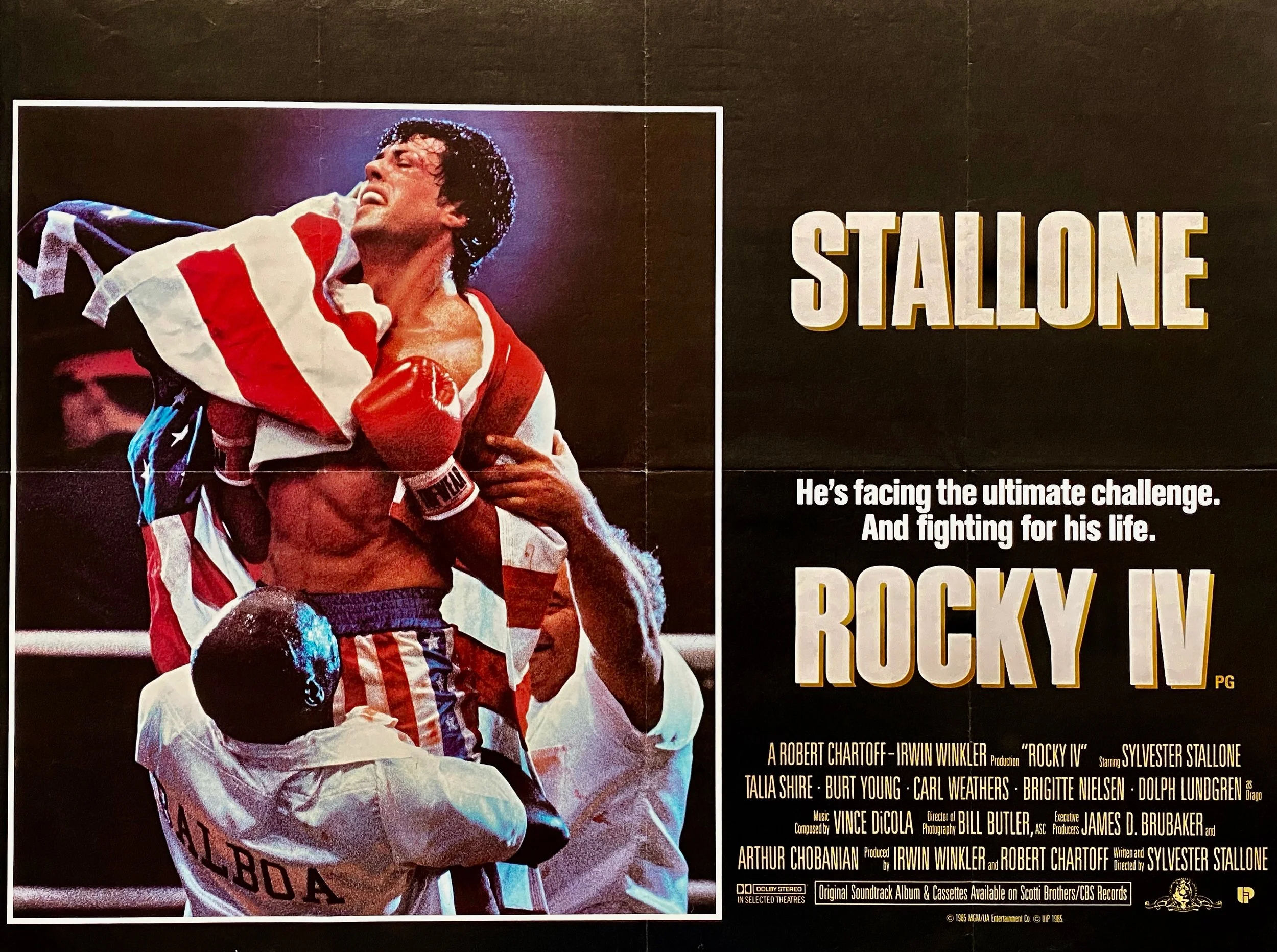
Culturally, Rocky IV's impact was seismic, embedding itself in 80s nostalgia and beyond. It grossed $300 million on a $28 million budget, the highest-earning Rocky film, boosted by a soundtrack featuring Survivor's "Burning Heart" and James Brown's "Living in America." The movie influenced fitness culture—Rocky's training montages inspired gym routines—and popularized Soviet villain tropes in media, from Street Fighter's Zangief to Command & Conquer games. It shaped perceptions of Russia as cold and mechanical, lingering in post-Cold War views amid Putin's era. For race and gender, it reinforced American exceptionalism but featured diverse heroes like Apollo Creed, subtly advancing inclusion. Parodies in Family Guy and South Park cement its campy legacy, while the 2021 director's cut Rocky IV: Rocky vs. Drago softens anti-Soviet edges for modern audiences.
Rocky IV encapsulated Cold War propaganda's zenith, rallying America with heroic narratives that outlasted the conflict. Its cultural echoes persist in how we view underdogs and rivals. But in today's multipolar world, one must ask: Could a modern film wield such ideological power without backlash?