
The Creator's Game Reborn: The Thompson Brothers and Lacrosse's Indigenous Legacy
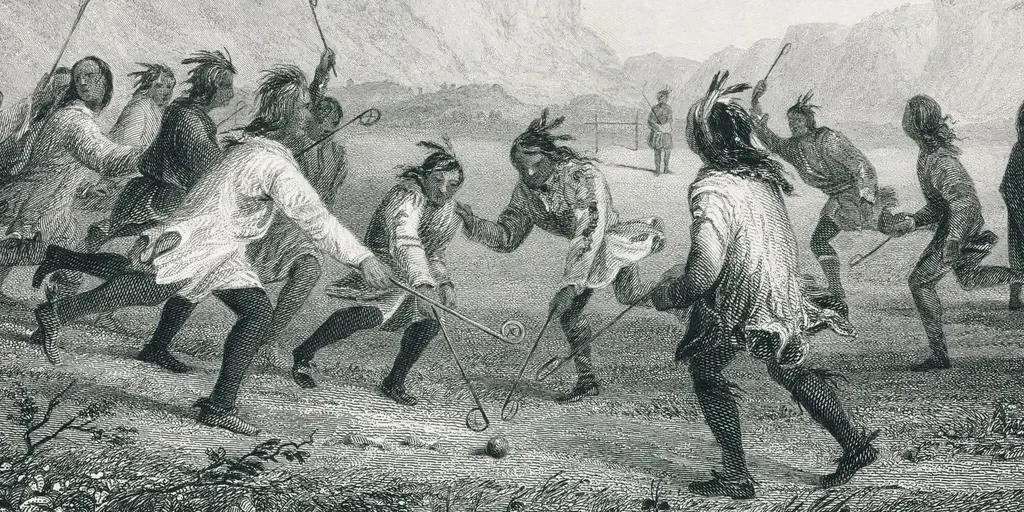
Lacrosse, hailed as the fastest-growing sport in North America, surges in popularity with youth leagues expanding, college programs booming, and professional circuits like the Premier Lacrosse League (PLL) drawing massive crowds. Yet, amid this modern frenzy, few recognize its ancient origins: invented by Indigenous peoples centuries ago as "The Creator's Game" or "Medicine Game," a spiritual ritual for healing, community bonding, and honoring the divine. For the Haudenosaunee (Iroquois) Confederacy, including the Onondaga Nation, lacrosse isn't mere competition—it's a sacred practice gifted by the Creator to resolve conflicts, cure ailments, and foster unity. Into this profound heritage step the Thompson Brothers: Jeremy, Miles, Lyle, and Jerome "Hiana" Thompson, Onondaga icons whose prowess has not only dominated fields but also revitalized Native pride, bridging ancient traditions with contemporary culture in a nation still reckoning with its colonial past.
The Thompsons hail from the Onondaga Nation, a sovereign territory south of Syracuse, New York, part of the Haudenosaunee Six Nations. Born to Jerome Sr., an ironworker and former box lacrosse player, and Delores Thompson, the brothers grew up immersed in the game. Sticks were cradled from toddlerhood, backyard scrimmages with their father honing skills passed down through generations. The family moved from the St. Regis Mohawk Reservation to Onondaga in 1999, into a home built by Jerome Sr. without initial electricity or running water—emblematic of reservation life's challenges. Yet, lacrosse provided purpose: as "The Medicine Game," it healed emotional wounds and strengthened cultural ties. Jeremy, the eldest (born 1986), led the way, followed by Hiana, Miles (1991), and Lyle (1992). Their bond, forged on the field, reflects Haudenosaunee values of clan and community, where the sport symbolizes harmony between humans, nature, and the spiritual world.
Jeremy Thompson's trailblazing set the stage. A midfielder with unmatched speed and tenacity, he starred at Syracuse University (2005-2008), earning All-American honors and helping the Orange to two NCAA championships. Drafted into the National Lacrosse League (NLL) by the Buffalo Bandits in 2008, Jeremy's pro career spanned teams like the Georgia Swarm and Panther City, amassing over 1,000 faceoff wins and representing the Iroquois Nationals in world competitions. His defensive prowess and leadership earned him induction into the Upstate Lacrosse Foundation Hall of Fame. Jeremy's success opened doors for his siblings, proving Native athletes could excel in mainstream arenas while honoring traditions.
Miles and Lyle elevated the family's legacy at the University of Albany. Transferring from community colleges, they joined Ty (sometimes grouped with them as the "Thompson Trio") to form an offensive juggernaut. In 2014, Miles and Lyle became the first co-winners of the Tewaaraton Award—lacrosse's Heisman—scoring 82 and 128 points respectively, leading Albany to the NCAA quarterfinals. Lyle repeated in 2015 with a record 175 points, blending behind-the-back shots, no-look passes, and cultural flair like wooden sticks in games. Their style, rooted in box lacrosse's creativity, revolutionized the sport, inspiring "Thompson dodging" techniques. Professionally, Lyle shines in the PLL with the Cannons, earning MVP honors, while Miles and Hiana contribute in NLL and international play. Together, they've led the Onondaga Redhawks to championships and the Iroquois Nationals to medals, including silver in 2015 indoor worlds.
Beyond stats, the Thompsons embody lacrosse's cultural depth. For the Onondaga, the game is spiritual: played to entertain the Creator, heal the sick, and unite clans. The brothers advocate for this heritage, co-founding Thompson Brothers Lacrosse (TBL) in 2015—a company offering clinics, equipment, and community programs for Indigenous and underserved youth. TBL emphasizes lacrosse's roots, using proceeds for scholarships and cultural events. Lyle, a vocal activist, weaves orange ribbons into his braid to honor residential school victims, highlighting Canada's and America's dark history of cultural genocide through boarding schools that used lacrosse as an assimilation tool. Their participation in the Iroquois Nationals asserts Haudenosaunee sovereignty, traveling on Indigenous passports despite barriers, as in the 2010 World Championships visa denial.
The Thompsons' impact ripples through American culture. In a sport commercialized by non-Native entities, they reclaim narrative control, inspiring Native youth amid high suicide rates and poverty on reservations. Their success challenges stereotypes, fostering pride and visibility. Geopolitically, it intersects with Indigenous rights movements, from Standing Rock to Land Back campaigns, using lacrosse as diplomacy. Hollywood nods include documentaries like "The Medicine Game," profiling the family. As lacrosse grows—projected to hit 1 million U.S. players by 2030—the Thompsons ensure its soul remains Indigenous, blending history with innovation.
The Thompson Brothers aren't just athletes; they're custodians of "The Creator's Game," propelling lacrosse forward while anchoring it in sacred soil. In North America's fastest-growing sport, their legacy ensures the medicine flows eternal.
