
Kathrine Switzer: The First Woman to Run the Boston Marathon and Her Enduring Legacy
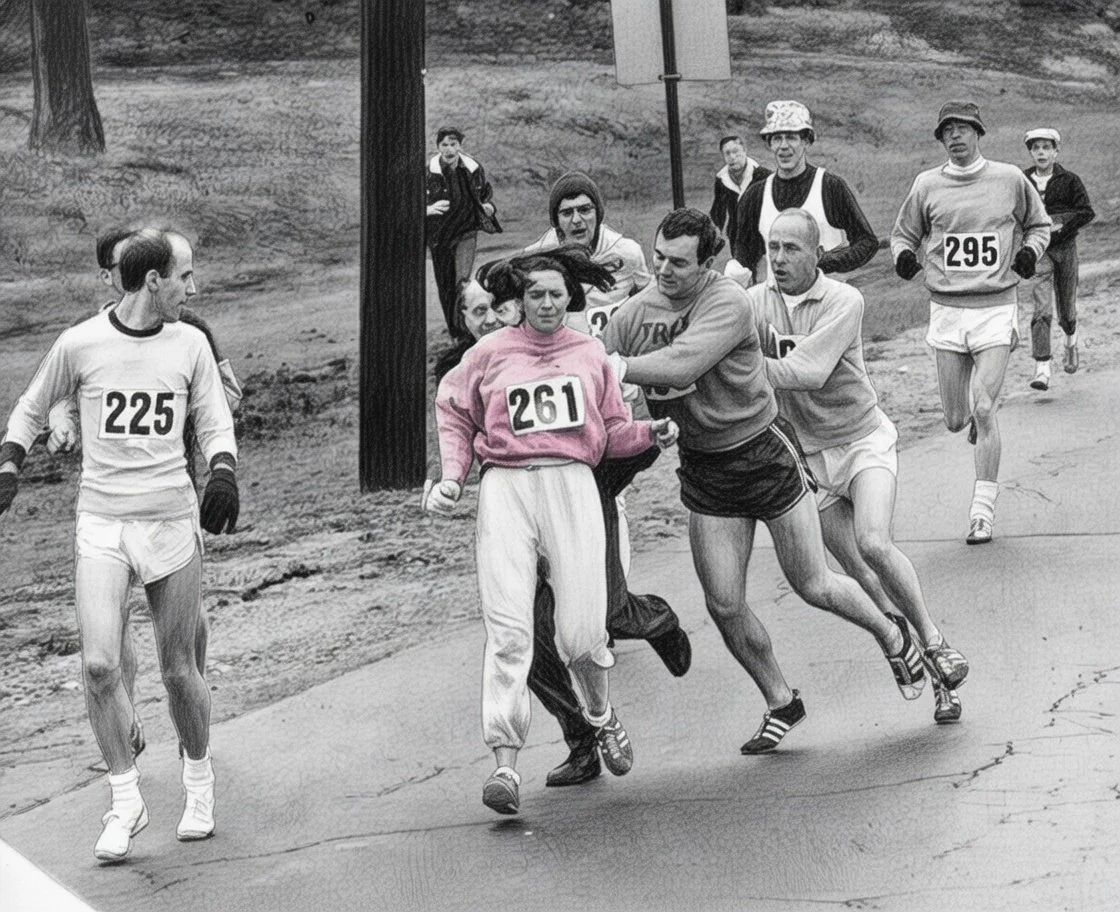
On a blustery April day in 1967, amid the historic streets of Boston, a 20-year-old Syracuse University journalism student named Kathrine Switzer laced up her sneakers and pinned bib number 261 to her sweatshirt. As the starting gun fired for the 71st Boston Marathon, Switzer became the first woman to run the race with an official entry—defying an unwritten ban on female participants enforced by the Amateur Athletic Union (AAU). Her act of rebellion, captured in iconic photographs of race official Jock Semple attempting to rip off her bib mid-race, ignited a firestorm that shattered gender barriers in endurance sports. In an era of burgeoning feminism and civil rights upheavals, Switzer's run symbolized the fight for women's inclusion, transforming marathons from male-dominated tests of grit into inclusive arenas of empowerment.
Switzer's journey to that starting line was rooted in determination and defiance. Born in 1947 in Germany to American parents and raised in Virginia, she developed a passion for running in high school, where she trained with the boys' track team despite no girls' program. At Syracuse, her coach Arnie Briggs dismissed the idea of women running marathons, citing fragility myths—women were thought incapable of distances over 1.5 miles. But after Switzer proved her mettle by completing 31-mile training runs, Briggs relented, helping her register as "K.V. Switzer" to obscure her gender. The Boston Athletic Association (BAA) accepted her entry without question, as the rules didn't explicitly prohibit women; it was an unspoken norm, reflecting 1960s societal views that women's bodies weren't suited for endurance, tied to pseudoscience and patriarchal control.
The race unfolded dramatically. Two miles in, Semple, a BAA co-director and mailman known for his gruff enforcement, spotted Switzer and charged at her, shouting, "Get the hell out of my race and give me those numbers!" He grabbed her sweatshirt, trying to eject her physically. Switzer's boyfriend, Tom Miller—a 235-pound hammer thrower—body-checked Semple away, allowing her to continue. Photographers captured the assault, images that went viral in newspapers worldwide, exposing the ugliness of gender exclusion. Switzer pressed on, enduring catcalls and skepticism, finishing in 4 hours and 20 minutes—proving women's capability amid physical and emotional adversity.
The incident's immediate fallout was intense. Semple defended his actions, claiming Switzer violated AAU rules, but public outrage mounted. Media coverage highlighted sexism in sports, aligning with the second-wave feminist movement—Betty Friedan's "The Feminine Mystique" (1963) and the National Organization for Women (1966) amplified calls for equality. Switzer faced backlash too: accused of publicity-seeking, she received death threats but also fan mail from women inspired to run. Geopolitically, in Cold War America, where women's roles were evolving amid Vietnam protests and civil rights marches, her run challenged the ideal of domestic femininity, echoing global shifts like the UN's gender equality pushes.
Switzer's defiance catalyzed change. In 1972, after lobbying by runners like Nina Kuscsik, the BAA officially welcomed women, with eight competing that year. Switzer's influence extended to the Olympics: her advocacy helped introduce the women's marathon in 1984, won by Joan Benoit. She founded the Avon International Running Circuit in 1978, hosting women's races in 27 countries, building the case for Olympic inclusion. By the 1980s, women's participation exploded—today, over half of marathon finishers are women, a direct legacy of 1967.
Culturally, Switzer reshaped American perceptions of women in sports. Her story, detailed in her 2007 memoir "Marathon Woman," inspired generations, symbolizing resilience against institutional sexism. Bib 261 became iconic—retired by the BAA in 2017, it's worn symbolically in races worldwide via her 261 Fearless foundation, promoting women's running clubs and empowerment. In a post-Title IX era (1972), her run prefigured gains in gender equity, influencing broader cultural shifts toward inclusivity amid #MeToo and women's rights debates.
Switzer returned to Boston in 2017 at age 70, finishing to cheers, honoring the 50th anniversary. Her legacy endures: inducted into the National Women's Hall of Fame in 2011, she continues advocating, reminding us that one stride can spark a revolution.
