
Euro Hoops Invasion: How European Stars Conquered the NBA
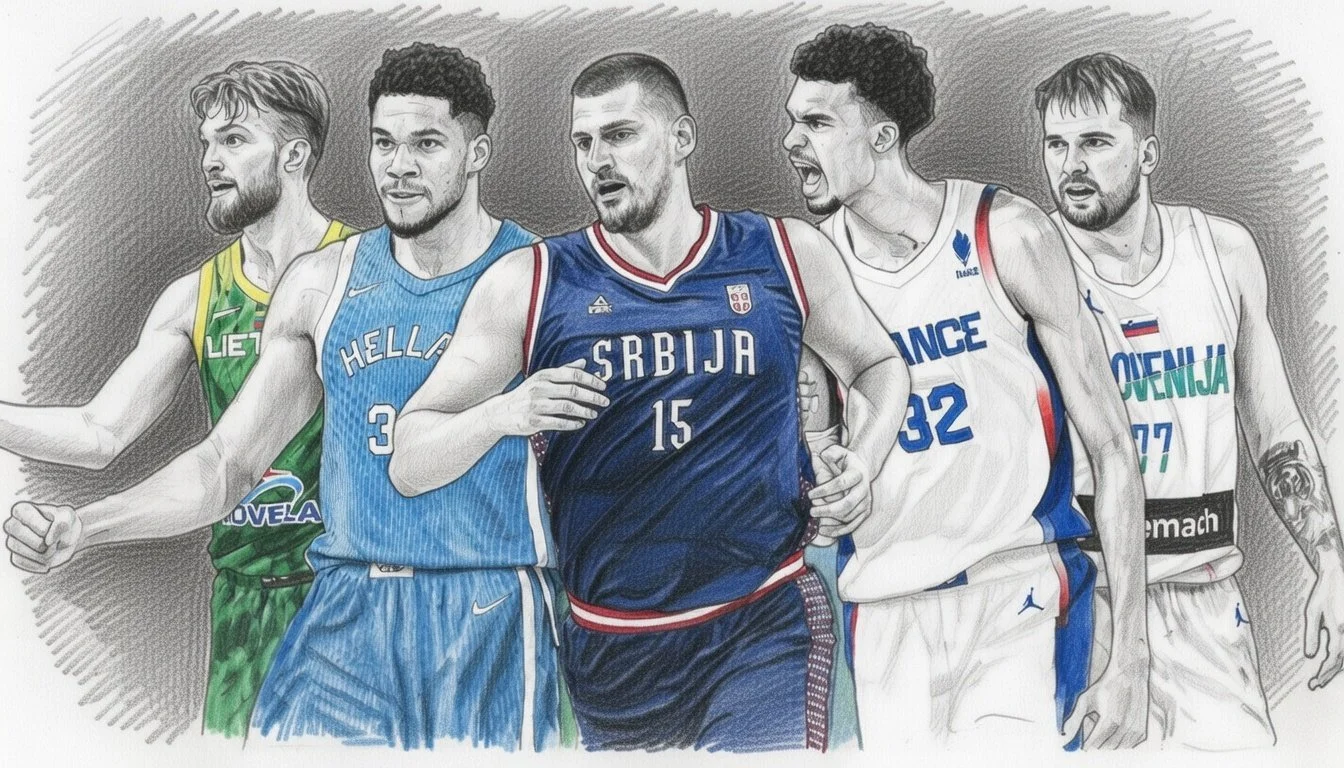
The NBA, once a quintessentially American league, has transformed into a global spectacle, with European players at the forefront of this evolution. From sparse representation in the 1970s to over 50 Europeans on rosters in the 2023-24 season, their ascent chronicles a shift driven by talent, globalization, and inspiration from icons like the 1992 Dream Team. Pioneers paved the way, but modern stars like Nikola Jokic, Luka Doncic, and Giannis Antetokounmpo have redefined excellence, influencing the game's style and expanding its reach.
European infiltration began modestly. In the late 1970s and early 1980s, players like Petur Gudmundsson from Iceland (1981) marked the first wave, but they were anomalies. The 1980s saw figures like Detlef Schrempf (Germany, 1985 draft) and Rik Smits (Netherlands, 1988), who brought size and skill but faced cultural barriers. The real surge came in the 1990s, catalyzed by the fall of the Iron Curtain and improved scouting. Drazen Petrovic (Croatia), drafted in 1986 by Portland but shining with the Nets from 1991-93, averaged 21.6 points in his final season, showcasing European flair before his tragic death in 1993. Vlade Divac (Serbia), drafted in 1989 by the Lakers, became a savvy passer, influencing the league's big-man evolution.
The 1992 Dream Team—featuring Michael Jordan, Magic Johnson, and Larry Bird—played a pivotal role. At the Barcelona Olympics, they demolished opponents by an average of 44 points, captivating global audiences. For Europeans, it was a wake-up call and inspiration. Young talents like Dirk Nowitzki (Germany) and Pau Gasol (Spain) idolized the Americans, motivating them to pursue NBA dreams. The Dream Team's dominance popularized basketball internationally, leading to a boom in European youth programs and NBA scouting. By 2000, international players rose from 23 in 1991 to 58, with Europeans comprising a growing share.
The 2000s solidified European stardom. Nowitzki, drafted ninth in 1998 by Dallas, revolutionized the power forward position with his fadeaway jumper and perimeter shooting. He led the Mavericks to the 2011 championship, earning Finals MVP and becoming the highest-scoring international player ever (31,560 points). Pau Gasol (Spain), drafted third in 2001 by Memphis but thriving with the Lakers, won two titles (2009, 2010) alongside Kobe Bryant, blending finesse with toughness. Tony Parker (France), picked 28th in 2001 by San Antonio, captured four rings (2003, 2005, 2007, 2014), his speed and craftiness earning Finals MVP in 2007. These players not only won but adapted European fundamentals—team play, shooting—to the NBA's athleticism.
The 2010s and 2020s saw Europeans dominate MVP awards. Giannis Antetokounmpo (Greece, Nigerian heritage), drafted 15th in 2013 by Milwaukee, won back-to-back MVPs (2019, 2020) and led the Bucks to the 2021 title with a 50-point Finals clincher. His "Greek Freak" athleticism blended European skill with raw power. Nikola Jokic (Serbia), a 41st pick in 2014 by Denver, claimed three MVPs (2021, 2022, 2024) and the 2023 championship, redefining the center with visionary passing. Luka Doncic (Slovenia), drafted third in 2018 by Dallas, has averaged triple-doubles, earning Rookie of the Year and multiple All-NBA nods, his step-back threes echoing Nowitzki's influence.
This rise reflects broader globalization: improved European leagues like EuroLeague honed talents, while NBA outreach via Basketball Without Borders scouted prospects. Today, Europeans like Rudy Gobert (France), four-time Defensive Player of the Year, and Domantas Sabonis (Lithuania) continue the legacy. From 10 internationals in 1984 to 120 in 2022 (27% of players), Europeans have infused the NBA with versatility, boosting its appeal amid geopolitical shifts like EU integration and migration.
The Dream Team's spark ignited a fire that European stars fanned into a blaze, making the NBA truly international.
