
Drogba's Appeal: How the Ivorian Star Helped Silence Guns During a Civil War
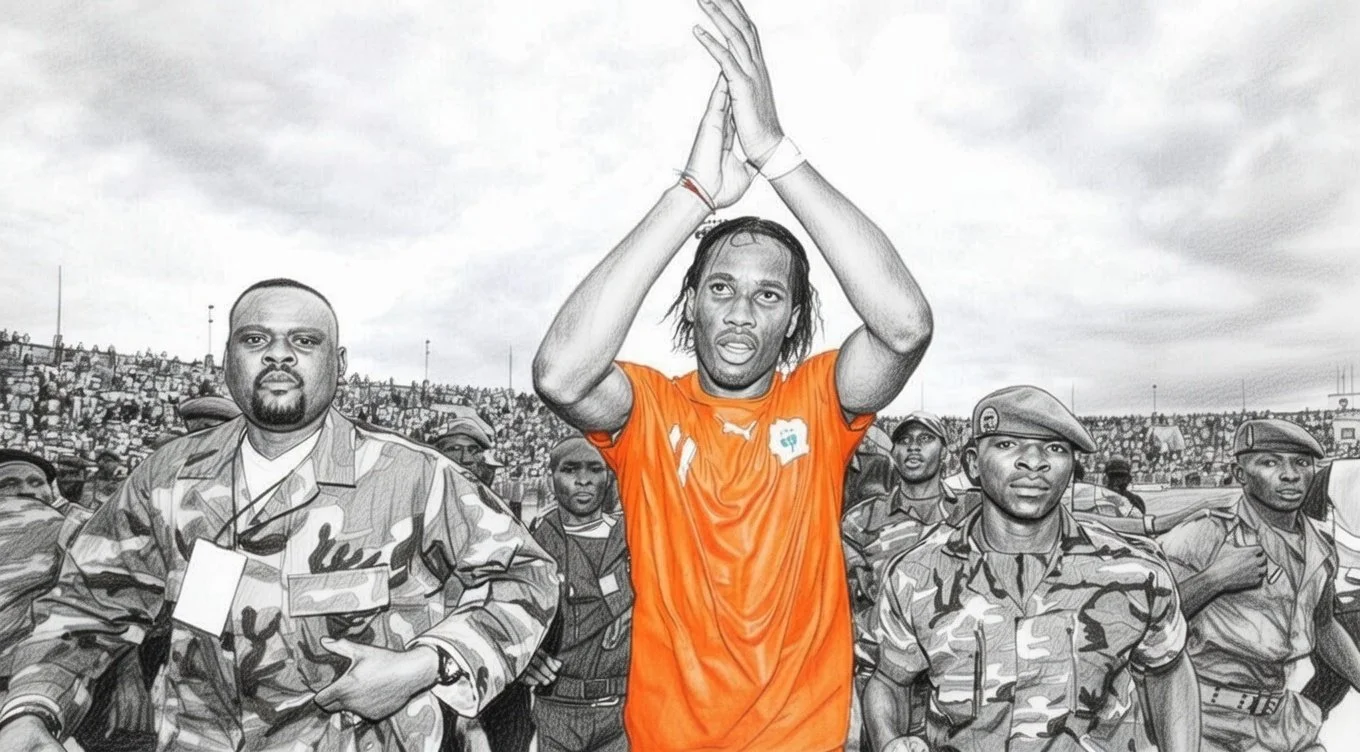
In November 2005, as Ivory Coast celebrated a dramatic 3-1 victory over Sudan in Abidjan that secured qualification for the 2006 FIFA World Cup—their first ever—millions of Ivorian eyes were fixed on their television screens. The national team, led by captain Didier Drogba, had just delivered a moment of national pride amid a brutal civil war that had torn the country apart since 2002. But it was what happened next that would etch Drogba's name into history beyond football. Standing in the stadium tunnel, surrounded by teammates, the Chelsea striker delivered an emotional plea broadcast live nationwide: "Men and women of Ivory Coast, from the north, south, center, and west... we want to tell you one thing: we want peace. We want to move forward, we want to play football in peace." The words, delivered with raw sincerity, resonated deeply in a nation fractured by ethnic, religious, and political divides. This single moment, amplified by the platform of the Africa Cup of Nations and World Cup qualification, is widely credited with helping accelerate the path to peace in a conflict that had claimed thousands of lives and displaced millions.
The Ivorian civil war erupted in September 2002 when a mutiny by northern soldiers against President Laurent Gbagbo escalated into full-scale rebellion. The north, predominantly Muslim, felt marginalized by the southern, Christian-dominated government. Rebels seized control of half the country, splitting it along a de facto border known as the "Côte d'Ivoire Line." Atrocities—massacres, forced recruitment, and ethnic cleansing—became commonplace. By 2005, the conflict had stalled in a fragile stalemate, with French peacekeeping forces in the middle. Football, however, remained one of the few unifying forces. The national team, Les Éléphants, drew players from both sides, symbolizing the possibility of coexistence.
Didier Drogba, born in Abidjan in 1978 to a middle-class family, embodied that unity. He had left Ivory Coast as a child for France, where he honed his skills before rising to stardom at Chelsea. By 2005, he was the Premier League's top scorer and a global icon. His influence extended beyond goals; as captain, he leveraged his platform to bridge divides. The 2005 plea came at a critical juncture. Days after the qualification, the Ivorian government and rebel leaders agreed to a ceasefire in December 2005, allowing the national team to play home matches in rebel-held areas for the first time in years. Drogba's words were not the sole cause—diplomatic pressure and economic exhaustion played roles—but they provided a powerful public catalyst. Rebel leaders cited the team's appeal when agreeing to disarm zones, and the match against Sudan became a symbolic turning point.
The impact deepened during the 2006 Africa Cup of Nations in Egypt. Ivory Coast reached the final, losing on penalties to hosts Egypt. The tournament's success—coupled with Drogba's leadership—further fostered national pride. Players visited both government and rebel territories, urging reconciliation. Drogba's on-field dominance (he scored crucial goals) and off-field advocacy made him a de facto peace envoy. The war formally ended in 2007 with a peace agreement, though tensions lingered until 2011's post-election crisis. Drogba's role earned him praise from UN Secretary-General Kofi Annan, who called football "more powerful than armies."
Culturally, the episode transformed perceptions of sport in conflict zones. It demonstrated how athletes could serve as unifying figures in divided societies, inspiring similar efforts elsewhere—like the 2004 Afghan cricket team's role in national healing. In Ivory Coast, Drogba became a national hero, awarded the Legion of Honor and later serving as a government advisor. His foundation focused on education and health in war-torn areas, building schools and hospitals. The plea is studied in peacebuilding courses as an example of celebrity diplomacy.
Today, Drogba's legacy endures. Statues and murals commemorate the moment in Abidjan. The 2023 Africa Cup of Nations, hosted by Ivory Coast, saw tributes to the 2006 team, with Drogba as an ambassador. His story reminds the world that in times of crisis, a simple appeal from a sports star can help silence guns and foster hope.
