
Under Their Own Banner: Why Puerto Rico Competes Independently in the Olympics
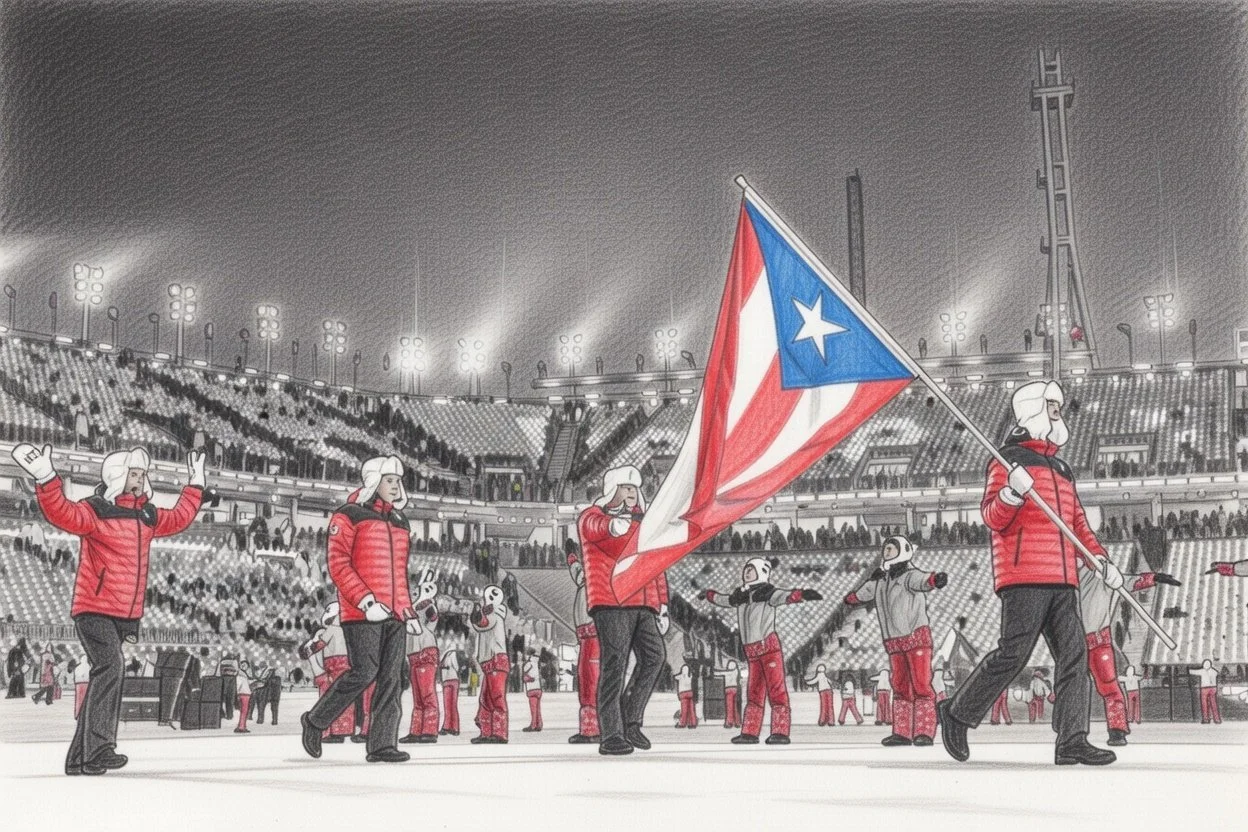
In the vibrant spectacle of the Olympic Games, where national anthems swell and flags flutter in unity and rivalry, Puerto Rico stands as a unique enigma. As a U.S. territory, its athletes could theoretically compete under the Stars and Stripes, yet since 1948, Puerto Rico has fielded its own team, marching behind the monoestrellada—the single-starred flag—and celebrating victories with the anthem "La Borinqueña." This arrangement, allowing Puerto Rico to claim 10 Olympic medals including Jasmine Camacho-Quinn's gold in the 100m hurdles at Tokyo 2020, underscores a fascinating blend of colonial history, legal status, and international sporting autonomy. Understanding why Puerto Rico competes independently requires delving into its tumultuous past as a Spanish colony turned U.S. possession, the nuances of territorial status, and the International Olympic Committee's (IOC) flexible definitions of "nationhood."
Puerto Rico's history is a saga of conquest and resilience. Originally inhabited by the Taíno indigenous people, the island—known as Borikén—was claimed by Spain in 1493 during Christopher Columbus's second voyage. Renamed San Juan Bautista, it became a key outpost in the Spanish Empire, fortified against pirates and rivals. Colonization brought devastation: the Taíno population plummeted from hundreds of thousands to near extinction due to disease, enslavement, and warfare. Spain imported African slaves to labor on sugar plantations, forging a creole culture blending Indigenous, European, and African elements. By the 19th century, reform movements stirred: the 1868 Grito de Lares revolt sought independence, though crushed, it sowed seeds of nationalism.
The pivotal shift came in 1898 amid the Spanish-American War. Sparked by the explosion of the USS Maine in Havana Harbor, the U.S. invaded Puerto Rico in July, defeating Spanish forces with minimal resistance. The Treaty of Paris that December ceded Puerto Rico, along with Guam and the Philippines, to the United States for $20 million. This marked the end of 400 years of Spanish rule and the dawn of American colonialism. Initially governed militarily, Puerto Rico transitioned to civilian rule under the Foraker Act of 1900, which established a U.S.-appointed governor and limited local autonomy. The Jones-Shafroth Act of 1917 granted U.S. citizenship to Puerto Ricans, enabling military service in World War I, but withheld full constitutional rights, including voting in presidential elections.
Nationalist fervor persisted: the 1930s saw Pedro Albizu Campos lead protests against U.S. exploitation, met with repression. Post-World War II, under Governor Luis Muñoz Marín, Puerto Rico adopted a commonwealth status in 1952—the Estado Libre Asociado—allowing a local constitution, flag, and anthem while remaining under U.S. sovereignty. This "compact" promised self-governance in internal affairs but left defense, currency, and foreign relations to Washington. Economically, it spurred growth via tax incentives, but hurricanes like Maria (2017) exposed vulnerabilities, with slow federal aid highlighting second-class status.
Being a U.S. territory entails a paradoxical existence. Puerto Rico is one of five inhabited U.S. territories (alongside Guam, U.S. Virgin Islands, American Samoa, and Northern Mariana Islands), classified as "unincorporated" by Supreme Court Insular Cases (1901-1922). This means it's "belonging to but not a part of" the U.S., affording Congress plenary power without full constitutional protections. Residents are U.S. citizens (since 1917) but cannot vote for president or have voting congressional representation—only a non-voting Resident Commissioner. They pay federal payroll taxes but not income tax on local earnings, yet receive uneven federal benefits (e.g., capped Medicaid). Militarily, Puerto Ricans serve disproportionately—over 200,000 in wars since WWI—but lack input on declarations. Economically, U.S. laws like the Jones Act mandate expensive shipping, stifling growth. Politically, status plebiscites (most recently 2020 favoring statehood) remain non-binding, fueling debates on independence, statehood, or enhanced commonwealth.
Amid this, Puerto Rico's Olympic independence shines as a beacon of sovereignty. The IOC, which governs Olympic participation, recognizes entities beyond sovereign states if they have an autonomous National Olympic Committee (NOC). Puerto Rico's Comité Olímpico de Puerto Rico (COPUR) gained IOC approval in January 1948, just before the London Games, debuting with nine athletes under a white flag bearing the coat of arms (the current flag was adopted in 1952). The IOC's charter defines a "country" flexibly as "an independent State recognised by the international community," but extends to territories with NOCs demonstrating autonomy in sports governance. Puerto Rico fits, managing its own athletic programs despite U.S. oversight in other areas. This mirrors arrangements for Hong Kong (under China), Guam (U.S. territory), and others. The U.S. Olympic & Paralympic Committee (USOPC) does not claim jurisdiction over Puerto Rico, allowing dual pathways: athletes can choose to represent Puerto Rico or the U.S., though most opt for the former due to cultural ties.
This setup fosters national pride: Puerto Rico's flag and anthem at medal ceremonies affirm identity amid territorial constraints. Boxer Juan Evangelista Venegas's 1948 bronze was the first; recent golds like Monica Puig's 2016 tennis triumph electrify the island. Even in statehood scenarios, precedents like Hong Kong suggest continued independence.
Puerto Rico's Olympic story encapsulates its resilient spirit—a territory competing as a nation, much like Bad Bunny's music asserts cultural sovereignty in a globalized world.
