
Sochi’s Shadow: How Putin’s $51 Billion Vanity Olympics Directly Fueled the Road to War in Ukraine
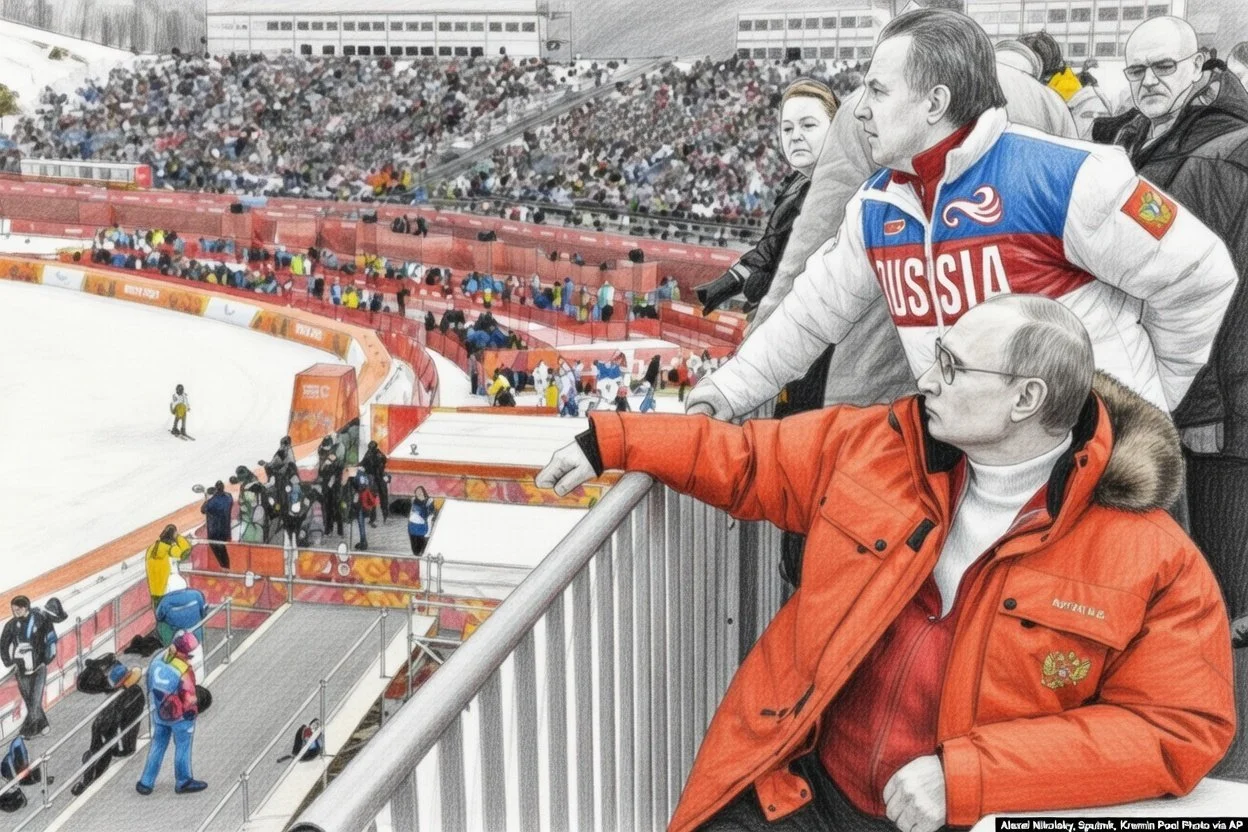
When the flame was extinguished in Sochi on February 23, 2014, the world saw a glittering Russia — modern, powerful, and back on the global stage. What the world didn’t see was that the closing ceremony marked the beginning of the end of the post-Cold War order in Europe. Less than 48 hours later, unmarked Russian troops began seizing Crimea. The $51 billion (some estimates say $55 billion) Winter Olympics — the most expensive in history — was not just a sporting event. It was a dress rehearsal, a propaganda triumph, and a psychological turning point that made the invasion of Ukraine not only possible, but almost inevitable.
The Most Expensive Games Ever — and Why They Mattered
Vladimir Putin personally micromanaged Sochi. He turned a subtropical Black Sea resort into a winter wonderland at enormous cost. The official budget ballooned from $12 billion to over $50 billion, with much of it siphoned through corruption. Entire highways, railways, and hotels were built from scratch. The Games were meant to be Putin’s coming-out party: proof that Russia had recovered from the chaotic 1990s and was once again a great power.
The timing was no coincidence.
The Maidan Revolution in Kyiv had been building since November 2013. On February 22, 2014 — the day before the Sochi closing ceremony — Ukrainian President Viktor Yanukovych fled to Russia after deadly clashes in Kyiv. While the world was still watching figure skating and hockey, Russian special forces were already moving into Crimea. The annexation was formally completed on March 18, just three weeks after the Olympic flame went out.
Sochi as Psychological Preparation
The Olympics gave Putin something priceless: a massive surge in domestic popularity. His approval rating climbed above 80% during the Games. Russians saw their leader hosting the world while projecting strength and modernity. This wave of nationalist euphoria created the perfect political cover for the Crimea operation. Putin understood that the Russian public, freshly intoxicated by Olympic success, would support bold action to “protect Russian speakers” in Ukraine.
The Games also served as a strategic smokescreen. While international leaders and media were focused on Sochi, Russia quietly repositioned troops and prepared the hybrid warfare playbook that would later be used in Donbas and, on a much larger scale, in 2022.
Did the $51 Billion Spending Weaken Russia’s Military?
This is the question many asked after 2022: Did the extravagant Olympics drain resources that could have gone to the military, leaving Russia less prepared for a long war?
The answer is nuanced — but ultimately no.
Russia’s defense budget actually increased sharply after 2014. From roughly $69 billion in 2014, it rose to $84 billion in 2015 as the Kremlin began a major military modernization program. The money for Sochi came largely from state corporations, oligarchs, and redirected infrastructure funds — not directly from the defense ministry’s core budget.
In fact, the Sochi experience may have strengthened Russia’s hybrid capabilities. The massive security operation (costing nearly $2 billion) tested crowd control, cyber defense, and rapid deployment — skills that were later used in Crimea. The event also gave the FSB and military intelligence valuable experience in managing large-scale international events under political pressure.
Where Sochi did hurt Russia was economically and diplomatically. The corruption and waste contributed to the 2014–2016 recession when oil prices collapsed. Western sanctions imposed after Crimea further isolated Russia, forcing it to pivot toward China and deepen its authoritarian model.
The Cultural and Psychological Legacy
The Sochi Games were the last time Putin was widely seen as a modern, successful leader on the global stage. After the Olympics, the mask came off. The invasion of Ukraine in 2022 was, in many ways, the logical continuation of the same nationalist, revanchist project that Sochi was meant to celebrate.
For many Russians, the memory of Sochi remains bittersweet. It was a moment of genuine national pride — the first time since the Soviet era that Russia hosted and dominated a major global event. But that pride was quickly weaponized into justification for war.
The Broader Pattern
Sochi fits a disturbing pattern of authoritarian regimes using the Olympics as a prelude to aggression:
2008 Beijing Olympics → Russia invaded Georgia during the closing ceremony.
2014 Sochi → Russia annexed Crimea days after the closing ceremony.
2022 Beijing Winter Olympics → Russia launched the full-scale invasion of Ukraine four days after the closing ceremony.
The Olympics give authoritarian leaders a temporary shield of international legitimacy and domestic euphoria — a window they have repeatedly exploited.
Final Reflection
The $51 billion Sochi Games were never really about winter sports. They were about projecting power, manufacturing consent, and creating the psychological conditions for territorial expansion. The fact that the most expensive Olympics in history were immediately followed by the first major European land grab since World War II is not a coincidence — it is the logical outcome of a regime that uses spectacle as strategy.
The real cost of Sochi wasn’t just the money. It was the illusion it created — that Russia could be both respected and feared, modern and imperial. That illusion died in the snows of Bakhmut and the ruins of Mariupol.
The Sochi Olympics didn’t weaken Russia’s military. They strengthened its willingness to use it.
