
The Özil Affair: Unmasking Racial Tensions in Germany's National Team
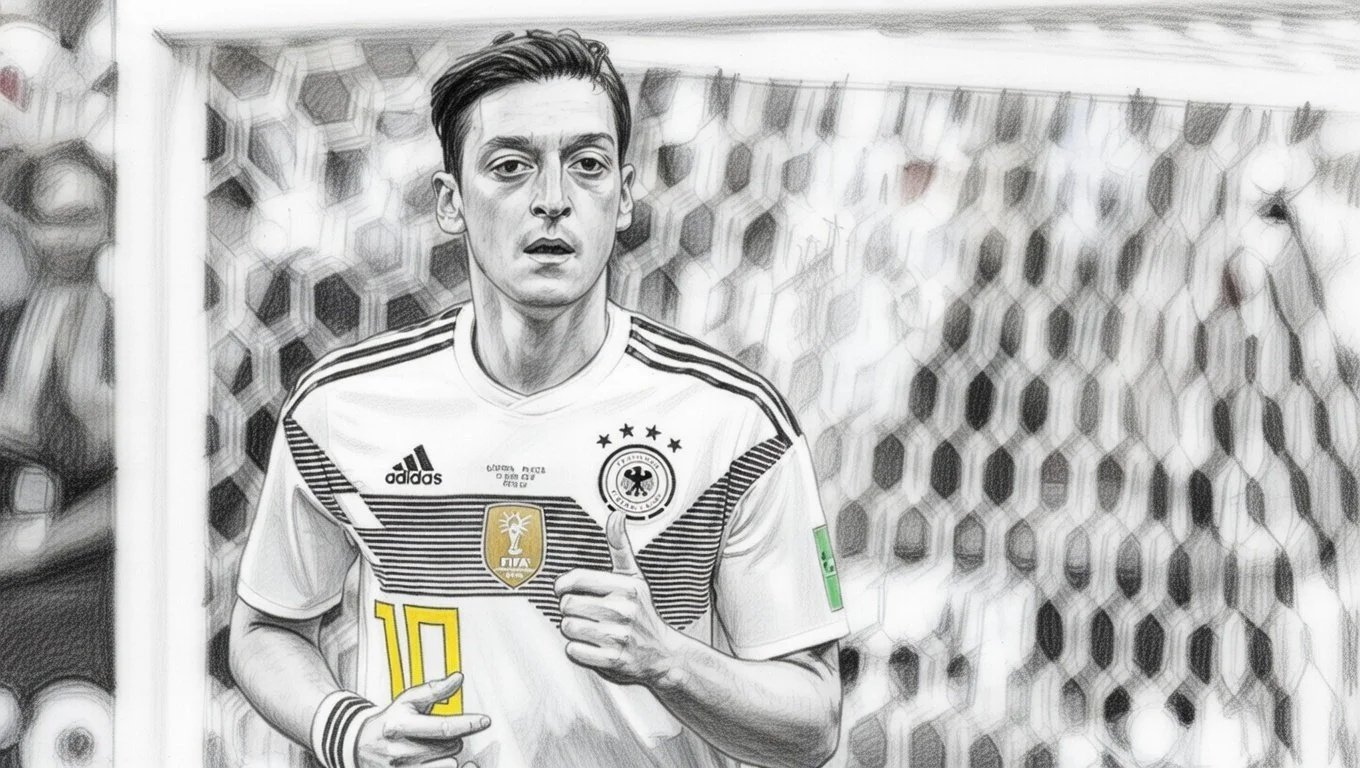
In July 2018, as the dust settled on Germany's humiliating group-stage exit from the World Cup in Russia—their worst performance in 80 years—Mesut Özil, the team's creative heartbeat, dropped a bombshell. In a searing three-part statement on social media, the Arsenal midfielder announced his retirement from international duty at age 29, citing "racism and disrespect" from fans, media, and the German Football Association (DFB). "I am German when we win, but I am an immigrant when we lose," he wrote, encapsulating the identity crisis plaguing players of immigrant descent. Özil's exit ignited a firestorm, exposing deep-seated racial tensions within Die Mannschaft, Germany's national team, and reflecting broader societal struggles in a nation grappling with its multicultural reality amid a history shadowed by Nazism.
Germany's national team, once a symbol of post-war unity, has long mirrored the country's demographic shifts. Post-WWII reconstruction brought waves of "guest workers" from Turkey, Italy, and elsewhere in the 1950s-70s, followed by refugees from the Balkans in the 1990s and Middle East in the 2010s. Football, as the nation's passion, became a battleground for integration. In the 1980s and 1990s, violent racism marred the sport: Black players endured monkey chants and assaults, while Nazi sympathizers infiltrated fan groups. The DFB struggled to address this, with incidents like the 1992 attack on a Black referee highlighting systemic issues. As diverse players rose—think Lothar Matthäus's era blending German-born with immigrants—the team achieved successes like the 1990 World Cup, but underlying prejudices festered.
Enter Mesut Özil, born in 1988 in Gelsenkirchen to Turkish parents. A product of Germany's youth system, he debuted for the senior team in 2009, contributing to the 2014 World Cup triumph with his visionary passing and 23 goals in 92 caps. Yet, his Turkish heritage made him a lightning rod. The controversy peaked in May 2018 when Özil and teammate Ilkay Gündoğan (also Turkish-German) posed for photos with Turkish President Recep Tayyip Erdogan during a London event. Amid Erdogan's authoritarian reputation and Germany's large Turkish diaspora (over 3 million), the images sparked outrage. Fans booed Özil during warm-ups, politicians like Angela Merkel's allies called it "unpatriotic," and DFB president Reinhard Grindel accused them of being manipulated. Özil defended it as respect for his roots, but the backlash intensified after Germany's World Cup flop, where he was scapegoated despite subpar team play.
Özil's statement detailed personal attacks: death threats, hate mail, and media portrayals as "the German-Turk." He accused Grindel of racism, referencing the DFB chief's past comments on multiculturalism as a "myth." The resignation divided Germany: supporters hailed it as exposing hypocrisy, while critics dismissed it as deflection from poor form. Chancellor Merkel praised Özil's contributions, but the episode highlighted "two-hearted" accusations often leveled at dual nationals. Similar struggles afflicted others: Jerome Boateng (Ghanaian father) faced 2016 calls from far-right politician Alexander Gauland to "send him back," prompting public outcry. Sami Khedira (Tunisian roots) and others navigated identity politics, with the team reflecting Germany's AfD-fueled anti-immigrant sentiments.
The impact on team culture was seismic. Post-2018, Germany's form slumped: early Euro 2020 exit, another World Cup group failure in 2022. Racial tensions eroded unity; a 2024 ARD poll asking if the team needed "more white players" drew condemnation from coach Julian Nagelsmann as "racist," with 21% agreeing amid debates on Leitkultur (leading culture). Yet, it spurred progress: the DFB launched anti-racism campaigns, diversified staff, and emphasized inclusion. Players like Antonio Rüdiger (Sierra Leonean heritage) and Jamal Musiala (Nigerian-English) now thrive, but incidents persist, like monkey chants against Black players in club games.
Culturally, the struggles resonate in media and memory. Özil's saga inspired documentaries like "The Özil Case" (2020), exploring racism in sport, and books on multiculturalism. Films like "Die Mannschaft" (2014) celebrate diversity, but controversies keep the dialogue alive. Annual anti-racism matches and UEFA's "No to Racism" initiatives trace roots to such flashpoints. In a globalized world, Germany's team embodies integration's pains: from Nazi-era exclusion of Jewish players to today's diverse squads, it's a microcosm of societal evolution.
Today, as Germany prepares for Euro 2028, Özil's legacy lingers—a reminder that talent transcends borders, but acceptance lags. The national team's racial struggles, amplified by his stand, push for a more inclusive future, ensuring the pitch reflects the nation's true colors.
