
Magic's Revelation: The 1991 HIV Announcement That Transformed Sports and Society
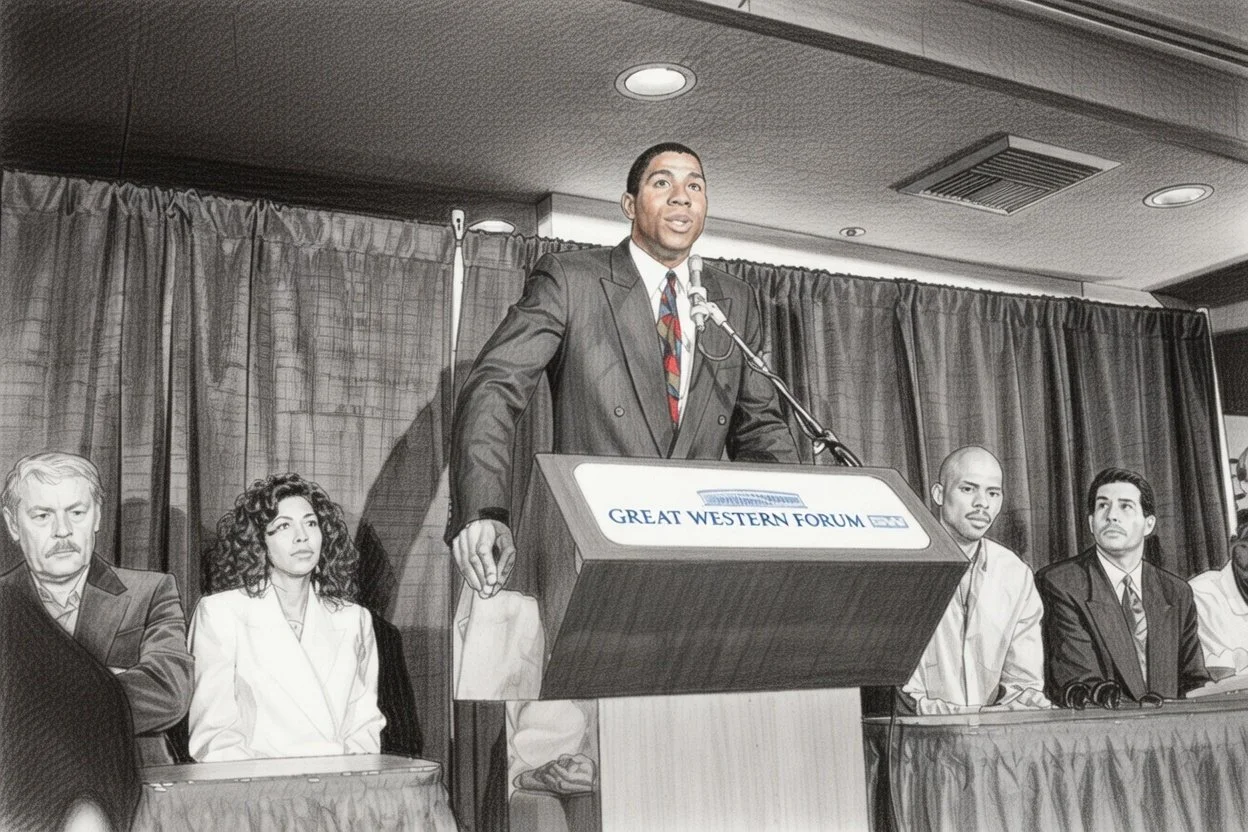
On November 7, 1991, the world of sports—and indeed, American society—stood still as Earvin "Magic" Johnson, the charismatic Los Angeles Lakers point guard, stepped to a podium in Inglewood, California. Flanked by his wife Cookie and NBA Commissioner David Stern, Johnson announced he had tested positive for HIV, the virus that causes AIDS, and was retiring immediately from professional basketball. "Because of the HIV virus I have obtained, I will have to retire from the Lakers today," he said, his voice steady but the room heavy with shock. This wasn't just a career-ending injury; it was a cultural bombshell that pierced the veil of invincibility surrounding athletes and forced a reckoning with the AIDS crisis ravaging the nation.
The early 1990s were the peak of the AIDS panic in America. First identified in 1981, the epidemic had claimed over 100,000 lives by 1991, disproportionately affecting gay men, intravenous drug users, and communities of color. Stigma ran rampant: misinformation fueled fears of casual transmission through sweat, saliva, or shared spaces. Politicians like Senator Jesse Helms decried it as a "gay plague," while President Ronald Reagan's administration delayed action, only mentioning AIDS publicly in 1985. By 1991, under George H.W. Bush, funding increased, but public hysteria persisted—schools banned HIV-positive children, and celebrities like Rock Hudson's 1985 diagnosis had begun to humanize the issue, yet the terror lingered. Johnson's revelation, as a heterosexual, married superstar with no history of drug use, shattered the myth that AIDS was confined to "others."
Society's reaction was immediate and visceral. The press conference aired live on national TV, halting stock markets and emptying offices as millions tuned in. Fans wept; Lakers teammates like Kareem Abdul-Jabbar expressed disbelief. Media outlets splashed headlines like "Magic Has HIV" across front pages, blending sympathy with sensationalism. In the sports world, panic ensued: rumors swirled about transmission via on-court contact, leading to calls for mandatory testing. Players like Karl Malone voiced fears, saying they'd refuse to play against infected opponents. The NBA responded by educating teams, but the announcement exposed underlying prejudices—Johnson admitted to promiscuity with women, prompting slut-shaming and racial undertones, as a Black man in a white-dominated sport.
Yet, Johnson's poise turned fear into education. He pledged to become a spokesman, declaring, "I plan to go on living for a long time." This shifted narratives: studies later showed a spike in HIV testing—up 20-30% in some areas—and public opinion polls indicated increased support for AIDS funding. His disclosure humanized the virus, reducing stigma by associating it with a beloved icon. In Black communities, where AIDS rates were rising, Johnson's message promoted condom use and testing, countering denial.
The impact on sports was profound. Johnson's retirement—at age 32, after five championships and three MVPs—highlighted athletes' vulnerability, prompting leagues to implement health protocols. The NBA introduced blood-borne pathogen policies, and his 1992 Dream Team participation (despite controversy) normalized HIV in elite competition. Culturally, it bridged sports and social issues: Johnson's Magic Johnson Foundation, launched in 1991, raised millions for HIV education, urban development, and minority businesses. His story inspired films like "And the Band Played On" and influenced celebrities like Arthur Ashe, who revealed his AIDS diagnosis in 1992.
In broader American culture, the announcement accelerated AIDS awareness amid geopolitical shifts. The Cold War's end diverted attention to domestic crises, and Johnson's advocacy aligned with Clinton's 1992 election, boosting federal funding. It challenged machismo in sports, promoting vulnerability and health discussions. Yet, disparities persist: today, HIV affects Black and Latino communities disproportionately, echoing 1991's inequities.
Johnson's legacy endures. Defying odds, he returned briefly in 1996, thriving on antiretrovirals. Now 66, he's a billionaire entrepreneur, proving HIV isn't a death sentence. His announcement didn't end the crisis but ignited hope, transforming panic into progress.
