
How President Trump's Venezuela Strategy Mirrors OKC's Dynasty-Building Blueprint
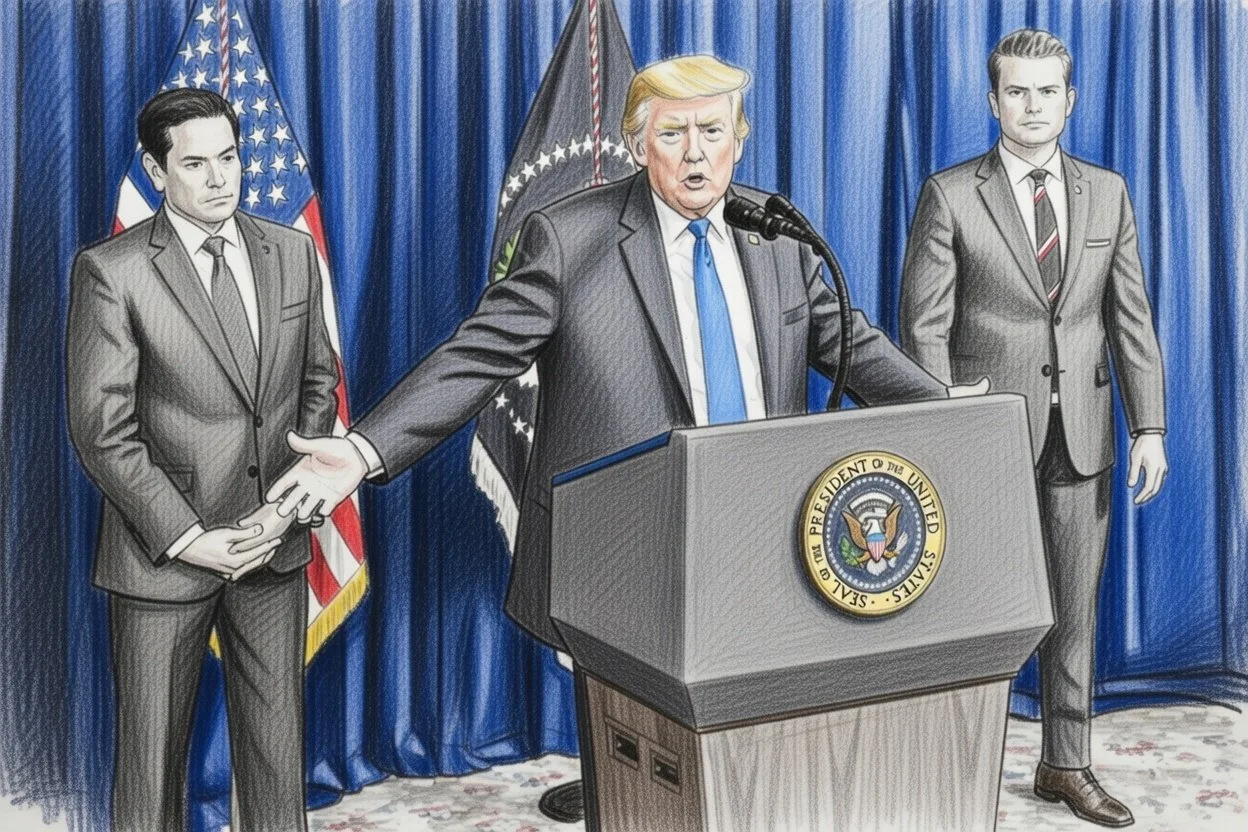
In the high-stakes arena of global geopolitics, President Donald Trump's decisive move against Venezuelan leader Nicolás Maduro on January 3, 2026, wasn't just a bold foreign policy strike—it was a calculated asset grab reminiscent of a savvy NBA general manager stockpiling draft picks. U.S. forces, in a daring operation dubbed "Absolute Resolve," breached Maduro's fortified compound in Caracas, capturing the embattled president and his wife, Cilia Flores, amid explosions and drone surveillance. Now in U.S. custody, Maduro faces charges of narcoterrorism and corruption, with a $50 million bounty claimed. But beyond justice, this action unlocks Venezuela's crown jewel: the world's largest proven oil reserves, estimated at over 300 billion barrels. Trump's administration is positioning American energy giants to revitalize Venezuela's crumbling oil sector, drawing parallels to how the Oklahoma City Thunder amassed talent through shrewd trades and drafts to forge a perennial contender. Just as OKC parlayed superstars into a treasure trove of future assets, the U.S. is leveraging regime change to "draft" oil fields, refineries, and export revenues, reshaping energy geopolitics in a post-sanctions era.
Venezuela's oil saga under Maduro was a tale of decay amid ideological rigidity. Once a petrostate powerhouse, producing over 3 million barrels per day in the 1990s, output plummeted to under 800,000 by 2025 due to mismanagement, corruption, and U.S. sanctions imposed since 2017. Maduro's regime nationalized assets, alienated foreign investors, and relied on allies like Russia and Iran for survival, turning PDVSA—the state oil company—into a shadow of its former self. Trump's first term ramped up pressure, recognizing opposition leader Juan Guaidó in 2019 and seizing Venezuelan assets like Citgo, PDVSA's U.S. subsidiary, to starve Maduro's coffers. The 2026 capture accelerates this strategy: Trump has urged U.S. oil firms to invest billions in rebuilding infrastructure, promising military protection and control over revenues to ensure compliance. In a White House meeting with executives from Chevron, ExxonMobil, and others, Trump touted a $100 billion infusion, framing it as a "win-win" for energy security and economic dominance. Venezuela has already pledged 30-50 million barrels to the U.S. as a goodwill gesture, signaling a shift from adversarial isolation to asset integration.
This asset collection echoes the Oklahoma City Thunder's masterful rebuild. Founded as the Seattle SuperSonics in 1967 and relocated in 2008, OKC's dynasty blueprint began with high draft picks in the late 2000s. Selecting Kevin Durant (No. 2, 2007), Russell Westbrook (No. 4, 2008), and James Harden (No. 3, 2009) formed a core that reached the 2012 NBA Finals. But when contracts ballooned, GM Sam Presti traded stars for future assets: Harden to Houston in 2012 for picks and players, Durant to Golden State in 2016 (yielding indirect assets), and Westbrook to Houston in 2019 for more capital. This "asset hoarding" peaked in the 2020s: trading Paul George for Shai Gilgeous-Alexander and five first-rounders, then flipping Chris Paul for additional picks. By 2024, OKC held over 15 first-round selections through 2030, drafting Chet Holmgren (2022), Jalen Williams (2022), and Cason Wallace (2023), blending youth with veterans to contend without cap-crippling deals. Presti's philosophy—patience, calculated risks, and long-term vision—turned a small-market team into a powerhouse, emphasizing sustainable growth over quick fixes.
Trump's Venezuela playbook mirrors this: sanctions as "tanking" to weaken Maduro's regime, the capture as a blockbuster "trade" removing the obstacle, and post-capture investments as "drafting" untapped reserves. Just as OKC accumulated picks by offloading assets at peak value, the U.S. has "traded" diplomatic pressure and military might for control over PDVSA's fields in the Orinoco Belt, potentially boosting global supply by 2-3 million barrels daily within years. This reduces reliance on OPEC+ adversaries like Russia and Saudi Arabia, echoing how OKC diversified its roster to avoid overdependence on one star. Geopolitically, it's a Reagan-esque power play: asserting U.S. hegemony in the Western Hemisphere amid China's Belt and Road encroachments in Latin America. Trump's rhetoric—"We're taking the oil"—parallels Presti's asset-maximizing mindset, prioritizing strategic acquisitions over immediate wins.
Yet, challenges abound. Reviving Venezuela's "rotting" industry requires $20-50 billion in initial investments for rigs, pipelines, and skilled labor, deterred by political instability and legal hurdles. International experts decry the abduction as illegal, risking backlash from allies like Brazil and Mexico. Domestically, Venezuelan immigrants celebrate Maduro's fall but fear Trump's deportation policies. In sports terms, it's like OKC's rebuild: high-risk trades can backfire if young talent underperforms or injuries strike, as seen in Holmgren's 2022-23 absence. Trump's gamble could flood markets, lowering prices and boosting U.S. exports, but environmental concerns—Venezuela's heavy crude is carbon-intensive—and human rights issues loom.
Culturally, this fusion of politics and sports underscores America's asset-driven ethos. In a nation where NBA dynasties inspire business strategies, Trump's moves reflect a cultural shift toward "winning" through accumulation, from Wall Street mergers to energy dominance. As OKC eyes championships with its pick hoard, the U.S. positions for energy independence, potentially reshaping global alliances. Maduro's capture isn't just a takedown—it's a draft-day steal, turning geopolitical foes into economic assets.
