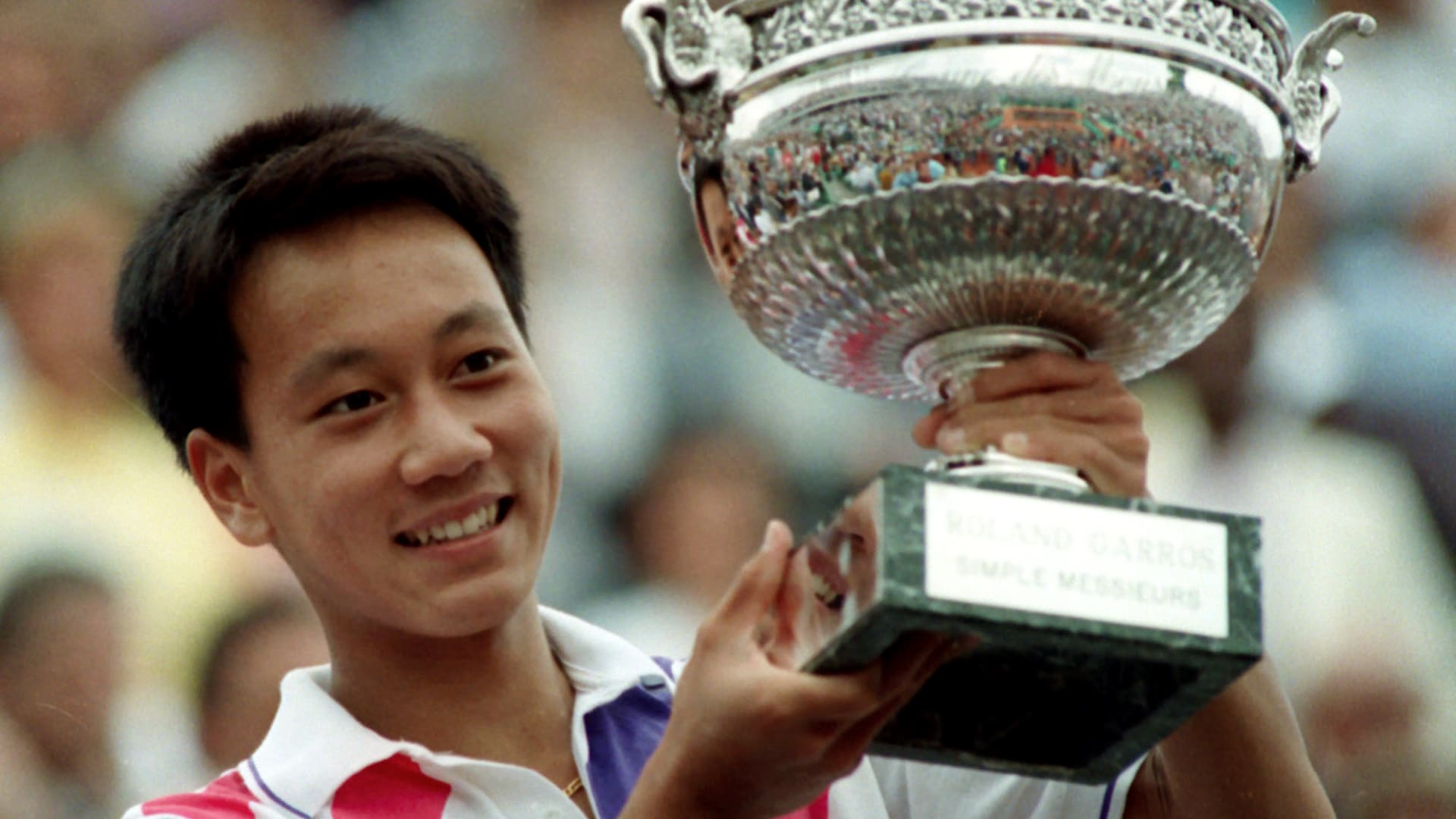
Michael Chang's 1989 French Open Triumph: Victory Amid Tiananmen Shadows and a Legacy for Asian Identity
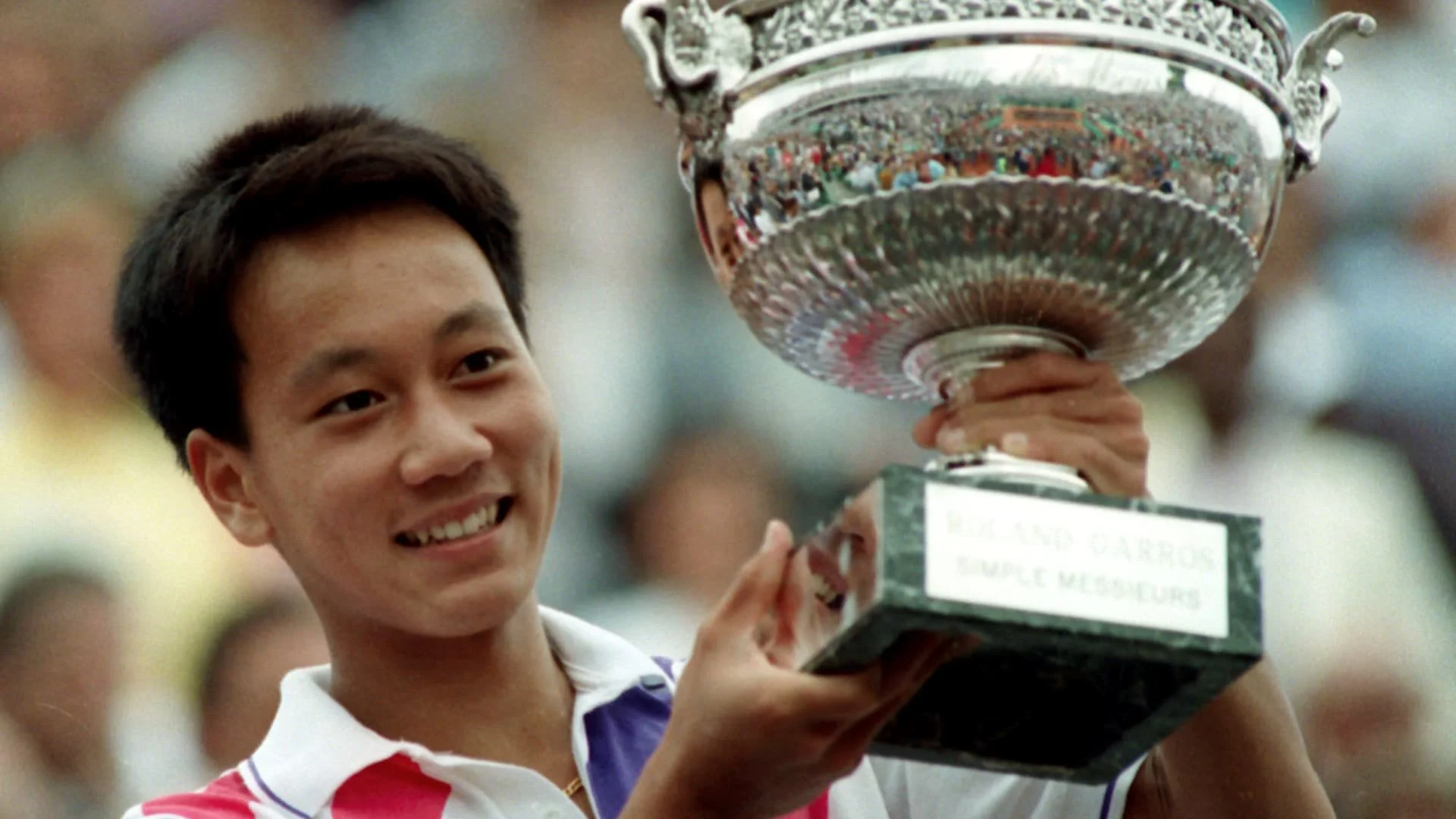
In the spring of 1989, as tanks rolled into Beijing's Tiananmen Square to crush a burgeoning pro-democracy movement, a 17-year-old American teenager of Chinese descent was etching his name into tennis history on the red clay of Roland Garros. Michael Chang's improbable victory at the French Open that year not only made him the youngest male Grand Slam champion ever—a record that stands to this day—but also unfolded against the backdrop of one of the 20th century's most poignant political upheavals. Chang's win, achieved through sheer grit, tactical brilliance, and spiritual resolve, transcended sports. It challenged stereotypes about Asian-Americans, inspired a generation, and resonated deeply within Asian cultures, symbolizing resilience in the face of adversity. This article delves into Chang's historic run, the simultaneous Tiananmen protests, and his enduring influence on perceptions of Asian-Americans and broader Asian heritage.
Born on February 22, 1972, in Hoboken, New Jersey, to Taiwanese immigrants Joseph and Betty Chang, Michael grew up in a devout Christian household in Encinitas, California. His parents, both chemists who had fled political turmoil in China and Taiwan, instilled a strong work ethic and faith in their sons—Michael and his older brother Carl. Tennis entered Michael's life at age six, coached by his father on public courts. By his teens, he was a prodigy, winning national junior titles and turning pro at 15. In 1988, as a 16-year-old, he reached the third round at Roland Garros, signaling his potential on clay—a surface that demands endurance and strategy over raw power.
The 1989 French Open, held from May 29 to June 11, was Chang's stage for immortality. Seeded 15th, the 5-foot-9 underdog navigated a treacherous draw. Early rounds were straightforward: victories over Eduardo Masso, Patrick Baur, and Francisco Roig. But the round of 16 pitted him against world No. 1 Ivan Lendl, a three-time French Open champion known for his baseline dominance. Down two sets and cramping severely in the fourth, Chang resorted to unorthodox tactics. He famously served underhand to disrupt Lendl's rhythm, a move that stunned the crowd and commentators. "I was just trying to survive," Chang later recalled. He won 4-6, 4-6, 6-3, 6-3, 6-3 in a four-hour epic, battling dehydration and physical agony. This match, often hailed as one of tennis's greatest upsets, propelled him forward.
In the quarterfinals, Chang dispatched Ronald Agénor 6-4, 2-6, 6-4, 7-6(5), and in the semis, he outlasted Andrei Chesnokov 6-1, 5-7, 7-6(4), 7-5. The final against third-seeded Stefan Edberg, a serve-and-volley maestro, was a five-set thriller. Chang surged to a 6-1 first set, but Edberg fought back to take the next two. Drawing on inner strength, Chang rallied for 6-4, 6-2 in the deciders, clinching the title at 17 years and 109 days old—the youngest man to win a major, a record unbroken despite precocious talents like Boris Becker and Mats Wilander coming close. His victory speech thanked God, a nod to his faith that permeated his journey.
This triumph coincided precisely with the Tiananmen Square protests, a student-led movement for democracy that gripped China from April 15 to June 4, 1989. Sparked by the death of reformist leader Hu Yaobang, demonstrations swelled to over a million participants in Beijing, demanding political reforms, free speech, and an end to corruption. By late May, as Chang began his French Open campaign, the Chinese government declared martial law. Protesters occupied Tiananmen Square, erecting a Goddess of Democracy statue. On June 3-4, just a week before Chang's final, the People's Liberation Army cracked down violently, killing hundreds (estimates range from 241 to thousands) and injuring thousands more in what became known as the Tiananmen Massacre. The world watched in horror as tanks advanced and the "Tank Man" image symbolized defiance.
For Chang, whose grandparents had fled China during the Communist Revolution, the events were deeply personal. He followed the news avidly during the tournament, praying for the protesters between matches. In post-win interviews, he dedicated his victory to the Chinese people, stating, "I pray for those people in China who are fighting for freedom." His underarm serve against Lendl, he later revealed, was inspired by a divine intuition amid the global turmoil. The win became a beacon of hope for democracy advocates, with Chang's perseverance mirroring the protesters' resolve. "It was more than tennis," he reflected years later; it was a statement against oppression.
Chang's achievement profoundly influenced perceptions of Asian-Americans. In 1989, Asian-Americans were often stereotyped as studious, unathletic "model minorities"—quiet overachievers in academia, not sports heroes. Chang shattered this mold. As the first Asian-American to win a Grand Slam, he proved Asians could excel in a physically demanding, individualistic sport like tennis, dominated by Western players. His success challenged the "perpetual foreigner" trope, affirming Asian-Americans as integral to the U.S. narrative. Media coverage highlighted his all-American upbringing alongside his heritage, fostering pride in the community. For young Asian-Americans, Chang became a role model, inspiring pursuits in sports beyond traditional paths. Figures like Jeremy Lin later cited him as an influence, noting how Chang's visibility normalized Asian faces in athletics.
His impact extended to broader Asian culture, sparking a tennis boom across Asia. In China and Taiwan, where tennis was niche, Chang's win—amid Tiananmen's symbolism—ignited interest. He became a cultural ambassador, visiting Asia to promote the sport and his faith. As a coach, he mentored Kei Nishikori, helping the Japanese star reach the 2014 U.S. Open final and elevating Asian tennis globally. In Asia, Chang represented hybrid identity: American success rooted in Asian values like discipline and humility. His evangelical Christianity added layers, influencing Asian Christian communities by blending faith with achievement. Culturally, he appeared in media, from documentaries to books, symbolizing overcoming odds—much like the underarm serve became a metaphor for ingenuity in Asian folklore.
Post-1989, Chang's career flourished: 34 ATP titles, a career-high No. 2 ranking, and induction into the International Tennis Hall of Fame in 2008. He founded the Chang Family Foundation, supporting youth tennis and Christian causes. Yet, his 1989 win remains iconic, intertwined with Tiananmen as a tale of personal triumph amid global tragedy.
Michael Chang's 1989 French Open victory was more than a sporting milestone; it was a cultural watershed. By winning amid Tiananmen's darkness, he illuminated paths for Asian-Americans, challenging biases and fostering pride. His legacy endures, proving that one teenager's resolve can echo across continents and generations.