
Forget K-Pop: Why K-Fencing Is the Most Fascinating Story to Come Out of the Korean Peninsula
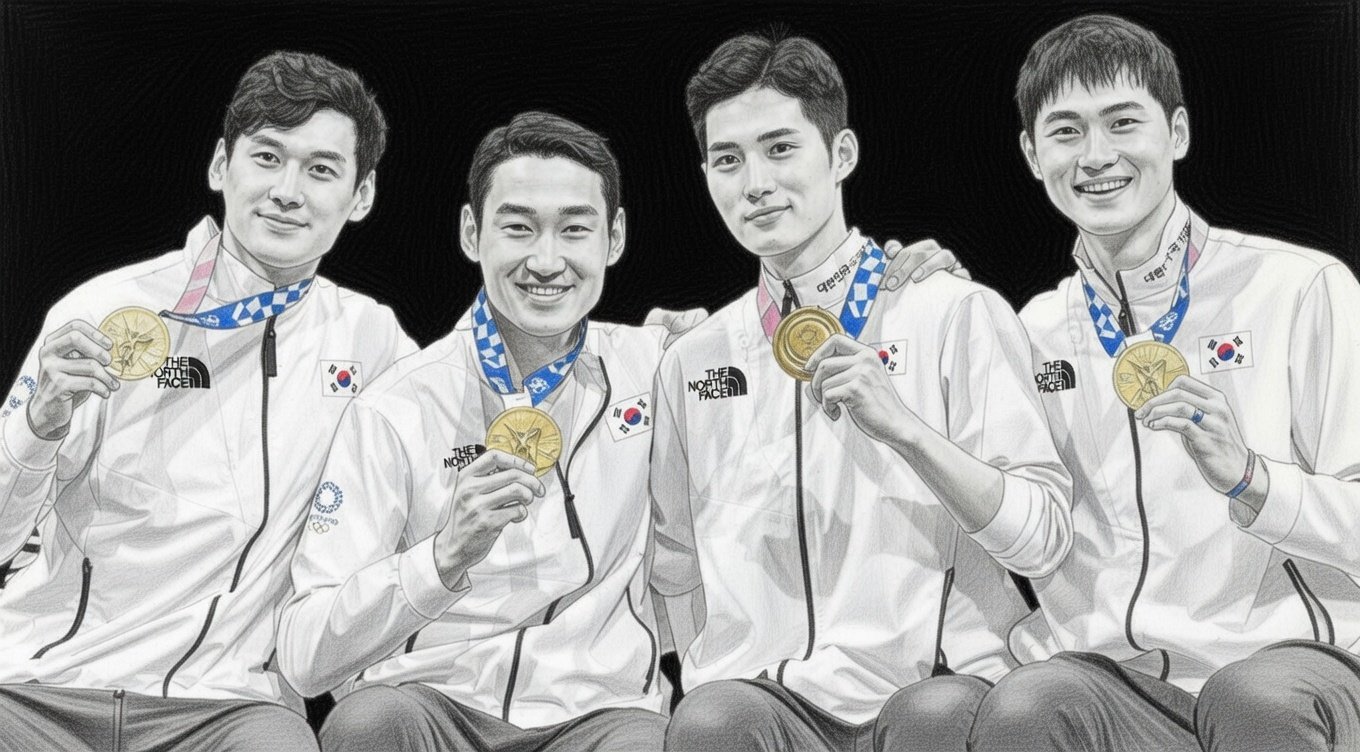
Imagine a gleaming arena in Paris during the 2024 Summer Olympics, where the clink of sabres echoes like revolutionary drums, and a team of South Korean fencers—poised, precise, and unyielding—sweeps the podium in men's team sabre, claiming their third consecutive gold with a commanding 45-41 victory over Hungary. The crowd erupts as Oh Sang-uk, the individual gold medalist, raises his mask, his smile a beacon of national pride amid a sea of waving Taegeukgi flags. This isn't just sport; it's a narrative of ascent, where a once-obscure discipline has vaulted South Korea into global dominance, outshining even the dazzling lights of K-pop concerts or the emotional depths of K-dramas. For those intrigued by cultural exports that redefine a nation's image and fans of athletic excellence born from meticulous strategy, K-fencing's rise offers a compelling counterpoint to Hallyu's pop wave—a story of blades forging identity in an era when Korea's soft power cuts deeper than ever.
The "Korean Wave," or Hallyu, began modestly in the late 1990s but exploded into a global phenomenon by the 2010s, transforming South Korea from a post-war economic miracle into a cultural superpower. K-pop, spearheaded by groups like BTS and BLACKPINK, has amassed billions of streams on Spotify and YouTube, with BTS's "Dynamite" becoming the first all-Korean song to top Billboard's Hot 100 in 2020. Their concerts sell out stadiums worldwide, generating over $5 billion annually for Korea's economy through music, merchandise, and tourism. K-dramas, meanwhile, have hooked audiences on platforms like Netflix with hits like "Squid Game" (2021), which became the streamer's most-watched series ever with 1.65 billion hours viewed in its first month, sparking global trends in fashion, food, and even language learning. This cultural surge stems from deliberate government investment: since the 1997 Asian financial crisis, Seoul poured billions into entertainment, creating a "content industry" that exports Korean coolness—beauty standards, tech-savvy idols, and heartfelt storytelling—to offset manufacturing declines. By 2025, Hallyu's economic impact tops $12.3 billion yearly, with K-pop alone driving 1.1% of GDP growth. Yet amid this pop dominance, a quieter revolution brews in Korea's fencing halls, where the clash of steel tells a story of precision, discipline, and unexpected triumph.
Fencing arrived in Korea during the Japanese occupation (1910-1945), introduced by colonial educators as part of Western physical education, but it remained elite and niche until independence. Post-Korean War (1950-1953), the sport grew slowly through university clubs and military training—its emphasis on agility and strategy appealing to a nation rebuilding with martial discipline. The Korea Fencing Federation formed in 1952, but early Olympic showings were modest: no medals until 1988 Seoul Games, where Kim Young-ho won silver in men's épée. The turning point came in the 2000s, fueled by government sports investment mirroring Hallyu's model. After the 1997 IMF crisis, Korea diversified into "knowledge industries," including athletics: the Ministry of Culture, Sports and Tourism allocated billions to talent development, building state-of-the-art training centers like the Taeneung National Training Center. Fencing benefited from scientific coaching—biomechanics analysis, psychological training, and youth scouting starting at age 8—creating a conveyor belt of prodigies.
By the 2010s, Korea's fencing program was a juggernaut. At the 2012 London Olympics, they claimed six medals, including golds in men's team sabre and women's individual foil, surpassing traditional powers like Italy and France. This success stemmed from a "Korean method": intense, year-round training (up to 10 hours daily), emphasis on speed over power, and team cohesion fostered through group living. Stars like Nam Hyun-hee (women's foil silver in 2008, 2012) and Kim Jung-hwan (multiple sabre golds) became national heroes, their stories inspiring dramas and endorsements. The sport's appeal grew domestically: fencing academies multiplied from 200 in 2000 to over 1,500 by 2025, with youth participation surging 400%. Unlike K-pop's idol factories, fencing's "hagwon" system—private academies—mirrors Korea's education zeal, where parents invest in Olympic dreams as status symbols.
The pinnacle came at the 2024 Paris Olympics, where Korea dominated fencing like BTS dominates charts. They won six golds out of 12 events—more than any nation—sweeping men's sabre (individual: Oh Sang-uk; team: third straight gold) and women's sabre (individual: Choi Se-bin; team). Oh's double gold (individual and team) echoed K-pop crossovers, his viral celebrations drawing 10 million social views. The team racked 14 medals total, outpacing Italy's 10, cementing Korea as fencing's superpower. This wasn't luck; it's the fruit of a $100 million annual sports budget, with fencing receiving priority for its medal yield—ROI that boosts national pride like a chart-topping album.
While K-pop and K-drama export glamour, fencing showcases Korea's "quiet power"—discipline yielding excellence. Hallyu paved the way: BTS's global army primed youth for Korean cool, making fencing stars like Gu Bon-gil (three-time Olympic gold) influencers with K-drama cameos and endorsements. Paris success amplified this: fencing gear sales spiked 150% in Korea post-Games, and international academies opened in the U.S. and Europe, exporting coaches like K-pop agencies export idols. The sport's elegance—swift, intellectual—contrasts K-pop's energy but shares viral potential: TikTok fencing tutorials rack millions of views, blending with K-culture memes.
K-fencing's rise parallels Hallyu's but carves a niche: where K-pop sells dreams, fencing sells achievement, inspiring global youth to pursue excellence amid Korea's "hell Joseon" pressures. It boosts soft power—Korean coaches train international teams, and Olympic wins enhance diplomacy, like K-dramas opening trade doors.
In Korea's cultural arsenal, fencing emerges as the sharpest blade, slicing through expectations to claim global gold. But as Hallyu evolves, one must ask: Could K-fencing's disciplined edge inspire the next wave of Korean exports, or will pop's rhythm always lead the dance?