
BRICS Games: A New Arena for Global Influence and Soft Power
Picture the vibrant opening ceremony at Kazan Arena on June 12, 2024, where over 40,000 spectators fill the stands under a cascade of colorful lights and fireworks, as athletes from more than 90 countries parade in, waving flags of Brazil, Russia, India, China, South Africa, and newly expanded members like Iran, Egypt, Ethiopia, Saudi Arabia, and the UAE. Russian President Vladimir Putin, presiding over the event, delivers a speech emphasizing unity and multipolarity, while performers blend traditional dances from across the bloc with modern acrobatics, symbolizing a collective vision free from Western dominance. This isn't just a sports festival; it's a statement, where medals and cheers proxy for shifting global alliances. For observers tracking geopolitical shifts and those interested in how sports shape international narratives, the BRICS Games represent a bold experiment in soft power—a platform where emerging powers challenge established orders, raising questions about whether this could erode the Olympics' universal appeal or simply complement it in a fragmented world.
The BRICS Games emerged from the BRICS economic bloc, formed in 2009 as BRIC (adding South Africa in 2010) to foster cooperation among major emerging economies representing over 40% of the world's population and 25% of global GDP. The games concept took root in 2015 during Russia's Ufa summit, aiming to promote cultural and people-to-people ties alongside economic agendas. The inaugural event in 2016 in Goa, India, was modest—five sports, 200 athletes from original BRICS nations—but grew steadily. Subsequent editions rotated hosts: China in 2017 (Guangzhou), South Africa in 2018 (Johannesburg), Brazil in 2019 (São Paulo), with Russia planning 2020 but delayed by COVID-19. The 2024 Kazan Games marked a milestone: held June 12-23 in Tatarstan's capital, it featured 27 sports (from athletics to sambo), 387 medal events, over 3,000 athletes from 93 countries (including invitees like Belarus and Venezuela), and 17 venues. Kazan, a multicultural hub blending Russian and Tatar influences, hosted flawlessly, with events like phygital sports (blending physical and digital) highlighting innovation. Russia topped the medal table with 266 golds, followed by Belarus (247 total medals) and China (53 golds), underscoring the bloc's athletic depth.
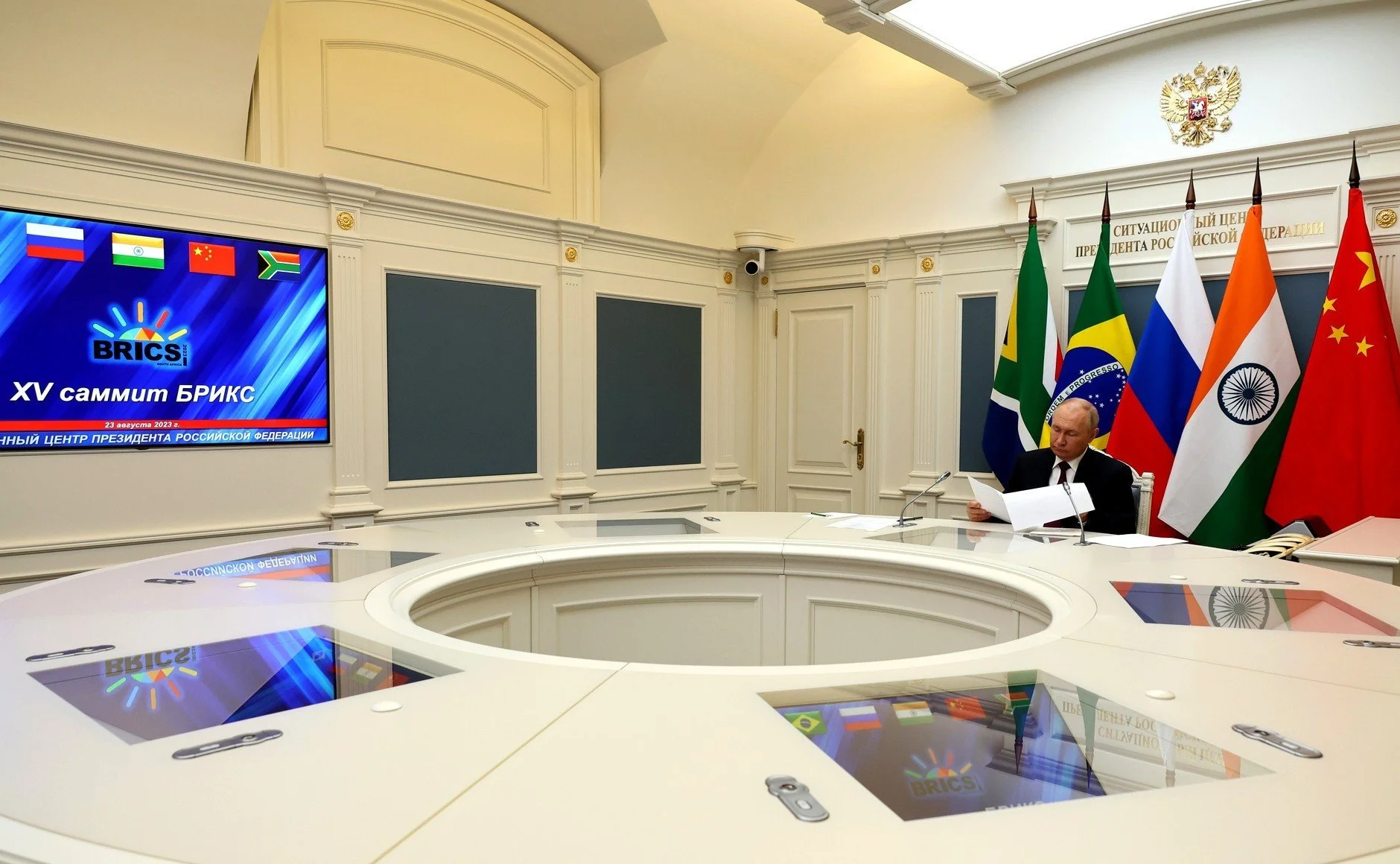
Vladimir Putin said the next BRICS Summit in Russia will be used as an opportunity to stage the Games along with cultural exchanges with the bloc ©Kremlin
Politically, the games are laden with implications, serving as a counter-narrative to Western-led institutions amid rising multipolarity. BRICS positions itself as an alternative to G7 dominance, advocating for de-dollarization, fair trade, and non-interference—themes amplified in sports. Russia's 2024 hosting was particularly charged: banned from Olympics since 2016 due to state-sponsored doping and further isolated post-2022 Ukraine invasion, Moscow used the games to defy sanctions and showcase capability. Putin framed it as "sport without discrimination," inviting nations shunned by the IOC, like Belarus (allied with Russia in Ukraine). This aligns with BRICS expansion in 2023, adding Iran, UAE, Saudi Arabia, Egypt, Ethiopia—countries seeking alternatives to U.S.-led order amid Gaza conflicts and economic shifts. The games foster diplomatic ties: side meetings discussed infrastructure, energy, and tech, strengthening the bloc's cohesion against perceived Western hegemony. Critics, like the Atlantic Council, see it as Russia evading isolation, using sports to legitimize influence in the Global South.
Is it a threat to the Olympics? Not imminently, but symbolically yes. The Olympics, with 10,500 athletes from 206 nations in 329 events, dwarf BRICS' scale—3,000 athletes, 27 sports. The IOC's universality contrasts BRICS' invite-only format, excluding major powers like the U.S. or EU nations. Yet as Olympic politicization grows—Russia's ban, boycotts over Gaza or Ukraine—the BRICS Games offer an alternative for marginalized states, potentially fragmenting global sports. If BRICS grows (aiming 40 members), it could rival in prestige, especially with phygital innovations appealing to youth. However, lacking Olympic history and neutrality, it's more complement than competitor—for now.
As soft power, the games are potent. Joseph Nye's concept—influence through attraction—fits: BRICS uses them to project inclusivity, countering Western "hegemony." Russia, facing isolation, hosted to demonstrate organizational prowess and cultural vibrancy, with Tatar elements highlighting diversity. China and India leverage for economic networking; Brazil and South Africa for Global South leadership. Events promote tourism (Kazan saw 100,000 visitors), media exposure (broadcast in 100 countries), and youth exchanges, fostering loyalty among emerging markets. Risks include politicization—Russia's disinformation around Paris Olympics contrasted its "pure" games. Overall, it's BRICS' tool for rebalancing narratives, emphasizing multipolarity.
The BRICS Games signal a shifting world order, using sports to build alliances and challenge dominance. They enhance soft power but highlight divisions. As the bloc expands, one must ask: Could this alternative arena eclipse the Olympics, or will it remain a niche echo in global sports?
