
Tscha Bum: The Korean Who Stole Germany’s Heart
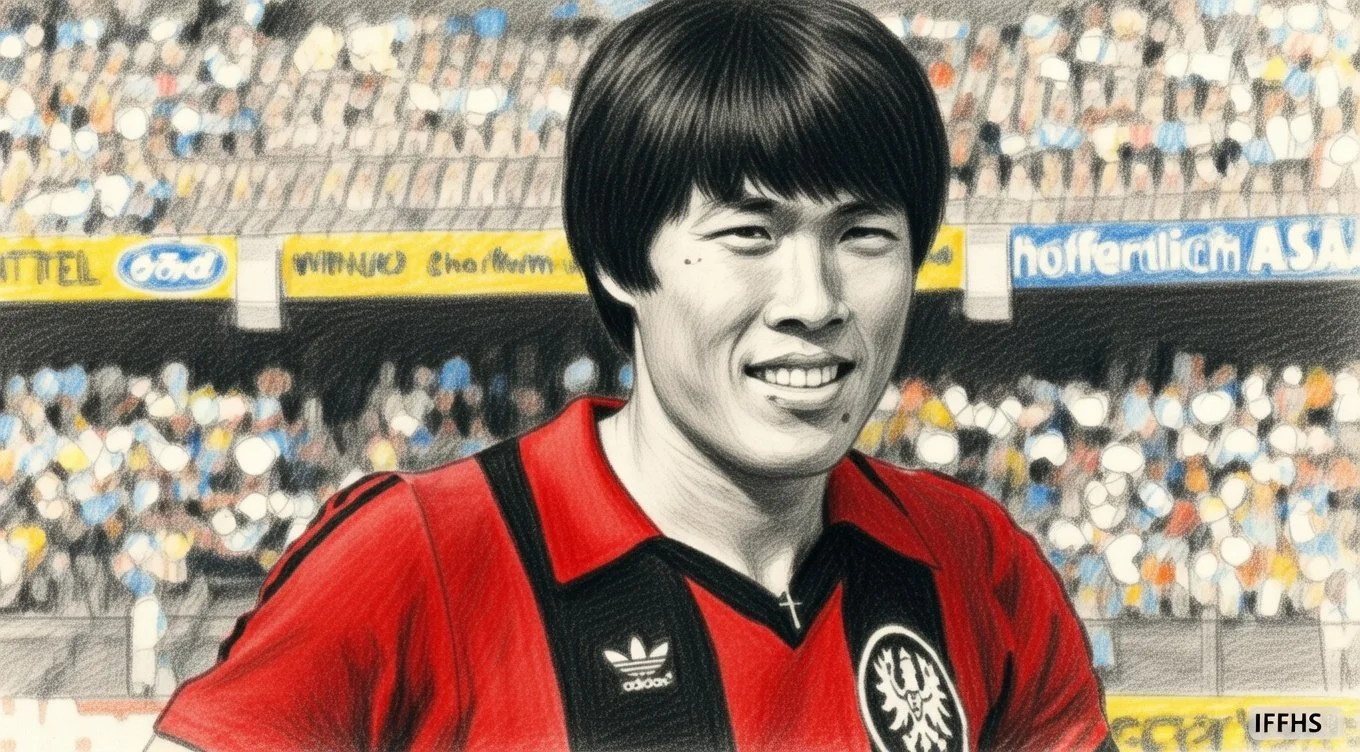
In the history of Asian football, very few players have left a deeper mark on a foreign country than Cha Bum-keun did in Germany. To this day, when older German fans hear the name “Tscha Bum,” their faces light up. The nickname — a playful German twist on his name that sounds like the onomatopoeia for a cannon shot (“Tscha-bumm!”) — perfectly captured what he brought to the Bundesliga: explosive power, relentless energy, and pure joy.
Cha Bum-keun didn’t just play in Germany. He won the country’s heart.
From Korean Army to the Bundesliga
Born in 1953 in Hwaseong, South Korea, Cha grew up in an era when the country was still recovering from the Korean War. Football was his escape. He was discovered while serving in the Korean army and quickly became the star of the national team, helping South Korea qualify for the 1974 Asian Games and winning the 1978 Asian Games gold medal.
In 1978, at the age of 25, Cha took a massive leap of faith. He moved to West Germany to join second-division side SV Darmstadt 98. At the time, no Asian player had ever succeeded in a top European league. The physicality, the pace, the cold weather, and the language barrier made it an enormous challenge. But Cha adapted almost immediately.
In his very first season (1978–79), he scored 14 goals and helped Darmstadt earn promotion to the Bundesliga. German fans were stunned. Here was a relatively small, technically gifted Asian forward who could outrun defenders, finish with both feet, and never stop working. The nickname “Tscha Bum” was born almost instantly.
The Frankfurt Years and Peak Fame
In 1979, Cha transferred to Eintracht Frankfurt, where he became a true superstar. He formed a legendary attacking partnership with Bernd Hölzenbein and later with Karl-Heinz Körbel. In 1980–81, he helped Frankfurt win the DFB-Pokal (German Cup), scoring in the final. He was named Foreign Player of the Year in Germany multiple times.
But it was his personality as much as his goals that won German hearts. Cha was humble, hardworking, and always smiling. He learned German quickly, integrated into the local culture, and treated every training session like it was a World Cup final. German players and coaches repeatedly said he was the most professional and disciplined player they had ever seen.
In 1983, he moved to Bayer Leverkusen, where he enjoyed perhaps his best years. In 1988, he helped Leverkusen win the UEFA Cup — the first major European trophy for a German club in years — scoring crucial goals along the way. By the time he retired in 1989, Cha had scored 98 Bundesliga goals (a record for an Asian player that stood for decades) and become a beloved figure across the country.
Why Germany Fell in Love With Him
Cha Bum-keun succeeded in Germany for reasons that went far beyond talent:
Work Ethic: Germans value discipline above almost anything. Cha trained harder than anyone. He was often the first on the pitch and the last to leave.
Humility: Despite being a global star, he never acted like one. He was polite, respectful, and grateful.
Adaptability: He embraced German culture, learned the language, and never complained about the cold or the physical style of play.
Pure Joy: His celebrations were infectious. When “Tscha Bum” scored, the entire stadium erupted with his nickname.
In a country still recovering from the shadow of World War II, Cha represented something pure and positive — a hardworking immigrant who succeeded through merit. He became a symbol of successful integration at a time when Germany was still figuring out how to handle immigration.
Lasting Legacy
Even today, Cha Bum-keun remains one of the most popular foreign players in German football history. When Leverkusen won the Bundesliga and DFB-Pokal double in 2024, veteran German journalists and fans immediately compared the team’s spirit to the “Tscha Bum era.”
In South Korea, he is simply “The Emperor” or “Cha Boom.” He is considered the greatest Korean footballer of all time and was named Asia’s Player of the Century by the IFFHS. He later managed the Korean national team and has remained a mentor to generations of Korean players.
Cha Bum-keun proved something profound: that excellence, when paired with humility and hard work, can transcend borders, race, and language. He didn’t just score goals in Germany — he changed perceptions. He showed that an Asian player could not only survive but dominate in Europe’s toughest league.
In a football world that has become increasingly global, Cha Bum-keun was the pioneer who made it all possible. And in Germany, they have never forgotten the smiling Korean who made the stadiums chant “Tscha Bum!”
