
The Dragon's Fire: Ricky Steamboat's Enduring Impact on American Culture and Race
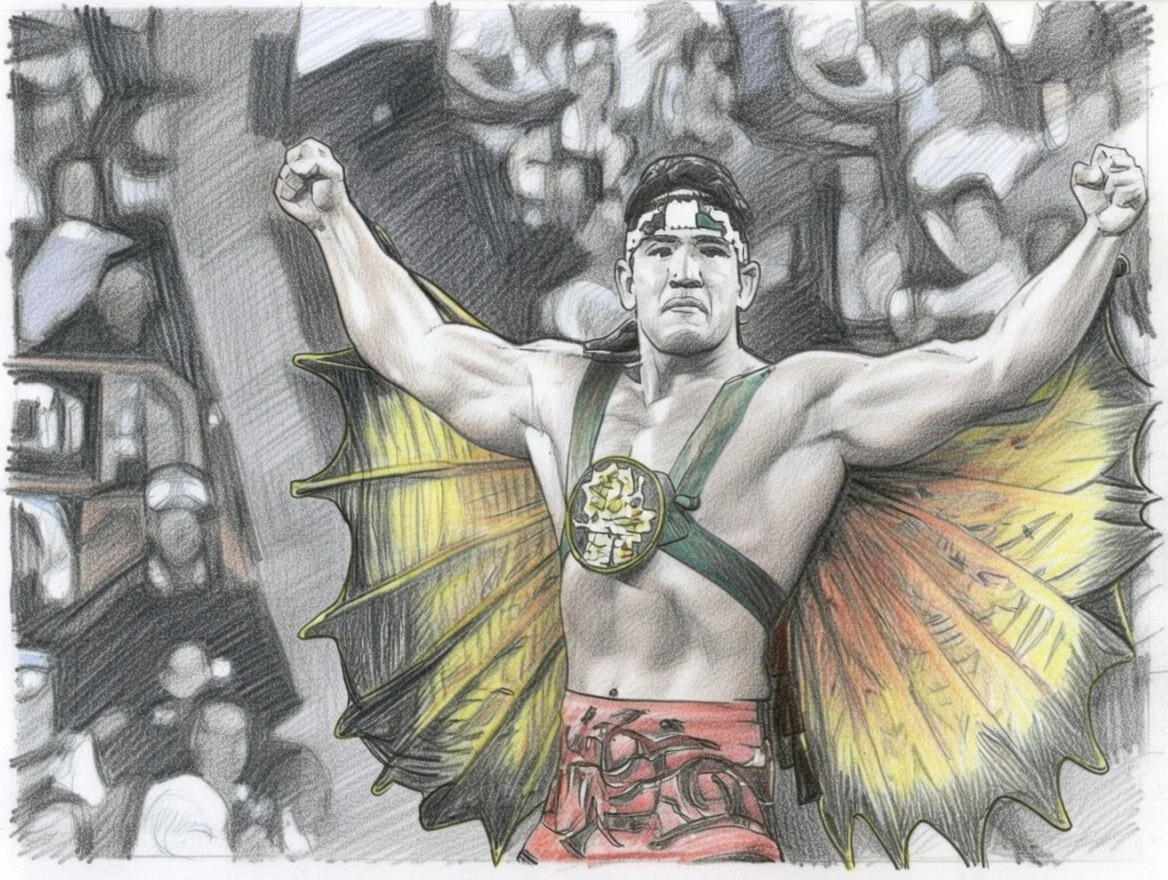
Imagine the electric hum of WrestleMania III on March 29, 1987, inside Michigan's Pontiac Silverdome, where a record 93,173 fans pack the arena, their cheers building like a storm as Ricky "The Dragon" Steamboat makes his entrance. Fire erupts from his mouth in a dramatic breath, his red robe flowing like a cape, emblazoned with Eastern motifs that honor his Japanese heritage. He faces "Macho Man" Randy Savage for the Intercontinental Championship, and what unfolds is 15 minutes of pure artistry—arm drags, chops, and near-falls that leave the crowd breathless. Steamboat wins with a small package pin, hoisting the belt amid pandemonium. This moment wasn't just wrestling; it was cultural alchemy, elevating the sport while presenting an Asian-American hero in a time of limited representation. For fans who cherish wrestling's evolution and those exploring racial dynamics in pop culture, Steamboat's career was a quiet revolution—his grace and integrity challenging stereotypes, influencing generations, and proving diversity could shine in America's entertainment landscape.
Richard Henry Blood Sr., born February 28, 1953, in West Point, New York, grew up navigating a blended identity. His father was Caucasian with English and Dutch roots, while his mother was Japanese, exposing him early to cultural fusion amid the civil rights era's tensions. The family moved to St. Petersburg, Florida, where young Ricky encountered subtle biases but found solace in sports. He discovered wrestling via TV, idolizing champions like Bruno Sammartino, and began training at local gyms. Debuting in 1976 for the American Wrestling Association (AWA) under Verne Gagne, he adopted "Ricky Steamboat" as a nod to Hawaiian wrestler Sammy Steamboat, soon evolving into "The Dragon" to celebrate his mother's heritage. This persona featured fire-breathing entrances and dragon-themed gear, blending martial arts flair with technical skill in an industry often reliant on gimmicks.
Steamboat's rise was marked by athletic excellence. In Mid-Atlantic Championship Wrestling (NWA territory), he formed tag teams with Jay Youngblood, winning multiple titles with high-flying moves that wowed crowds. His feuds with Ric Flair showcased his prowess—clean, hard-hitting matches that emphasized storytelling over spectacle. Joining the World Wrestling Federation (WWF) in 1985, he became a fan favorite, his honorable style contrasting villains like the Iron Sheik. The pinnacle was WrestleMania III vs. Savage, hailed as one of wrestling's greatest bouts for its pacing and drama. Steamboat held the Intercontinental Title briefly before moving to World Championship Wrestling (WCW) in 1989, where his trilogy with Flair—Chi-Town Rumble, Clash of the Champions, and WrestleWar—earned legendary status. At Chi-Town Rumble, he captured the NWA World Heavyweight Championship in a 20-minute clinic of counters and submissions. Injuries forced retirement in 1994, but he returned sporadically, inducting into the WWE Hall of Fame in 2009 and coaching in NXT.
Steamboat's impact on American culture stems from elevating wrestling's credibility. In the 1980s, WWF's boom turned it mainstream, with cable TV and pay-per-view reaching millions. His matches shifted focus from cartoonish characters to athletic narratives, influencing modern styles in AEW and WWE. Culturally, he embodied quiet heroism—never turning heel, always the good guy—resonating in an era of action heroes like Rocky Balboa. His fire-breathing entrance became iconic, inspiring video games and merchandise, while his technical mastery set standards for international wrestlers.
On race, Steamboat was a trailblazer. As one of the first prominent Asian-American wrestlers, he navigated an industry with ethnic caricatures—the Iron Sheik as Middle Eastern villain or Kamala as savage. Steamboat's "Dragon" drew from his heritage but emphasized strength and respect, not exoticism. In interviews, he discussed facing racism abroad (e.g., in Europe) and subtly at home, yet his success offered visibility when Asian-Americans held under 1% of TV roles. His mixed heritage mirrored America's growing diversity post-1965 immigration reforms, providing a positive model amid stereotypes in media like "Sixteen Candles." Steamboat's integrity—no scandals, family-focused—reinforced uplifting narratives, paving for stars like Asuka or Shinsuke Nakamura. In broader culture, he contributed to normalizing AAPI representation, coinciding with rising visibility in the 1990s and beyond.
Steamboat's legacy persists: coaching in WWE influenced stars like Charlotte Flair, while his Hall of Fame status cements his role in wrestling's pantheon. In American culture, he helped diversify entertainment, contributing to AAPI progress amid movements like #StopAsianHate. His dragon fire burned barriers, inspiring inclusive storytelling.
Ricky Steamboat's journey reshaped wrestling and cultural perceptions, proving grace could conquer bias. But in today's diverse landscape, one asks: Who will ignite the next flame for underrepresented voices?
