
Eternal Elegance: Roberto Clemente's Enduring Impact on Baseball, Culture, and Puerto Rico
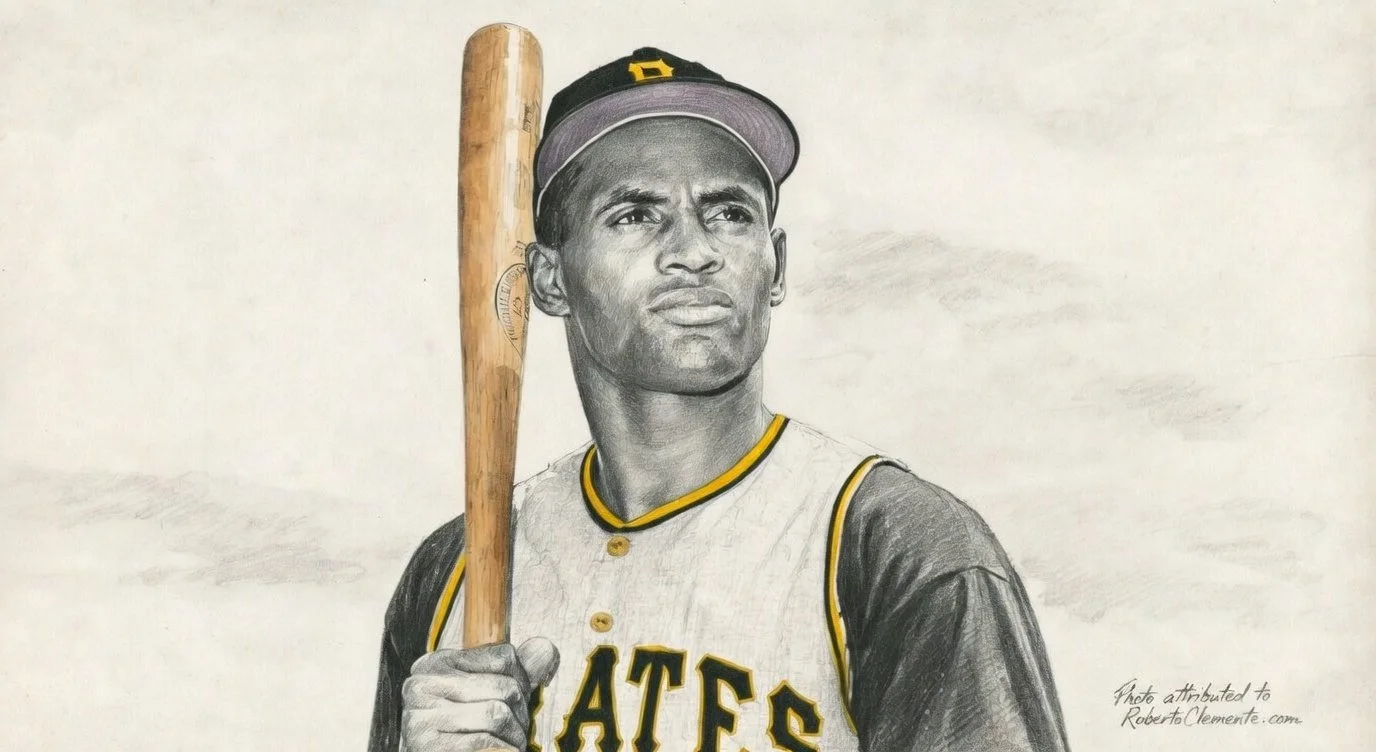
In the annals of baseball history, few figures embody grace, grit, and global influence like Roberto Clemente. The Puerto Rican outfielder, born on August 18, 1934, in Carolina, Puerto Rico, transcended the diamond to become a symbol of Latino pride, humanitarianism, and cultural bridge-building. Over a 18-year career with the Pittsburgh Pirates (1955-1972), Clemente amassed 3,000 hits, 12 Gold Gloves, and four National League batting titles, but his legacy extends far beyond statistics. He shattered racial barriers in Major League Baseball (MLB), elevated Puerto Rican identity on the world stage, and left an indelible mark on American culture through his activism and tragic death. Clemente's life was a masterclass in excellence and empathy, proving that sports could be a force for social change.
Clemente's early life was steeped in humility and hard work, traits that defined his career. Raised in a modest family of seven children, with a sugarcane worker father and laundress mother, he honed his skills on makeshift fields using guava sticks as bats. Discovered at 18 by the Brooklyn Dodgers' scout Al Campanis, he signed for a $5,000 bonus but was drafted by the Pirates in 1954 under the Rule 5 draft. Debuting in 1955, Clemente faced rampant racism as one of MLB's early Latino pioneers. Teammates mocked his English, fans hurled slurs, and hotels denied him entry in the segregated South. Yet, he persevered, batting .255 as a rookie and evolving into a defensive wizard with a cannon arm that threw out 266 baserunners over his career—the most by any outfielder in MLB history.
His offensive prowess peaked in the 1960s. Clemente won batting titles in 1961 (.351), 1964 (.339), 1965 (.329), and 1967 (.357), showcasing a elegant swing that sprayed line drives to all fields. He led the Pirates to the 1960 World Series victory over the Yankees, hitting .310, and starred in 1971, batting .414 with two home runs to earn MVP honors as Pittsburgh triumphed over Baltimore. That series featured Clemente's iconic arm, throwing out runners from deep right field. By retirement, he was a 15-time All-Star, with 240 home runs, 1,305 RBI, and a .317 average. Inducted into the Hall of Fame in 1973—the first Latino player so honored—he waived the five-year waiting period due to his untimely death.
Clemente's impact on baseball was revolutionary. As the first Latin American superstar in MLB, he paved the way for generations of Latino players, who now comprise over 30% of the league. His style—elegant defense, aggressive baserunning, and consistent hitting—inspired icons like Roberto Alomar and Ivan Rodriguez. Clemente advocated for Latino rights, protesting unequal treatment and pushing for better pay, foreshadowing the players' union's strength. His arm set a standard for outfielders; no one threw with such accuracy and flair. Off the field, he mentored young Latinos, emphasizing education and pride, influencing the sport's diversification amid civil rights era changes.
Culturally, Clemente bridged divides in Cold War America. As a dark-skinned Puerto Rican, he challenged stereotypes of Latinos as "hot-tempered" or inferior, his dignity earning respect. He spoke out against racism, famously saying, "I represent the poor people of America and the world." His marriage to Vera Zabala in 1964 and family life humanized him, while his fashion—elegant suits and Afro-Caribbean style—influenced urban culture. Clemente's story inspired literature and film, like the 2013 documentary "Roberto Clemente," and music tributes. In Puerto Rico and Latin America, he became a folk hero, symbolizing resistance to U.S. imperialism while embracing American opportunities.
For Puerto Rico, Clemente was more than an athlete—he was a national emblem. In a U.S. territory often marginalized, his success fostered pride. He invested in youth baseball, building fields and coaching clinics, inspiring stars like Ivan Rodriguez and Carlos Correa. His advocacy for Puerto Rican rights, including better representation, resonated amid debates on statehood. Clemente's legacy includes the Roberto Clemente Bridge in Pittsburgh and Puerto Rico's Roberto Clemente Coliseum, symbols of his enduring bond with his homeland.
Tragically, Clemente's life ended on December 31, 1972, at age 38. Responding to Nicaragua's devastating earthquake on December 23, which killed 10,000 and left 250,000 homeless, he organized relief flights from Puerto Rico. Frustrated by corrupt distribution of aid, Clemente boarded a overloaded DC-7 cargo plane laden with supplies. The plane crashed into the Atlantic Ocean shortly after takeoff from San Juan, killing all aboard. No bodies were recovered. His death, on a mission of mercy, canonized him as a martyr. The MLB established the Roberto Clemente Award in 1973 for humanitarianism, honoring his final act.
Clemente's legacy endures: a Hall of Famer whose number 21 is retired by the Pirates, he inspires amid discussions on athlete activism. In a divided America, his story reminds us of sports' power to unite and uplift.
