
Trailblazer on the Mound: Chan Ho Park's Pioneering Career and Lasting Impact on Korean Baseball
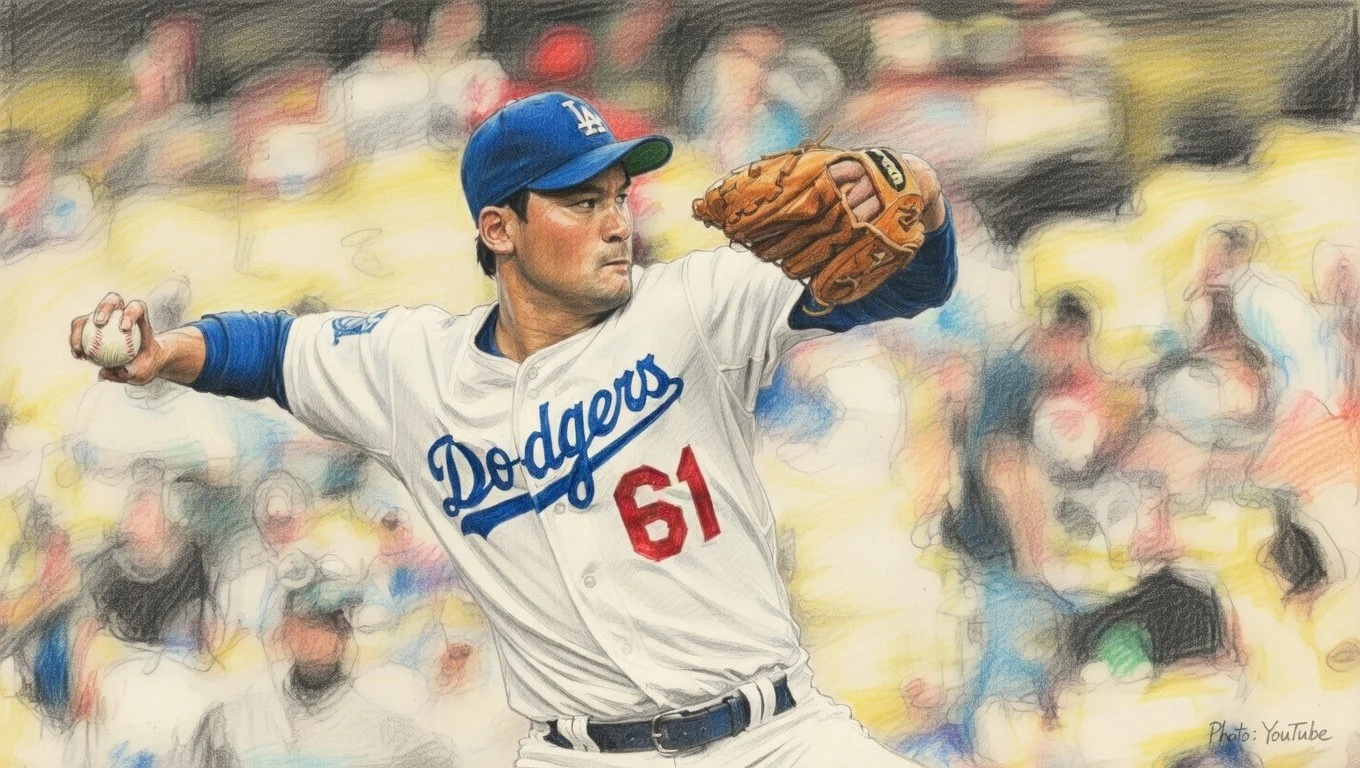
In the summer of 1994, a 20-year-old right-hander from Gongju, South Korea, stepped onto the mound at Dodger Stadium, forever altering the landscape of Major League Baseball (MLB). Chan Ho Park, the first South Korean-born player in MLB history, debuted with the Los Angeles Dodgers on April 8, 1994, striking out two batters in a single inning of relief. This modest beginning marked the dawn of an era for Korean baseball, as Park's trailblazing career not only shattered barriers but also inspired a generation of players from his homeland to pursue dreams in America's national pastime. Over 17 seasons, Park's accomplishments on the field and his role as a cultural ambassador cemented his legacy as the "Korean Cannon," whose impact continues to resonate in both MLB and South Korean society.
Park's journey began in humble circumstances. Born on June 30, 1973, in Gongju, he grew up in a family that valued education and hard work. His father, a professor, encouraged his athletic pursuits, and Park excelled in high school baseball, leading Hanyang University to national championships. In 1994, at age 20, he signed with the Dodgers as an amateur free agent for a $1.2 million bonus—the highest ever for a Korean player at the time. This move was groundbreaking: prior to Park, no South Korean had played in MLB, and his signing challenged the insular nature of Korean professional baseball, where players were expected to stay domestic.
Park's rookie season was promising, but his breakthrough came in 1996 when he became the first Korean to start a postseason game. Over his career from 1994 to 2010, he pitched for seven teams: the Dodgers (1994-2001, 2008), Texas Rangers (2002-2005), San Diego Padres (2005-2006), New York Mets (2007), Philadelphia Phillies (2009), New York Yankees (2010), and Pittsburgh Pirates (2010). His stats speak volumes: a 124-98 record, 4.36 ERA, 1,715 strikeouts in 1,993 innings, and 476 appearances (287 starts). Park holds the record for most career wins by an Asian-born pitcher (124), surpassing Hideo Nomo in 2010. He was selected to the All-Star Game in 2001, becoming the first South Korean All-Star.
His peak years with the Dodgers showcased his dominance. In 1997, he went 14-8 with a 3.38 ERA and 166 strikeouts. The following year, he improved to 15-9 with a 3.71 ERA. In 2000, Park achieved career highs: 18 wins, 217 strikeouts, and a 3.27 ERA, finishing second in the NL Cy Young voting. His fastball touched 100 mph, complemented by a devastating slider and changeup, making him a strikeout machine. In 2001, he signed a five-year, $65 million contract with the Rangers—the richest for a pitcher at the time—solidifying his status as an elite talent.
Injuries hampered his Rangers tenure, but Park rebounded with the Padres in 2005-2006, posting a 4.81 ERA in 2005 before a strong 2006. Later stints with the Mets, Phillies, Yankees, and Pirates showed resilience, with a memorable 2009 World Series appearance for Philadelphia. Retiring in 2010, Park's career bridged continents, proving Asian pitchers could excel in MLB's power era.
Park's impact on Korean baseball is immeasurable. As the first South Korean in MLB, he shattered perceptions that Korean players couldn't compete in America's top league. In the 1990s, Korean baseball was growing, but international success was limited. Park's Dodgers debut sparked "Park-mania" in South Korea, with games broadcast live despite time differences, boosting KBO League attendance and youth participation. He inspired over 25 Korean players to follow, including Hyun-Jin Ryu, Shin-Soo Choo, and Ha-Seong Kim. Park's pioneering role fostered MLB scouting in Korea, with academies emulating his training.
Culturally, Park symbolized national pride amid South Korea's economic rise. His success challenged stereotypes of Asians in sports, fostering bilateral ties—evident in MLB's Korean exhibitions. Post-retirement, Park mentored prospects and served as a Rangers advisor, cementing his ambassador role.
Park's legacy endures: inducted into the Korean Baseball Hall of Fame, he remains a hero. As the "Korean Cannon," he blasted open doors, ensuring Korean talent thrives in MLB.
