
The True Story Behind Marty Supreme: Marty Reisman, the Flamboyant Genius Who Changed Ping Pong Forever
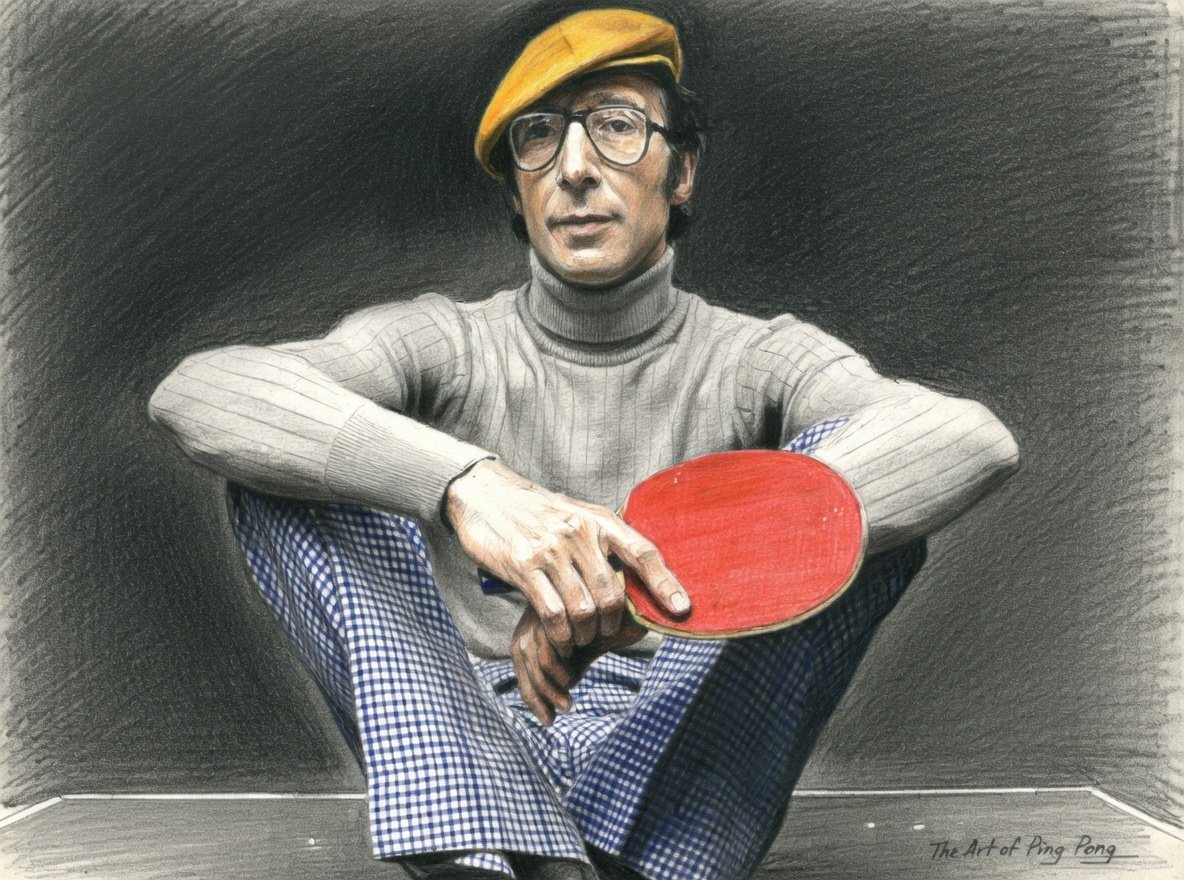
When Timothée Chalamet stepped onto the red carpet at the 2026 Academy Awards wearing a custom suit inspired by 1960s table tennis attire, the internet exploded. The film Marty Supreme, directed by Josh Safdie, had just received eight Oscar nominations, including Best Picture and Best Actor. While the movie takes dramatic liberties, its protagonist is unmistakably inspired by one of the most charismatic and misunderstood figures in American sports history: Marty Reisman.
Born Martin Reisman on February 26, 1930, in Manhattan’s Lower East Side, Reisman grew up in a working-class Jewish family during the Great Depression. His father was a garment worker, and the family lived in a crowded tenement. Young Marty discovered table tennis at the famous Boys’ Club on 10th Street. What began as a way to stay off the streets quickly became an obsession. By age 12, he was already beating adults in local clubs. By 15, he was winning citywide tournaments.
Reisman’s style was revolutionary. While most players used a conventional shakehand grip and focused on consistency, Reisman developed a flamboyant, attacking game that emphasized spin, deception, and showmanship. He could make the ball dance with his penhold grip and devastating sidespin. His signature trick shot — lighting a cigarette while returning a serve — became legendary. Opponents called him “The Needle” because his shots were sharp and piercing.
In the 1950s, Reisman dominated American table tennis. He won the U.S. Open singles title five times (1953, 1954, 1956, 1957, 1960) and was ranked the world’s No. 1 player in 1957. He represented the United States at the World Championships multiple times, reaching the semifinals in 1952. But Reisman’s biggest battles were often off the table. He clashed repeatedly with the United States Table Tennis Association (USTTA) over rules, prize money, and what he saw as bureaucratic interference. His rebellious streak and refusal to conform made him a polarizing figure in the conservative world of amateur table tennis.
The most dramatic chapter of Reisman’s life came in 1971 during the famous Ping Pong Diplomacy. When the U.S. team was invited to China — the first American delegation allowed into the country since 1949 — Reisman was initially left off the roster. The decision was widely seen as punishment for his earlier criticism of the USTTA. Public outcry forced the association to add him as an alternate. When he finally arrived in Beijing, the Chinese treated him like a rock star. They remembered his 1950s matches against their players and respected his skill. Chairman Mao Zedong reportedly watched footage of Reisman’s games. For a brief moment, table tennis became a bridge between two hostile superpowers.
Reisman’s personal life was as colorful as his playing style. He never married, lived modestly in New York, and continued playing well into his 70s at clubs like the Westchester Table Tennis Center. He worked as a salesman and later ran his own table tennis equipment business. Despite his fame, he remained humble and often said he played for the love of the game rather than money or glory.
The 2025 film Marty Supreme takes significant creative liberties with Reisman’s life. Chalamet’s character is a composite figure — more brooding and emotionally tortured than the real Reisman ever appeared publicly. The movie dramatizes his clashes with the table tennis establishment and invents a romantic storyline that never existed. Director Josh Safdie has openly admitted the film is “inspired by” rather than “based on” Reisman’s life. Yet the emotional core remains true: a brilliant, unconventional athlete fighting against a rigid system that never fully embraced him.
Reisman passed away on December 7, 2012, at age 82. His death received modest coverage in the mainstream press, but within the table tennis community, it was treated like the loss of a king. The ITTF (International Table Tennis Federation) called him “one of the greatest players of all time.” In China, where he remains a revered figure, tributes poured in from former national team players.
Today, Reisman’s influence is still felt. The modern explosion of interest in table tennis in the United States — driven by clubs, YouTube channels, and celebrity players — owes a debt to the trail he blazed. His flamboyant style inspired generations of showmen, from Harlem’s underground ping pong legends to today’s TikTok trick-shot artists. More importantly, his story remains a powerful reminder of how sport can transcend politics. During the height of the Cold War, Reisman’s racket helped open a door between two nations that had been completely closed.
The Oscar buzz surrounding Marty Supreme has brought renewed attention to the real Marty Reisman. Documentaries are being re-released. Vintage footage of his matches is going viral again. Young players are discovering his unorthodox techniques and his refusal to play by anyone else’s rules.
In the end, Marty Reisman was never just a ping pong player. He was a performer, a rebel, and a pioneer who proved that style and substance could coexist on the same table. His life was never about trophies alone — it was about proving that a kid from a New York tenement could stand toe-to-toe with the best in the world and do it his own way.
As Timothée Chalamet prepares for Oscar night wearing a custom suit inspired by Reisman’s iconic look, one thing is clear: the legend of Marty Reisman is no longer just a footnote in table tennis history. Thanks to the film, it’s becoming part of American cultural history — exactly where it always belonged.
