
The Ice Glass Ceiling: The History of Black American Sports in the Winter Olympics
The Winter Olympics, with their snow-capped peaks and icy arenas, have long symbolized a pristine, elite world of athletic achievement. Yet for Black American athletes, this frozen domain has represented a formidable "ice glass ceiling"—a barrier compounded by socioeconomic challenges, geographic limitations, and access issues that mirror broader inequities in American society. From the sport's early days dominated by European and white American participants to recent breakthroughs, the journey of Black athletes in winter sports reflects the United States' evolving narrative of inclusion, resilience, and the push for opportunity. In a nation where summer sports like track and basketball have been pathways for Black excellence since Jesse Owens' 1936 triumphs, winter disciplines highlight persistent divides: access to cold-weather facilities, expensive gear, and training programs often remains out of reach for many minority communities. This disparity echoes America's history of uneven resource distribution, where systemic factors have limited Black participation in "niche" sports. Yet, as we'll explore, pioneering Black American athletes have shattered this ceiling, paving the way for future generations and symbolizing progress in a culture still striving for equity.
The history of Black American involvement in the Winter Olympics is sparse in its early chapters, underscoring the challenges of entry into a sport ecosystem rooted in affluent, northern climates. Winter sports like skiing, skating, and bobsledding require resources—ski resorts, ice rinks, and coaching—that were historically difficult for Black Americans to access due to economic and geographic constraints. The first notable figure was Mabel Fairbanks, a pioneering figure skater in the 1930s and '40s, but she never competed in the Olympics due to limited opportunities; instead, she became a coach, mentoring stars like Atoy Wilson, the first Black U.S. national champion in 1966. It wasn't until the 1980 Lake Placid Games that Black Americans appeared on the U.S. Winter Olympic team, with speed skater Erroll Fraser and bobsledder Willie Davenport (a former summer hurdler) marking modest beginnings. These early participations reflected shifting U.S. culture post-Civil Rights Movement, where increased emphasis on broader access began opening doors, albeit slowly, in non-traditional spaces for Black athletes.
The breakthrough came in 1988 at the Calgary Winter Olympics, where Debi Thomas became the first Black American to win a medal in any winter sport. Thomas, a Stanford pre-med student and world champion, captured bronze in women's figure skating with a captivating routine to Bizet's Carmen. Her achievement was groundbreaking: as the first Black woman to medal at the Winter Games, she challenged the sport's limited diversity, dominated by figures like Katarina Witt. Thomas' success symbolized the era's cultural shifts—the 1980s saw rising Black middle-class visibility through icons like Michael Jordan and Oprah Winfrey, reflecting America's gradual embrace of diversity in elite arenas. Yet her story also highlighted hurdles: Thomas balanced demanding academics with training, facing financial strains in a sport requiring costly coaches and travel. Her bronze was a crack in the ice glass ceiling, proving Black athletes could excel in winter sports despite systemic odds.
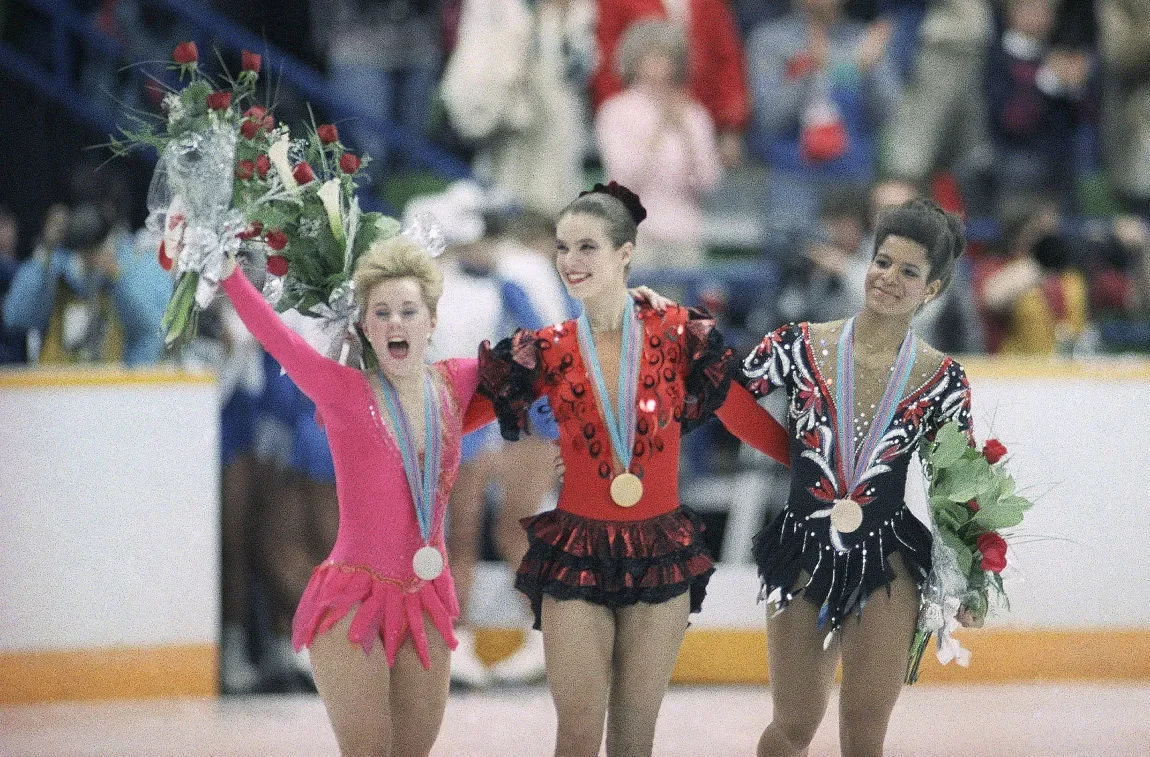
Olympic bronze medalist Debi Thomas, right, celebrates with silver medalist Elizabeth Manley of Canada, left, and gold medalist Katarina Witt of East Germany at the Olympic Saddledome in Calgary, Canada, on Saturday, Feb. 27, 1988. The Associated Press
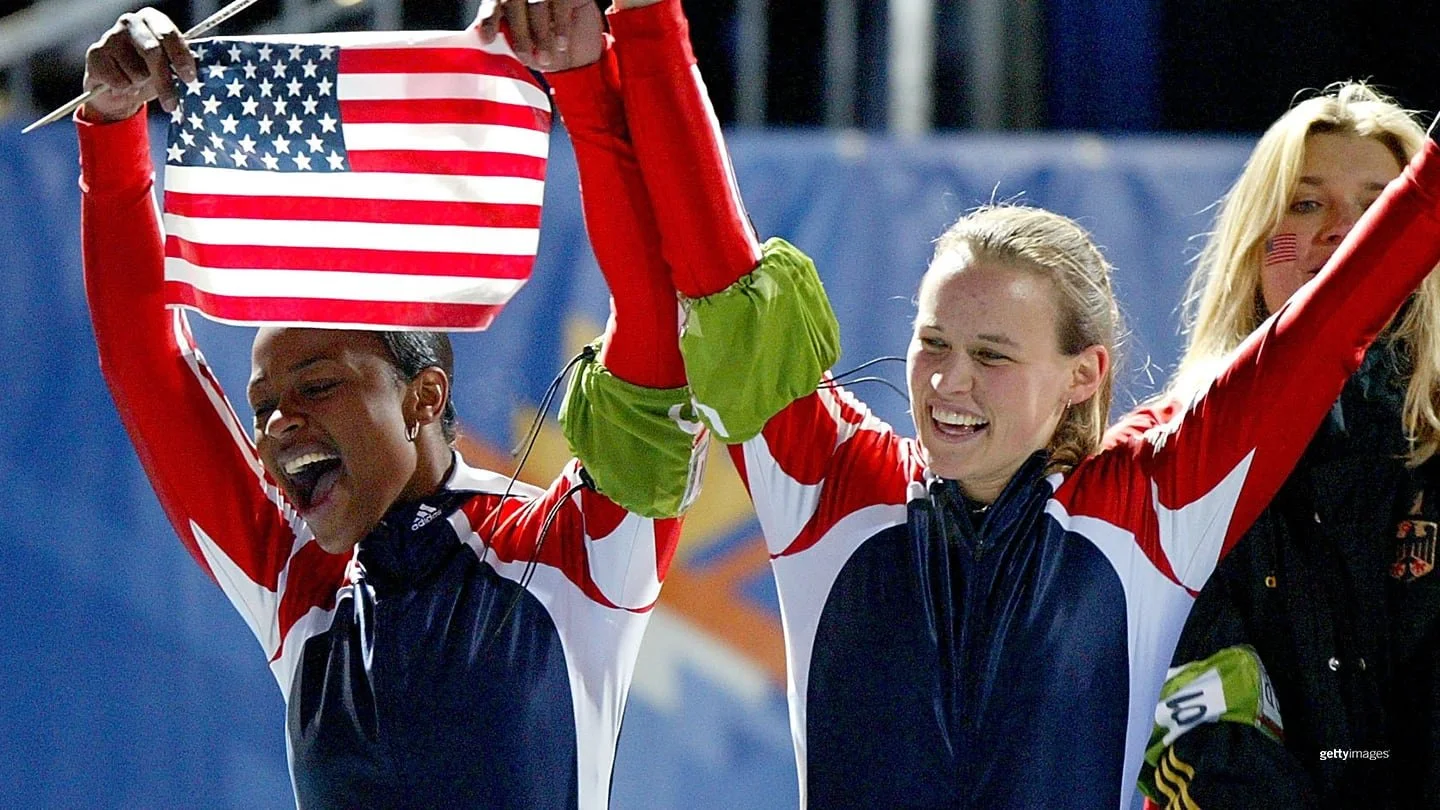
The turn of the millennium brought gold, further dismantling barriers. In 2002 at the Salt Lake City Games, Vonetta Flowers became the first Black American—and the first Black athlete from any country—to win a Winter Olympic gold medal. Teaming with Jill Bakken in women's bobsled, Flowers pushed to victory in the inaugural two-woman event, clocking 1:37.76 over two runs. Flowers, a former track star from Birmingham, Alabama, switched to bobsled after failing to qualify for the 2000 Summer Olympics in long jump. Her triumph was emblematic of U.S. culture's growing inclusivity: the 2000s saw increased diversity in media and sports, with figures like Tiger Woods dominating golf. Flowers' win reflected America's narrative of opportunity, where talent from underrepresented communities could shine if given access. It also highlighted winter sports' evolution—bobsled's need for speed and power drew from track, a traditional Black stronghold, bridging summer and winter divides.
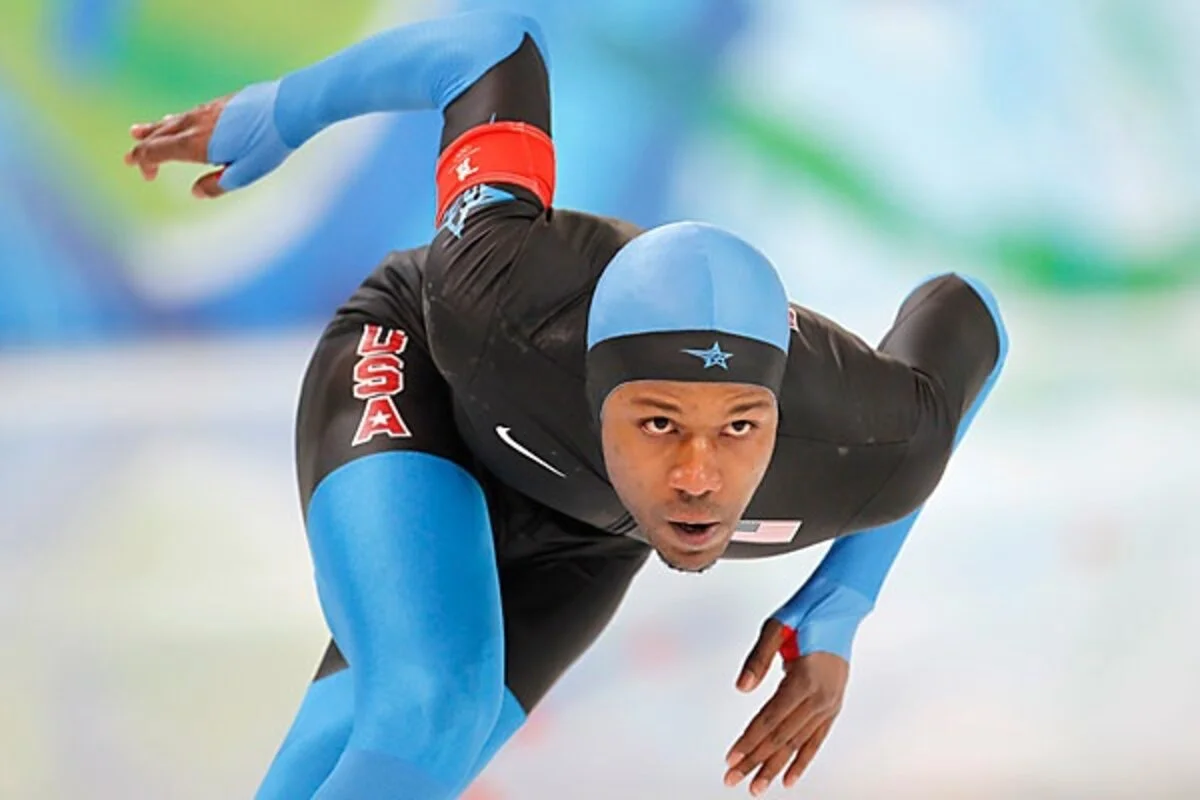
Four years later, Shani Davis etched his name in history at the 2006 Turin Games, becoming the first Black American to win an individual gold medal in the Winter Olympics. Davis dominated the men's 1000m speed skating with a time of 1:08.89, adding silver in the 1500m. From Chicago's South Side, Davis started on roller skates before transitioning to ice, overcoming financial hurdles and the challenges of training in a sport with limited urban facilities. His victory was a cultural milestone: in a post-9/11 America grappling with identity and unity, Davis' success symbolized the American Dream's inclusivity, where inner-city talent could conquer elite domains. It reflected broader shifts—Barack Obama's rising prominence signaled changing racial dynamics, with Davis' gold amplifying Black excellence beyond traditional sports like basketball.
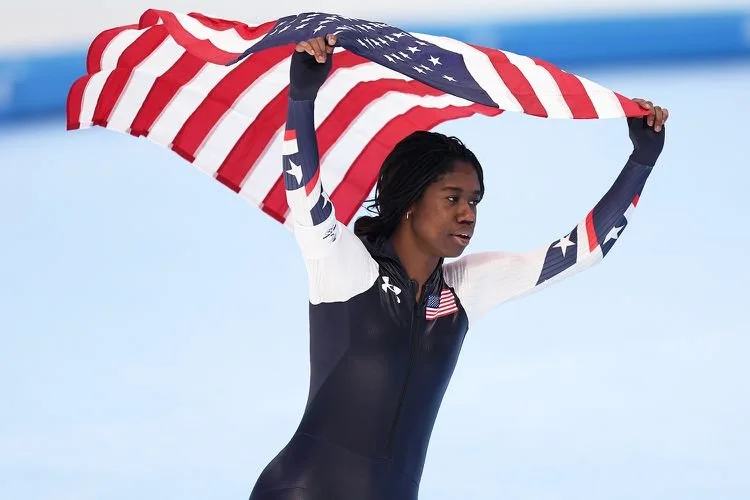
These pioneers set the stage for contemporary stars, further breaking the ice glass ceiling. At the 2022 Beijing Games, Erin Jackson became the first Black woman to win an individual Winter Olympic gold, triumphing in the 500m speed skating with a time of 37.04 seconds. Jackson, from Ocala, Florida—a place far from ice rinks—switched from inline skating to ice in 2017, embodying adaptability in a sport requiring specialized facilities. Her win highlighted U.S. culture's progress: in the Black Lives Matter era, her success amplified calls for diversity in winter sports, where Black participation hovers below 2%. Similarly, Elana Meyers Taylor has become the most decorated Black Winter Olympian, with five medals across four Games (2010-2022), including silvers in bobsled. As a former softball player from Georgia, her journey reflects America's talent pipeline diversification, where HBCUs and southern programs feed into winter disciplines.
Credit : Richard Heathcote/Getty
This history mirrors U.S. culture's evolution: from limited access in earlier decades to increased opportunities, Black American winter athletes symbolize breaking into resource-intensive domains, much like Jackie Robinson in baseball. Barriers persist—winter sports' high costs ($10,000+ yearly for training) and northern focus limit participation in Black communities, reflecting economic disparities where median Black household income is 60% of white. Yet progress shows: initiatives like Share Winter Foundation provide scholarships, echoing cultural shifts toward equity post-2020 racial reckoning.
Looking to 2026 Milan-Cortina, Black American athletes promise more breakthroughs. Erin Jackson, now 33, aims to defend her 500m title, her speed and experience making her a favorite—her story reflects America's emphasis on second chances and diversity. Elana Meyers Taylor, 41 by then, could return for bobsled, her longevity symbolizing resilience amid motherhood and advocacy. Laila Edwards, a rising hockey star, broke barriers in 2024 as the first Black woman on the U.S. senior national team; her potential Olympic debut embodies growing inclusivity in team sports. Darryl Payne Jr., a bobsled hopeful from Temple, Texas, trains for 2026, potentially as the first Black American man in the sport since 1956. These athletes reflect U.S. culture's push for representation, where diversity strengthens teams and inspires youth.
The ice glass ceiling, once impenetrable, now cracks wider with each medal. Black American winter athletes embody America's cultural journey—from limited access to empowerment—reflecting a society striving for equity. As 2026 approaches, their stories inspire, but the work continues: true breaking requires systemic access for all. In a nation built on dreams, can winter sports finally reflect its full diversity?
