
China's Belt and Road Initiative in Sports: Building Stadiums as Soft Power for Influence
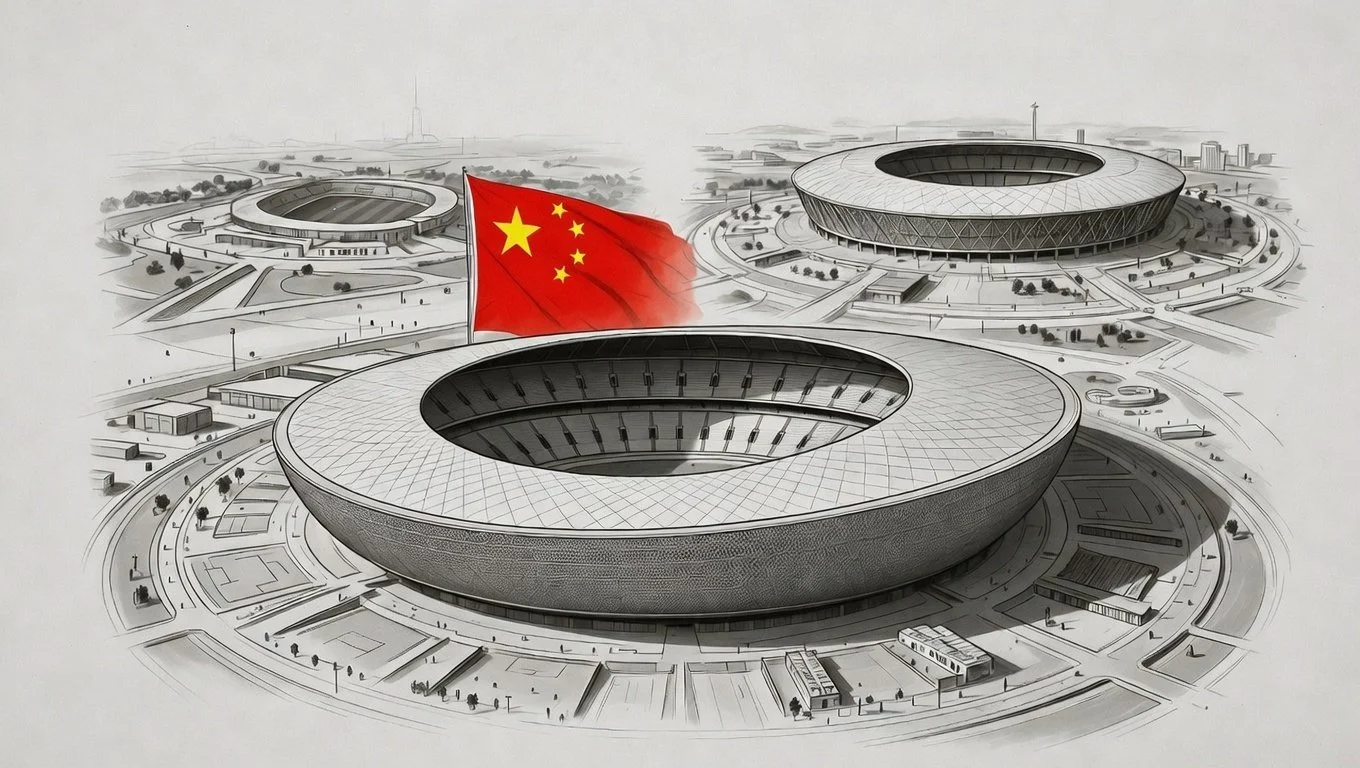
Picture the gleaming Lusail Stadium in Qatar during the 2022 FIFA World Cup final, where 88,966 fans roar as Argentina claims victory over France in a penalty shootout thriller. But rewind to its construction: funded partly through Chinese loans and built by Chinese firms like China Railway Construction Corporation, this $767 million icon stands as a testament to Beijing's global reach. While Qatar hosted, China's involvement—part of the broader Belt and Road Initiative (BRI)—extends far beyond, with stadiums sprouting across Africa, Asia, and Latin America. These aren't just venues for games; they're tools of diplomacy, where concrete and steel pave the way for economic ties and cultural sway. For observers of international relations and sports enthusiasts tracking how athletics shape geopolitics, China's BRI sports push represents a calculated play in soft power—a strategy where building stadiums fosters loyalty, opens markets, and positions Beijing as a benevolent partner in a multipolar world.
Launched in 2013 by President Xi Jinping, the BRI—originally "One Belt, One Road"—aims to revive ancient Silk Road trade routes through massive infrastructure investments in over 150 countries, encompassing roads, ports, railways, and energy projects valued at $1 trillion by 2025. It targets developing nations in Asia, Africa, Europe, and Latin America, promising connectivity and growth while securing resources and markets for China. Critics dub it "debt-trap diplomacy," citing cases like Sri Lanka's Hambantota Port leased to China after loan defaults. Yet BRI's scope includes "people-to-people" bonds, where sports infrastructure fits seamlessly—stadiums as visible, community-oriented gifts that generate goodwill faster than highways. By 2025, China has financed or built over 100 sports facilities worldwide, from soccer arenas to multisport complexes, often tied to BRI pacts. This "stadium diplomacy" echoes U.S. Marshall Plan tactics but with Chinese characteristics: low-interest loans, turnkey projects by state firms, and branding that highlights partnership over dominance.
Africa has been a prime focus, where China's investments exceed $300 billion since 2000, with sports venues as entry points. In Tanzania, the Benjamin Mkapa Stadium in Dar es Salaam—built by Beijing Construction Engineering Group for $56 million in 2007—hosted the 2008 African Cup of Nations qualifiers, boosting local pride and tourism. Zambia's Levy Mwanawasa Stadium (2010, $65 million) and Heroes National Stadium (2014, $94 million), both Chinese-built, have hosted AFCON matches, symbolizing Beijing's support for development. In Angola, post-civil war reconstruction included four stadiums for the 2010 AFCON, funded by $600 million Chinese loans—venues like Estádio 11 de Novembro now draw crowds for local leagues, fostering community while tying Luanda to Beijing through debt and maintenance contracts. These projects employ local labor (up to 70% in some cases) but often import Chinese materials and expertise, creating dependencies that extend influence.
In Asia, BRI sports tie into economic corridors. Pakistan's Gaddafi Stadium in Lahore received Chinese upgrades in 2017 as part of the China-Pakistan Economic Corridor (CPEC), a $62 billion BRI flagship, enhancing cricket facilities to host international matches and draw tourists. In Sri Lanka, the Mahinda Rajapaksa International Cricket Stadium (2011, $27 million Chinese loan) stands as a BRI landmark, though underused and debt-burdened, illustrating "white elephant" risks. Cambodia's Morodok Techo National Stadium (2021, $160 million grant from China) hosted the 2023 Southeast Asian Games, showcasing Beijing's generosity amid Mekong River disputes. These venues often feature Chinese branding—plaques, naming rights subtly nodding to donors—reinforcing ties.
Latin America and Europe see similar plays. In Costa Rica, the National Stadium (2011, $100 million Chinese gift) replaced an outdated venue, hosting concerts and soccer, strengthening relations after San José switched diplomatic recognition from Taiwan to China in 2007. Belarus's Borisov Arena (2014, Chinese-built) exemplifies BRI's European inroads, aiding Minsk's sports infrastructure amid EU sanctions. Even in the Middle East, Qatar's Lusail (2022, partial Chinese construction) tied into BRI's Maritime Silk Road, facilitating World Cup hosting that boosted Doha's profile while opening doors for Chinese firms in Gulf markets.
As soft power, these projects are masterful. Joseph Nye defines soft power as attraction through culture and values; China's BRI stadiums project benevolence, countering "China threat" narratives. They generate immediate goodwill—crowds at inaugurations cheer Chinese dignitaries, local media praise partnerships. Economically, they stimulate tourism and events, like AFCON boosting GDP by 1-2% in host nations. Politically, they secure votes in UN forums—African nations often support China on Taiwan or human rights. Culturally, they introduce Chinese elements: construction firms sponsor local teams, host training camps, or screen CSL matches, familiarizing audiences with Chinese brands like Huawei or Alibaba. In debt-trap cases, like Zambia owing $6.3 billion to China by 2025, stadiums soften the image of creditor pressure.
Critics highlight downsides: overcapacity in venues like Sri Lanka's Rajapaksa (used sparingly, maintenance burdensome), environmental impacts from construction, and labor issues—migrant workers facing poor conditions. Geopolitically, it counters U.S. initiatives like Build Back Better World, positioning China as the go-to partner for developing nations.
China's BRI sports push redefines soft power, using stadiums to build influence and markets. It showcases Beijing's vision of win-win cooperation. But as debts mount and rival initiatives emerge, one must ask: Will this strategy cement China's global leadership, or spark backlash in overextended partners?